Other Common Names: Spider flower, Spider iris, Starfish lily, Flag lily, Spinekopblom.
Synonyms: Ferraria undulata.
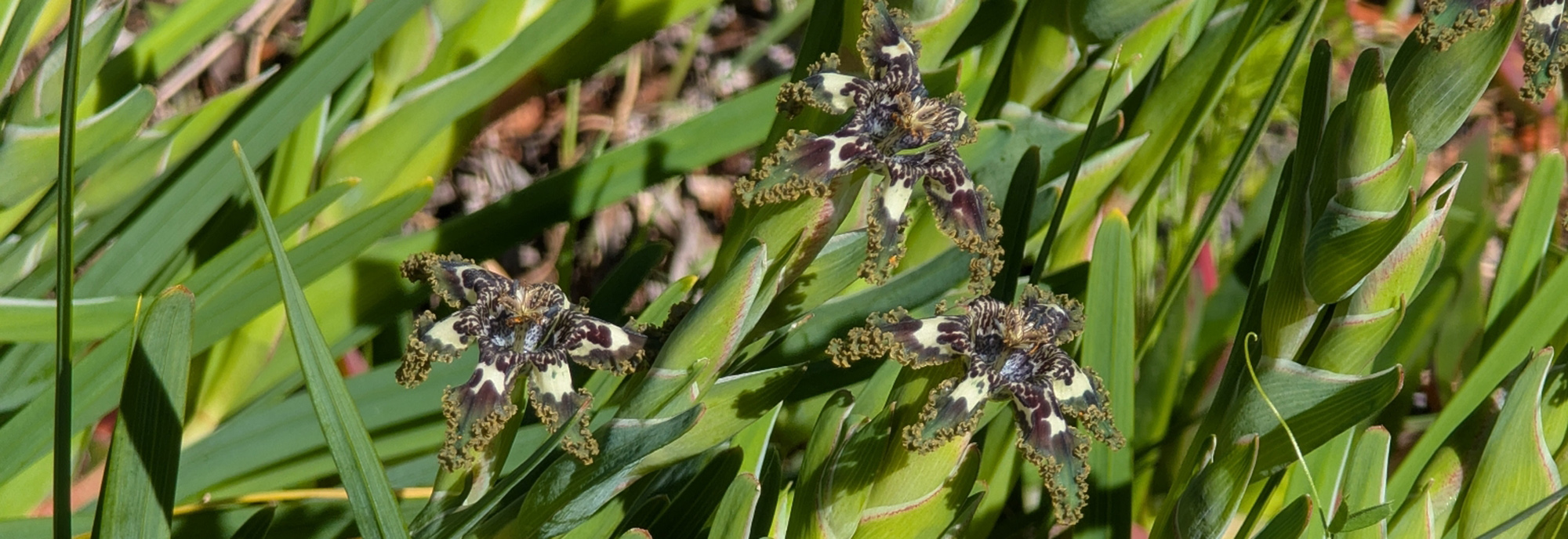

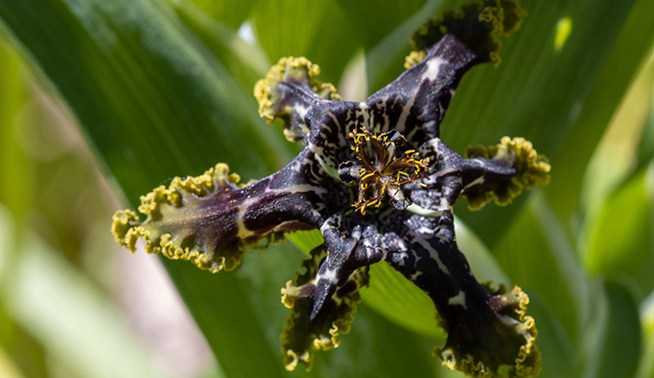
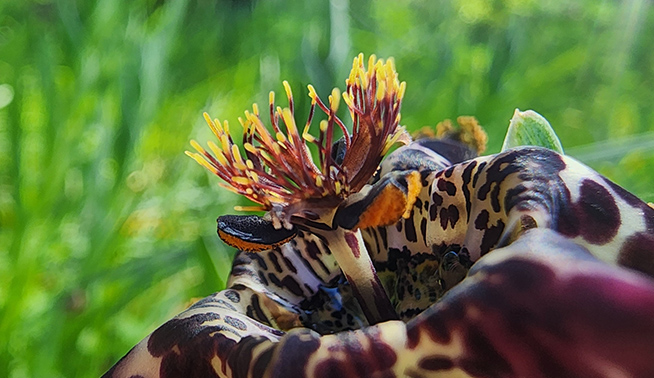
Ferraria crispa


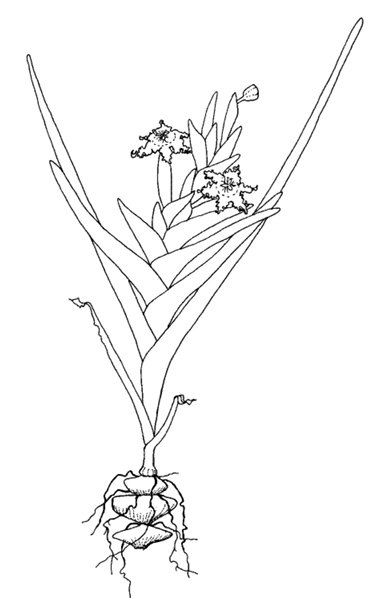
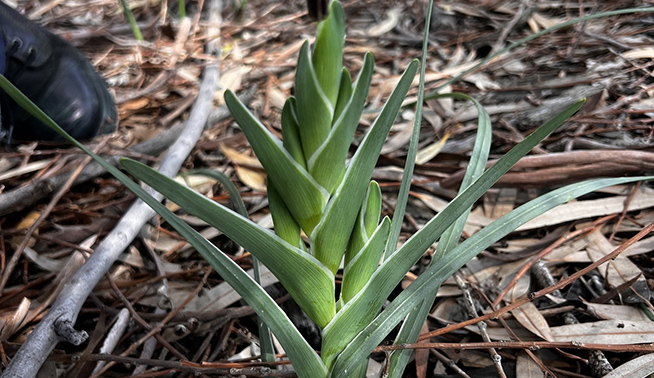
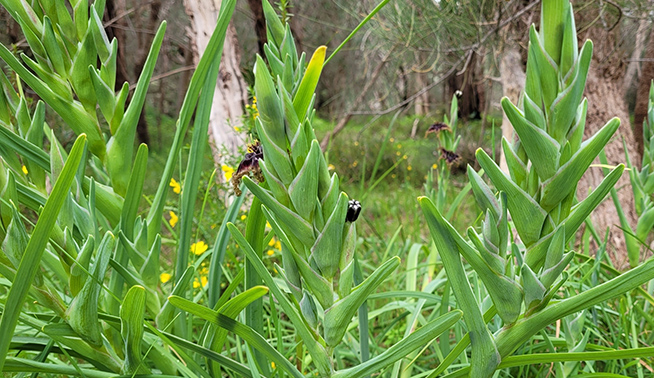
Grows up to 0.6 m tall. Plants generally survive fire, with underground corms remaining viable and enabling regeneration after burning. Reproductive maturity is reached in approximately two years, and seeds persist in the soil seedbank for around one year.
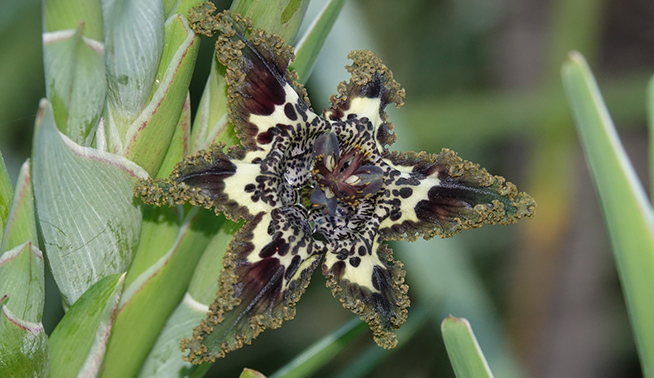
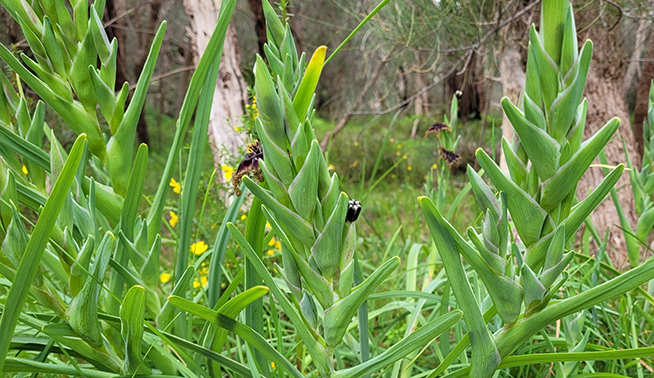
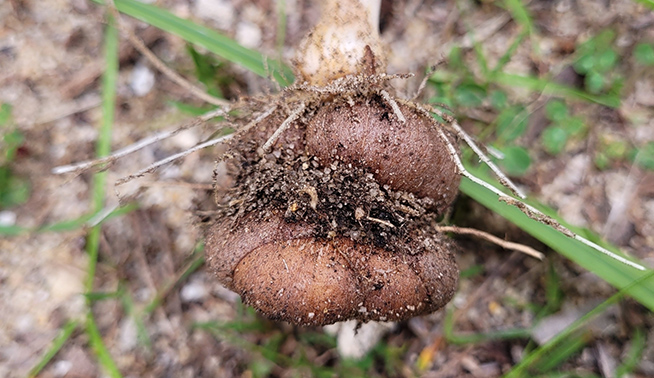
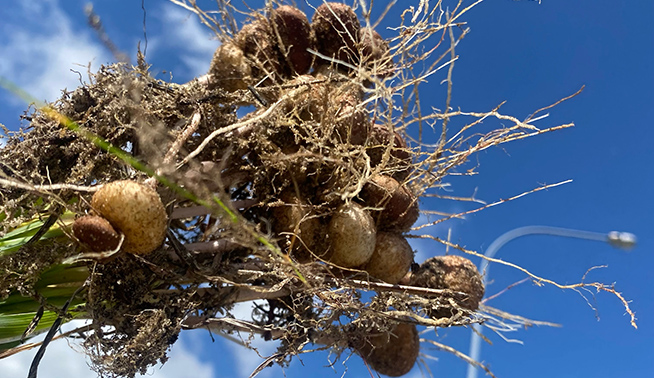
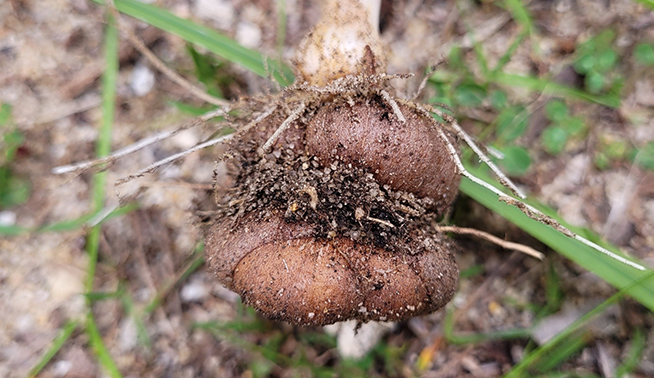
Hand removal/pulling of small populations and small plants should only be done with shovels or trowels as considerable care is required to ensure that all corms in the column of corms are removed. Surrounding soil may need sifting to locate and remove all corms, as any remaining corms can regrow and produce new plants. Disposal by deep burial or burning. Seeds will be stimulated by the disturbance.
Herbicides appear to target only the present and/or previous years corm, leaving the deeper corms unharmed. Its not translocated between corms. Black flag is particularly challenging to manage with herbicide, any corm not affected by herbicide or dislodged corms will sprout and form a new plant the following year.
For dense flowering infestations/plants, apply a mix of 10g 2,2 DPA (740g/kg) and 2.5mL of a surfactant with 1L of water, using a foliar application method, ensuring full leaf coverage and spraying until just wet.
For degraded sites, apply a mix of 150mL glyphosate (450g/L), 0.2g of metsulfuron methyl (600g/kg) and 15mL of a surfactant with 15L of water, using a foliar application method, ensuring full leaf coverage and spraying until just wet.
Black flag is commonly found on disturbed edges of bushland and along roadsides. It prefers full sun therefore increasing native species to reduce open canopy will reduce opportunity for black flag.
LSID number: [2905672] | full LSID: [https://id.biodiversity.org.au/node/apni/2905672] | field_lsid: [] | taxon: [Ferraria crispa]
ALA Reference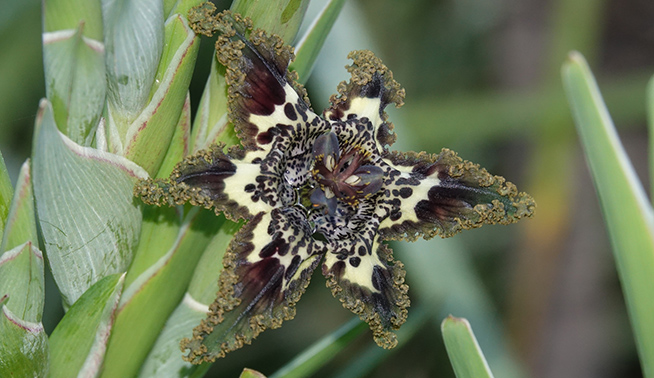
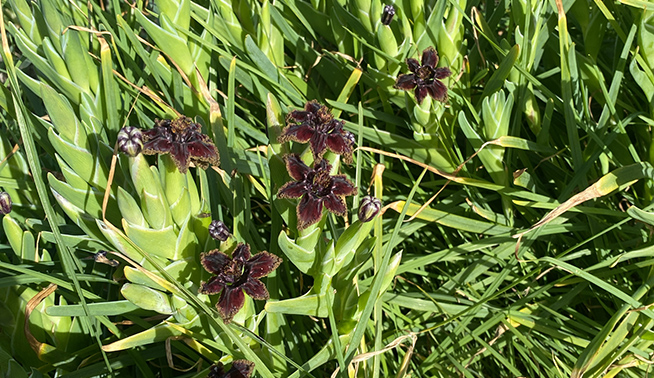
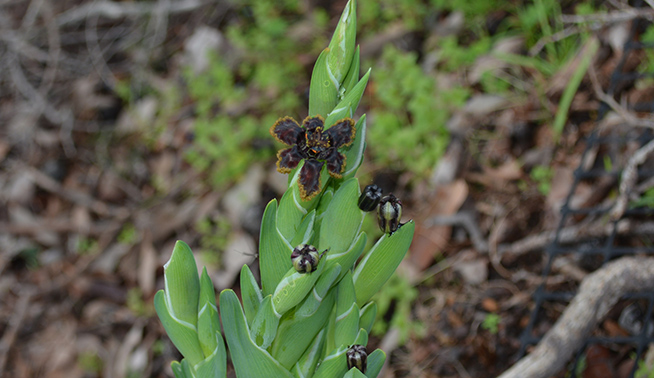
 Atlas of Living Australia. (n.d.)
Ferraria crispa Burm. Atlas of Living Australia.
Brown, K. and Bettink, K. (2010)
Black Flag (Ferraria crispa Burm.) is a difficult to control and persistent invader of Banksia/Eucalypt Woodland in south-west Australia. Ecological Management & Restoration, 11: 228-230
City of Mandurah. (n.d.)
Black Flag Ferraria crispa (Burm.) . City of Mandurah Environmental Weeds.
City of Stirling. (n.d.)
Garden plants and bushland invaders. City of Stirling.
Ohlsen, D. (2017, June 16)
Ferraria crispa subsp. crispa. VicFlora Flora of Victoria.
Pacific Bulb Society. (2024, December 16)
Ferraria crispa. Pacific Bulb Society.
Urban Bushland Council WA. (n.d.)
Black Flag. Urban Bushland Council WA.
Weeds of Australia. (n.d.)
Ferraria crispa Burm. subsp. crispa. Weeds of Australia; Lucidcentral.
Western Australian Herbarium (1998–)
Florabase—the Western Australian flora. Department of Biodiversity, Conservation and Attractions.
Atlas of Living Australia. (n.d.)
Ferraria crispa Burm. Atlas of Living Australia.
Brown, K. and Bettink, K. (2010)
Black Flag (Ferraria crispa Burm.) is a difficult to control and persistent invader of Banksia/Eucalypt Woodland in south-west Australia. Ecological Management & Restoration, 11: 228-230
City of Mandurah. (n.d.)
Black Flag Ferraria crispa (Burm.) . City of Mandurah Environmental Weeds.
City of Stirling. (n.d.)
Garden plants and bushland invaders. City of Stirling.
Ohlsen, D. (2017, June 16)
Ferraria crispa subsp. crispa. VicFlora Flora of Victoria.
Pacific Bulb Society. (2024, December 16)
Ferraria crispa. Pacific Bulb Society.
Urban Bushland Council WA. (n.d.)
Black Flag. Urban Bushland Council WA.
Weeds of Australia. (n.d.)
Ferraria crispa Burm. subsp. crispa. Weeds of Australia; Lucidcentral.
Western Australian Herbarium (1998–)
Florabase—the Western Australian flora. Department of Biodiversity, Conservation and Attractions.
| JAN | FEB | MAR | APR | MAY | JUN | JUL | AUG | SEP | OCT | NOV | DEC | Notes | |
|---|---|---|---|---|---|---|---|---|---|---|---|---|---|
| Dormant | |||||||||||||
| Active Growth | |||||||||||||
| Flowering | |||||||||||||
| Fruiting |
| JAN | FEB | MAR | APR | MAY | JUN | JUL | AUG | SEP | OCT | NOV | DEC | Notes | |
|---|---|---|---|---|---|---|---|---|---|---|---|---|---|
| Physical | |||||||||||||
| Chemical |


 PER96570 - Glyphosate