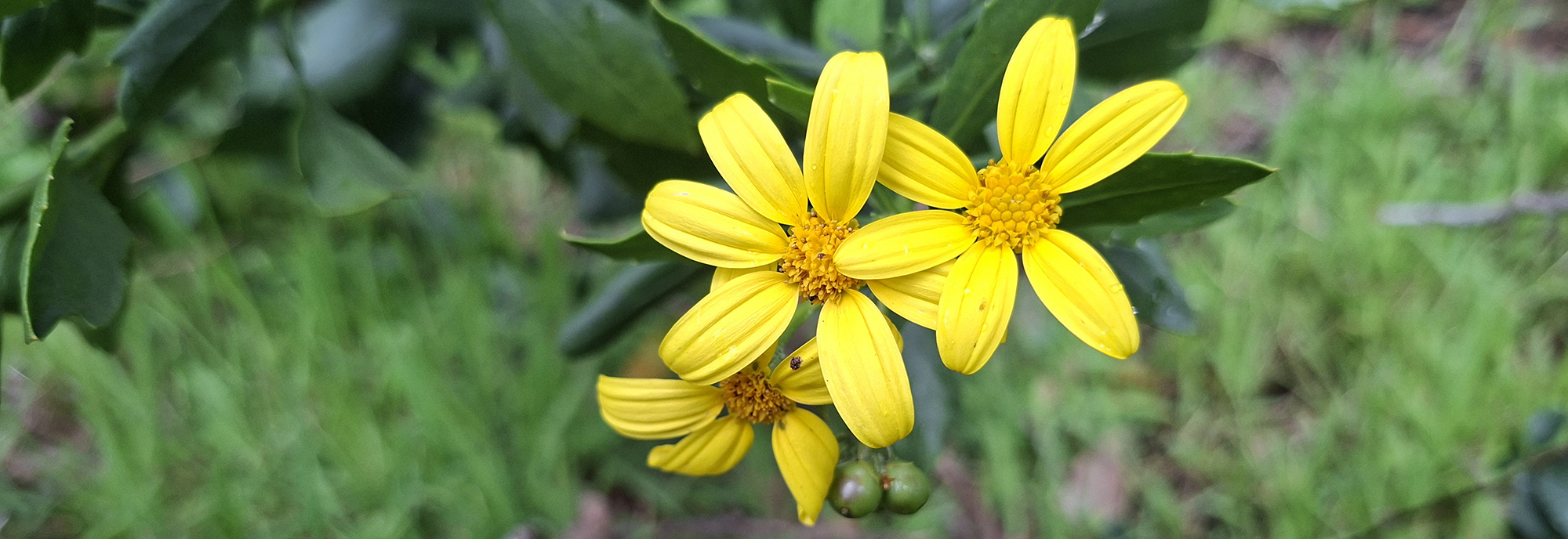

Synonyms: Osteospermum moniliferum subsp. moniliferum
Boneseed
Chrysanthemoides monilifera subsp. monilifera
Quick facts

Status
Declared Pest - Prohibited s12, WoNS

Life Cycle
Perennial

Growth Form
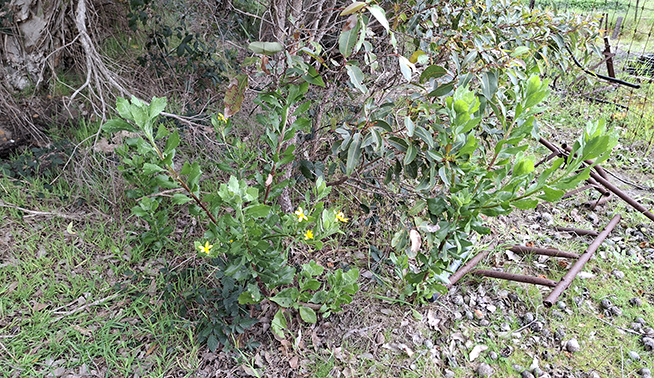
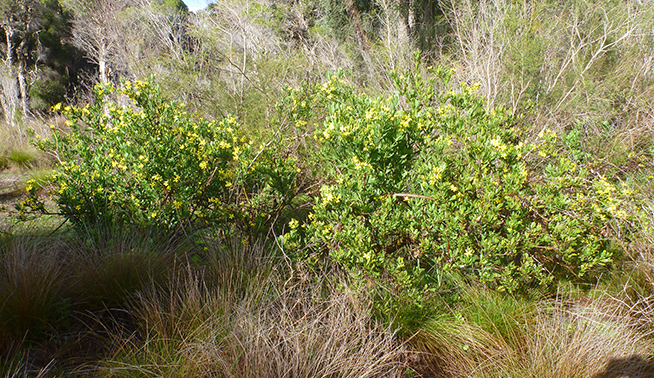
Shrub / Small Tree

Origin
South Africa

Flowers
Yellow

Dispersal
Birds,other animals
Names

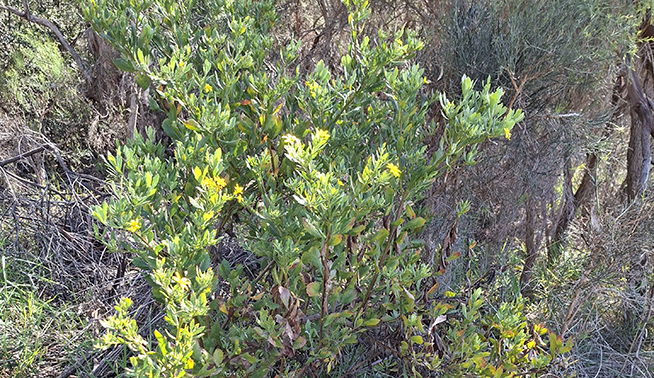
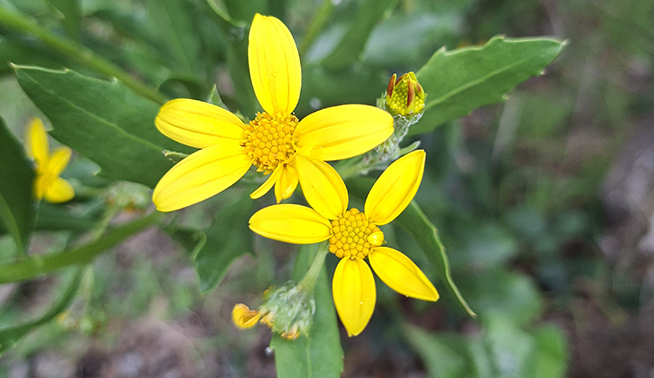
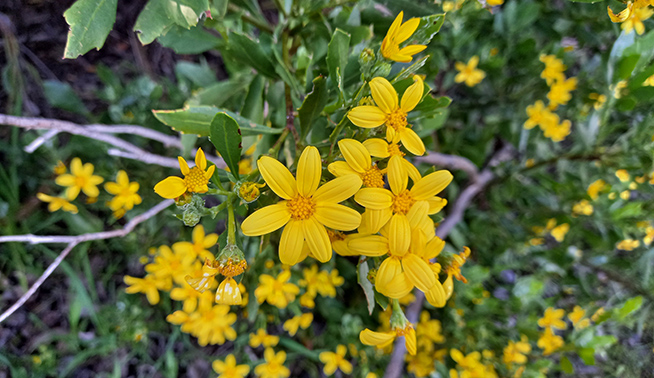
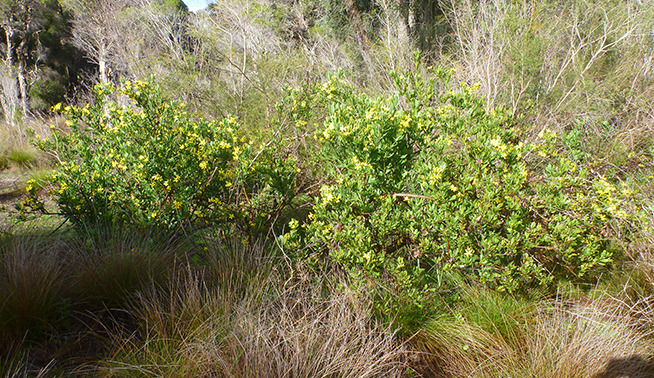
Form and function
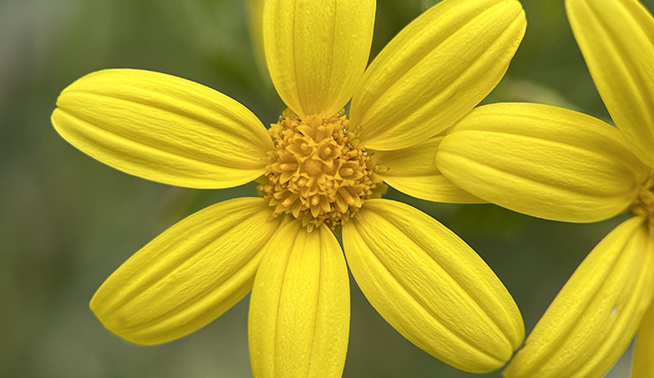
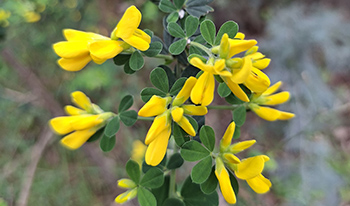
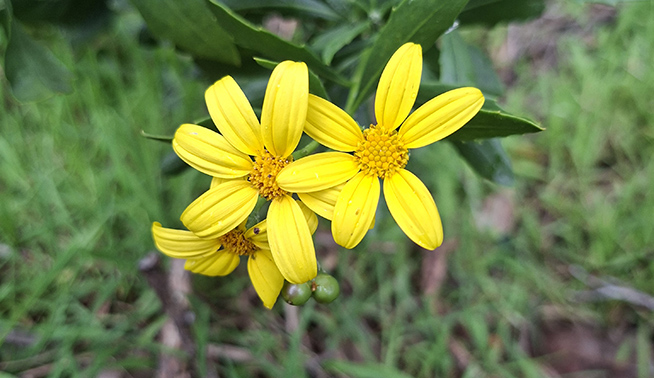
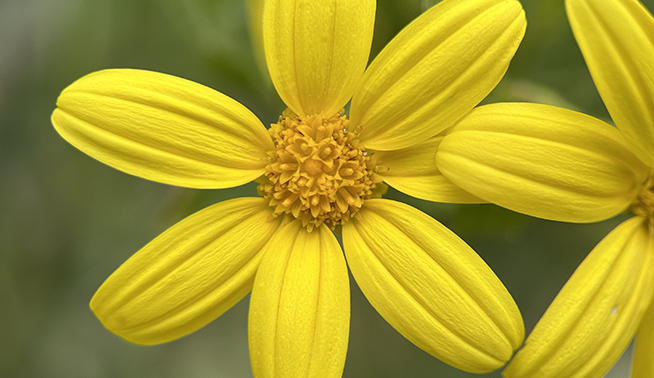
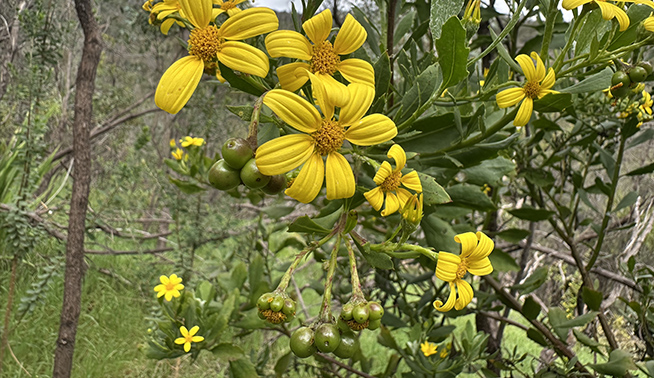
Flowers
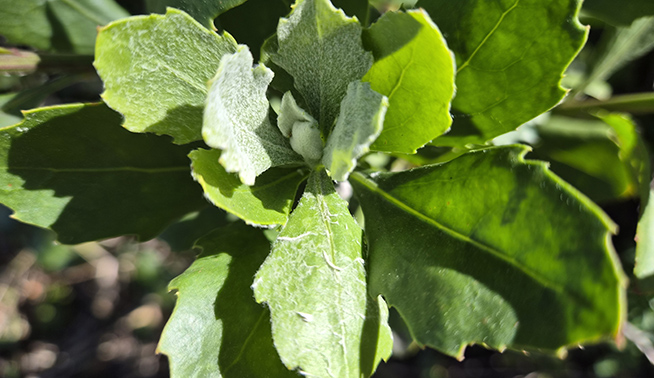
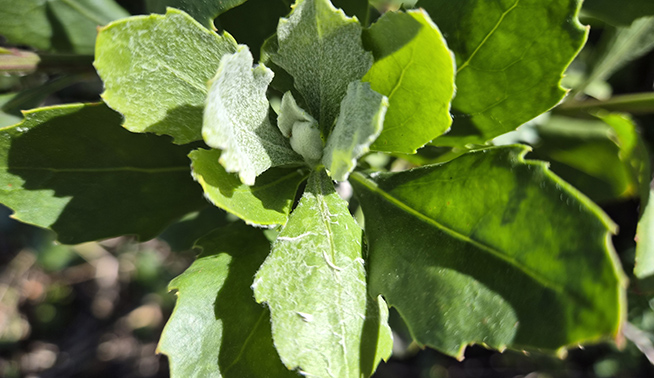
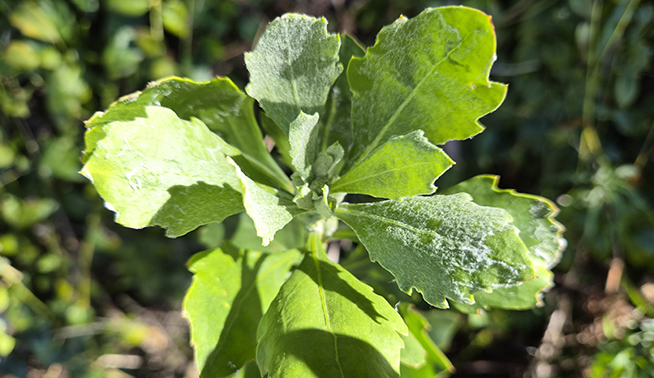
Leaves
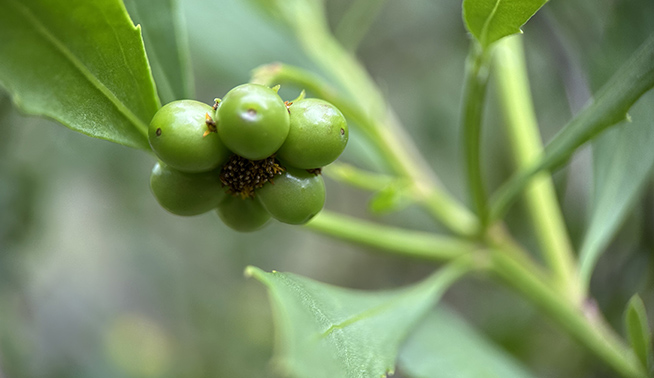
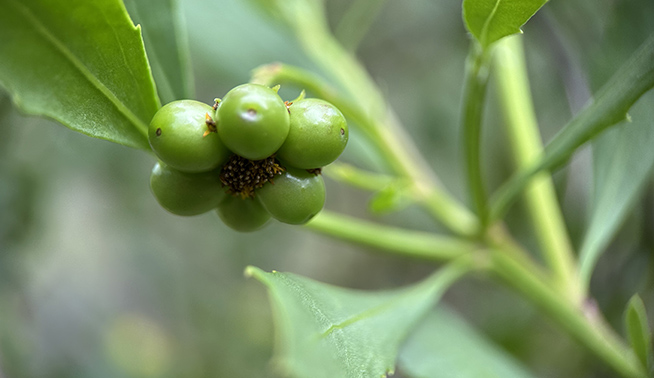
Fruits
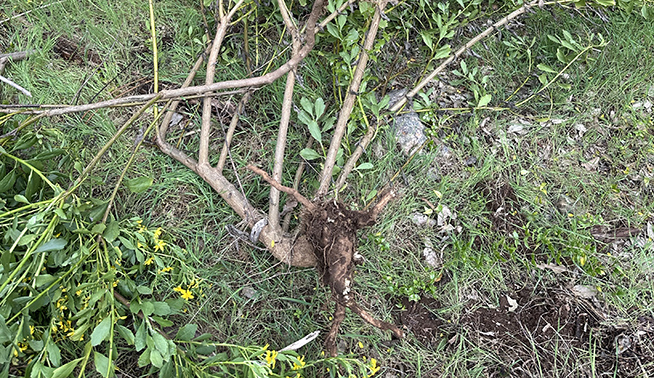
Roots
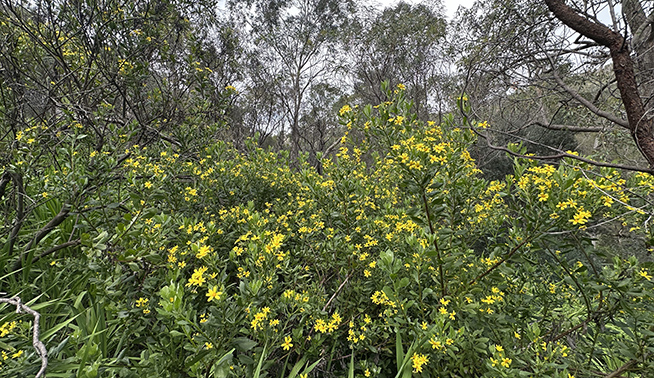
Habitat
May be confused with...
Similar native species: Yellow Buttercups (Hibbertia hypericoides).
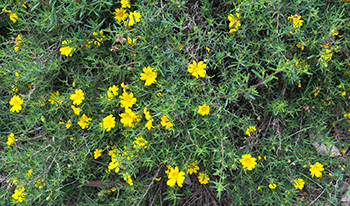
Similar non-native species: Flax-leaf Broom (Genista linifolia) and Montpellier Broom (Genista monspessulana). May also be confused with Bitou Bush (Chrysanthemoides monilifera subsp. rotundata), however the distribution of the two subspecies does not overlap.
How does it spread?
Why is it a weed?
3D Model
How to control


Due to the extensive quantity and duration of Boneseed’s seedbank, long term control is necessary, and consistent follow-ups must be carried out for several years for successful treatment.
Physical
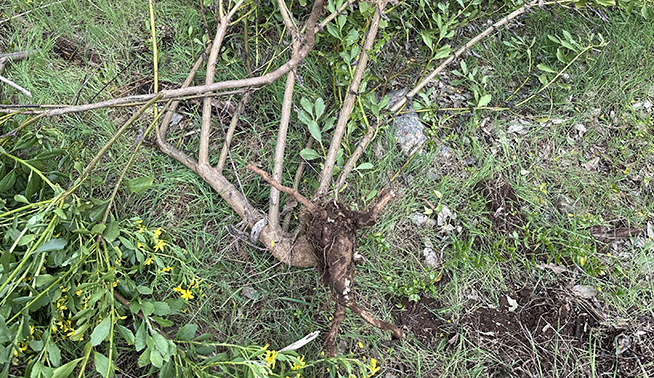
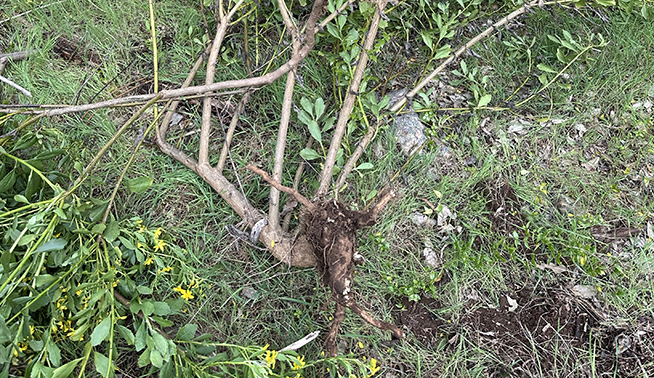
Seedlings and juvenile plants can be hand pulled as they have shallow roots with no tap root. Larger plants can also be hand pulled if the soil is damp, gravelly or sandy. Best method here is to grab the trunk and rock the shrub back and forth until the roots loosen, then the plant can but pulled out and upturned. Hand tools may be required in drier and heavier soils. Broken root fragments left in the soil won’t give rise to new plants.
Chemical
Due to bonseed having a high seed bank, a single herbicide application will not be sufficient as seedlings will rapidly replace treated plants. A follow-up treatment post new seedling germination will likely be required, otherwise conduct the first herbicide treatment just prior to flowering period. Performing a later initial herbicide application on larger Boneseed plants is likely to require a higher rate but decrease the need for secondary treatment.
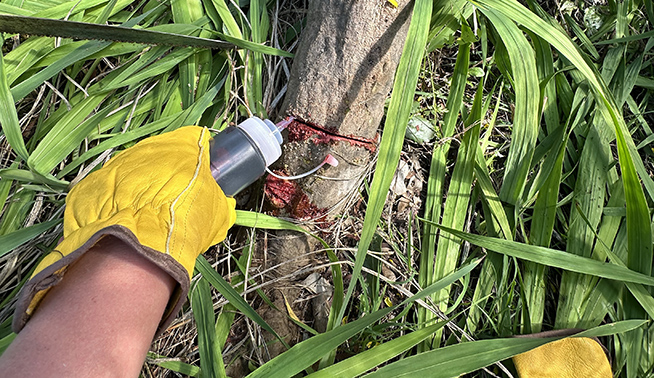
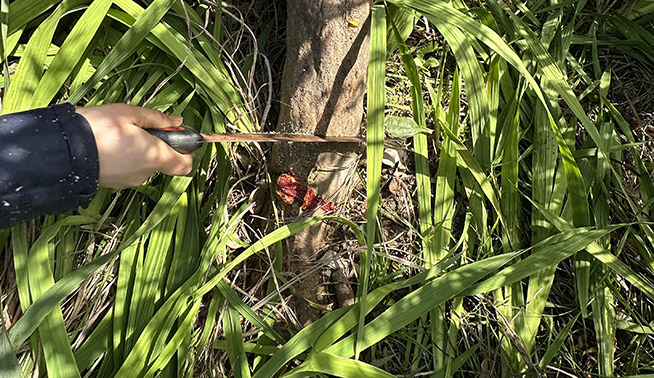
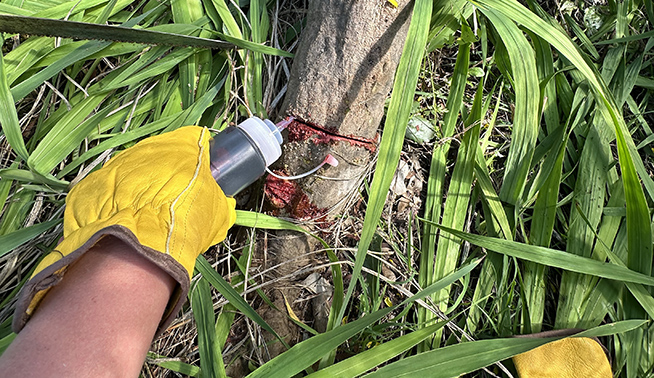
- Cut stump: Glyphosate 360 g/L at 50%. Cut trunk with handsaw and paint with herbicide immediately. Herbicide can be added at intervals during cutting.
- Foliar spray: Glyphosate 360 g/L at 5 or 10 mL/ 1 L water, ensuring full leaf coverage. Best results achieved when treated at peak flowering during winter. Use higher rate on plants over 1.5 m high.
- Tebuthiuron 200 g/kg at 1.5–2g per m2. Sprinkle evenly over the ground after removing mature plants. This is a soil residual herbicide that will target germinating seed in the seed bank if follow up control cannot occur in the next year. Do not apply near water catchments or areas with high surface run off. Note tebuthiuron is non-selective and will affect all plants and seedlings attempting to grow while active int the soil.
Managerial
Controlled burns should be considered for larger infestations and only if a program of followup control can be applied to address the stimulated seedbank. All burn events will need to consider a program of follow up control as the burns will stimulate the seedbank to germinate.
 PER96570 - Glyphosate
Weed Distribution Map
LSID number: [2913231] | full LSID: [https://id.biodiversity.org.au/node/apni/2913231] | field_lsid: [] | taxon: ["Chrysanthemoides monilifera"]
ALA Reference
References
-
 A. Ghafoor
Chrysanthemoides monilifera subsp. rotundata, in (ed.), Flora of Australia. Australian Biological Resources Study, Department of Climate Change, Energy, the Environment and Water: Canberra.
A. Ghafoor
Chrysanthemoides monilifera subsp. rotundata, in (ed.), Flora of Australia. Australian Biological Resources Study, Department of Climate Change, Energy, the Environment and Water: Canberra.
-
Batchelor, K., Scott. J.K., Webber. B.L. (2022)
Boneseed and bitou bush in Western Australia: a tale of two Chrysanthemoides. Council of Australasian Weed Societies (CAWS).
-
CRC for Australian Weed Management. (2000)
Best Practice Management Guide Boneseed, Chrysanthemoides monilifera subsp. monilifera. ISSN 1442-7192
- Cherry H. (2010) Western Australia Boneseed Eradication Strategy. Unpublished Report. Government of Western Australia (2007) 'Biosecurity and Agriculture Management Act 2007.'
-
CRC for Australian Weed Management (2003)
Boneseed (Chrysanthemoides monilifera ssp. monilifera) Weed management guide. ISBN 1-920932-01-1.
-
Department of Biodiversity, Conservation and Attractions. (2026)
Fire Facts Government of Western Australia
-
Department of Primary Industries and Regional Development. (2026
Western Australian Organism List (WAOL)
-
VicFlora (2026)
Flora of Victoria, Royal Botanic Gardens Victoria.
-
Western Australian Herbarium (1998–)
Florabase—the Western Australian flora. Department of Biodiversity, Conservation and Attractions.
-
NSW WeedWise
Boneseed (Chrysanthemoides monilifera subsp. monilifera)
Life Cycle
| JAN | FEB | MAR | APR | MAY | JUN | JUL | AUG | SEP | OCT | NOV | DEC | Notes | |
|---|---|---|---|---|---|---|---|---|---|---|---|---|---|
| Germination | |||||||||||||
| Flowering | |||||||||||||
| Fruiting |
Regularly or most commonly
Occasionally, given suitable conditions
Management
| JAN | FEB | MAR | APR | MAY | JUN | JUL | AUG | SEP | OCT | NOV | DEC | Notes | |
|---|---|---|---|---|---|---|---|---|---|---|---|---|---|
| Hand removal | |||||||||||||
| Foliar spray | |||||||||||||
| Cut stump |
Optimal
Potentially, but conditionally dependent