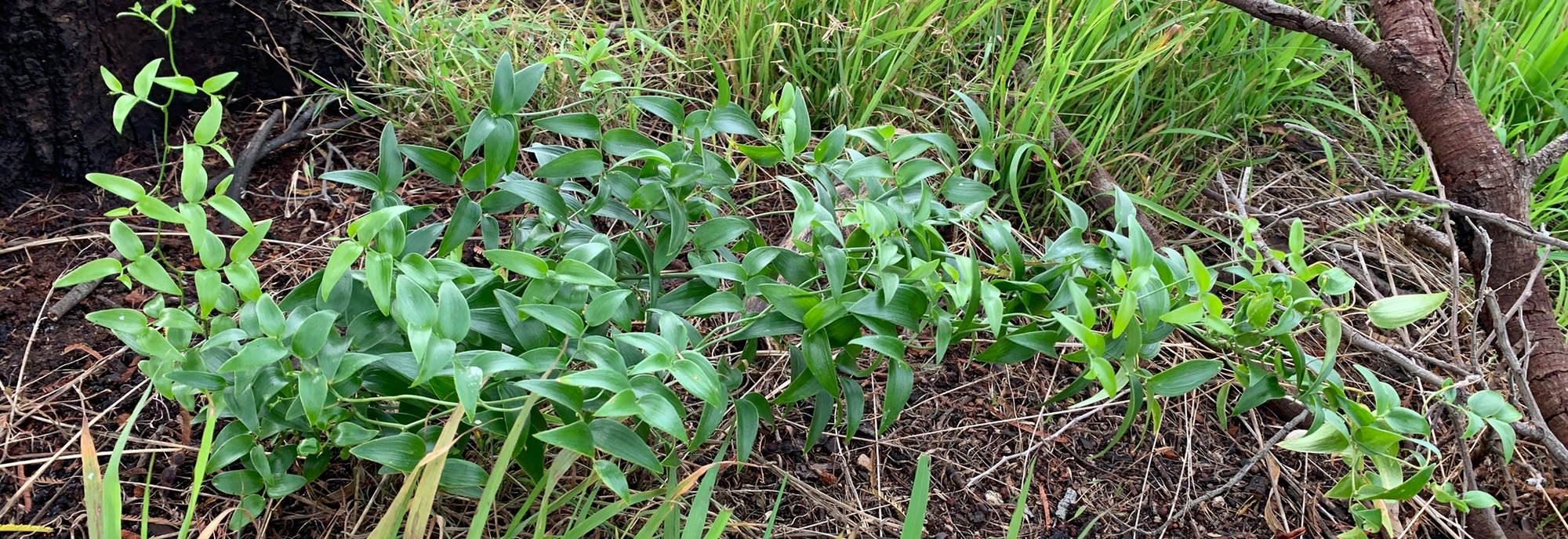

Other Common Names: African asparagus fern, Baby smilax, Bridal veil, Bridal veil creeper, Florists' smilax, Smilax, Smilax asparagus.
Bridal Creeper
Asparagus asparagoides
Quick facts

Status
Declared Pest / WoNS

Life Cycle
Perennial

Growth Form
Vine

Origin
Southern Africa

Flowers
White/pale green

Dispersal
Birds, mammals
Names

Form and function
Flowers
Leaves
Fruits
Roots
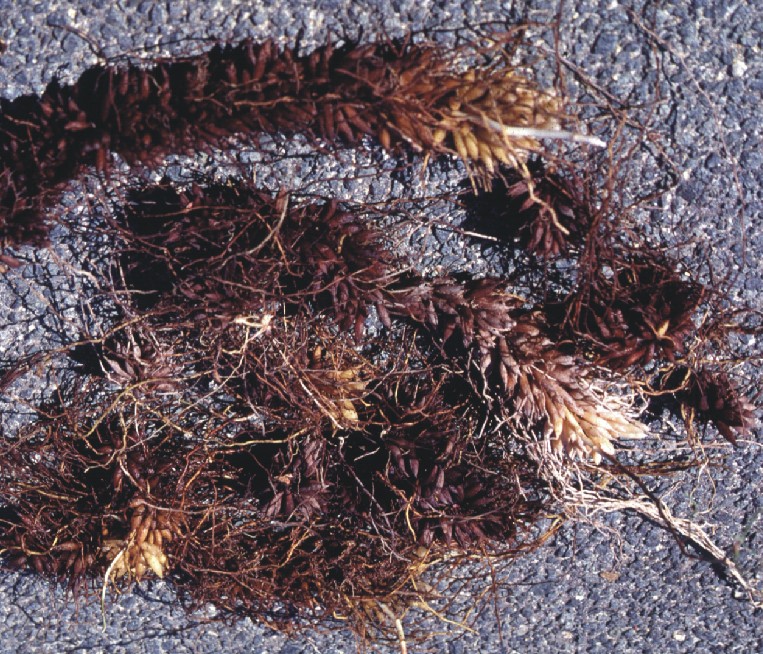
Habitat
May be confused with...
How does it spread?
Why is it a weed?
History
How to control


Physical
Physical/mechanical control is very difficult. It is not effective unless all the rhizomes are dug up and destroyed. Physical control is only possible for new and small infestations or as a follow up after several years of herbicide control of a larger infestation. Hand pulling can only be used for small plants/infestations and if the plant breaks leaving any part of the rhizome behind, the plant will immediately grow back.
Chemical
Selective
For actively growing plants, apply a mix of 0.02 g metsulfuron-methyl (600g/kg) and 25mL of a compatible wetter with 10 L of water using a foliar application method. No effect will be seen until the following season which should show reduced growth that will need retreatment
Non-selective
For actively growing plants, apply a mix of 1L of glyphosate (450g/L) with 2L of water and apply to the leaves and stems using a wick application/wiping method with a sponge glove or brush ensuring to avoid other non-target species. This method is slower but more selective than using the foliar application method.
Broader foliar spray with glyphosate is not recommended in bushland due to off-target impacts.
Managerial
For larger infestations, fire can be used to remove the above ground biomass and can help to improve the effectiveness of herbicide application by improving access for spraying. In some cases, fire may also help destroy the seed and dense, rhizomatous root mat. However this method should be used together with chemical control methods, and the use of fire requires government authority permission and may endanger the surrounding native vegetation.
Biological
Three biological control agents have been released in Australia;
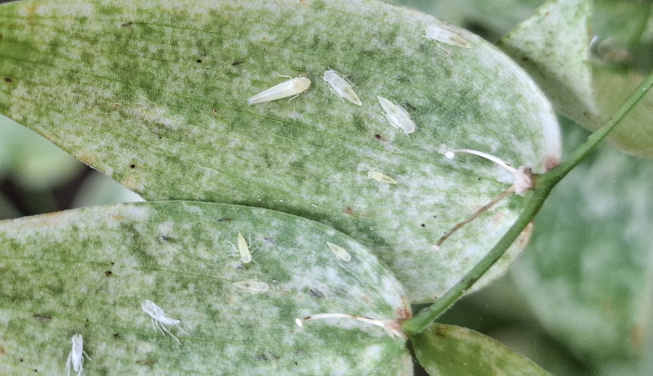
the leafhopper (Zygina sp.), which feeds on photosynthetic cells causing whitening which was released in 1999
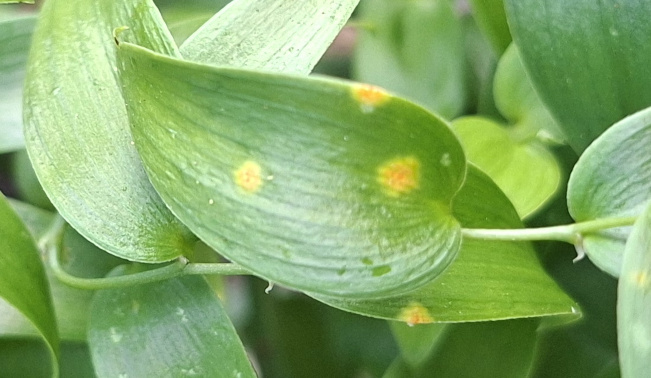
the rust fungus (Puccinia myrsiphyllii) is highly effective as it attacks leaves and stems, significantly impacting tuber reserves which was released in 2000
- the leaf beetle (Crioceris sp.) that targets young expanding tissues of leaves and shoot tips, reducing biomass and fruit production which was released in 2002.
The rust fungus and leafhopper have caused the most significant impacts on the bridal creeper and can stop the plant from flowering and fruiting.
 Permit PER96598 for metsulfuron
Weed Distribution Map
LSID number: [2895458] | full LSID: [https://id.biodiversity.org.au/node/apni/2895458] | field_lsid: [] | taxon: [Asparagus asparagoides]
ALA Reference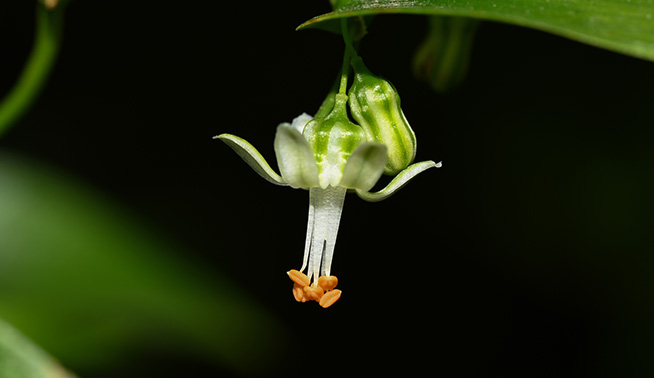
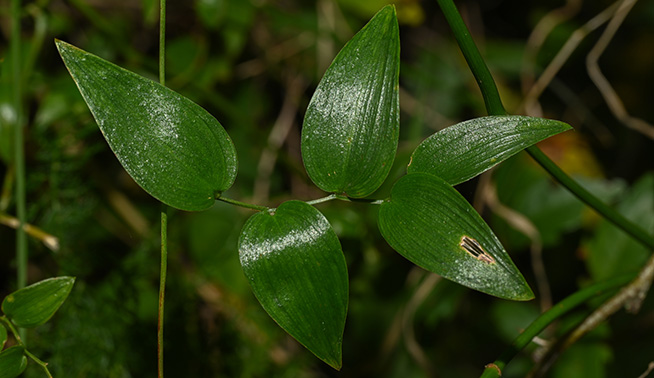
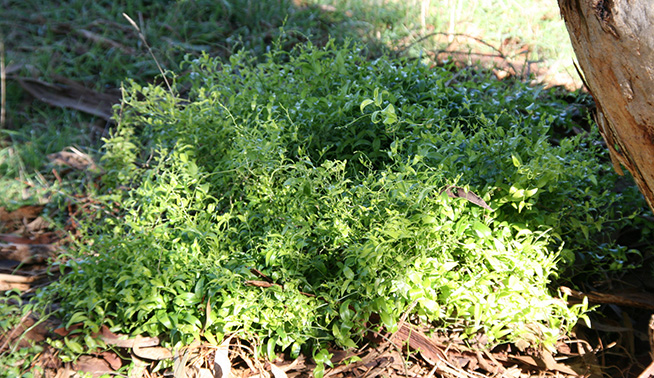
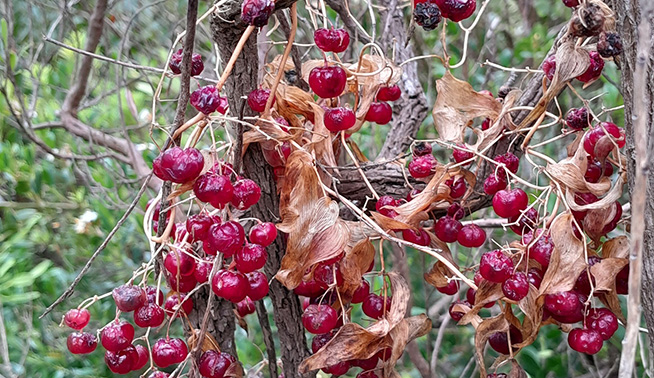
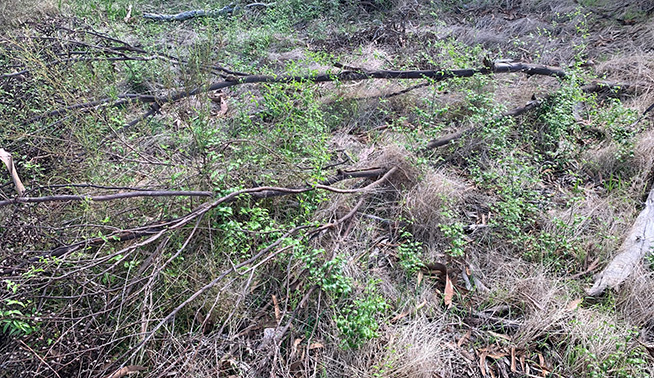
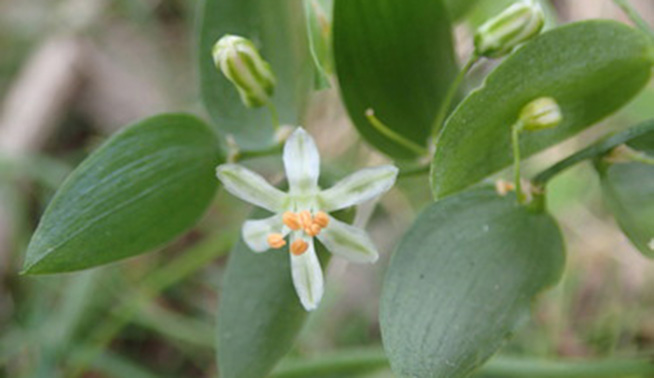
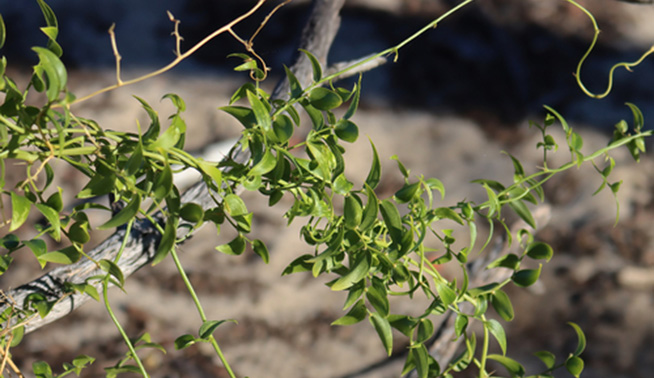
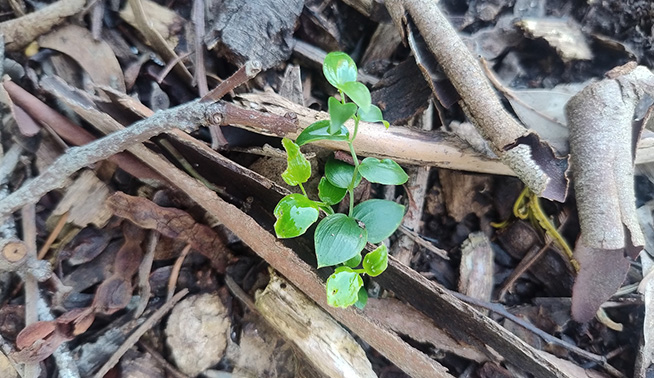
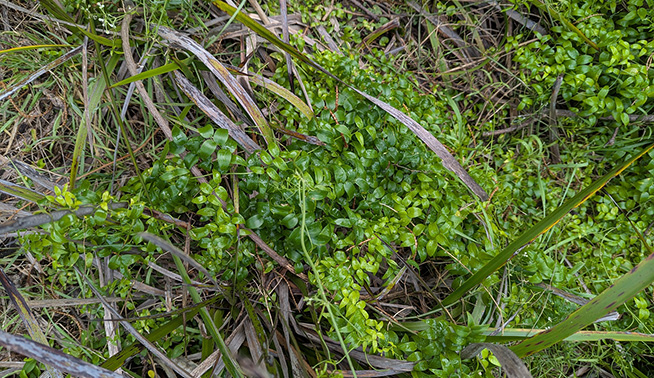
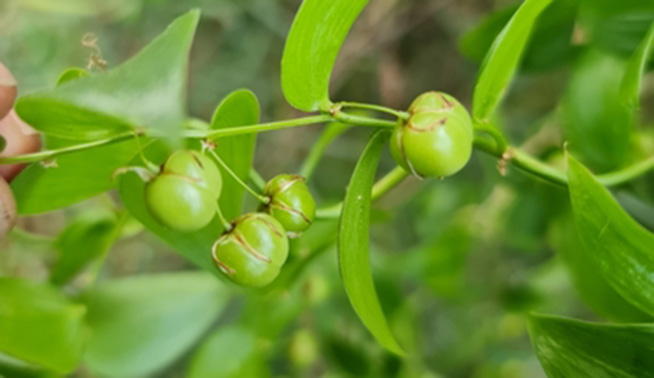
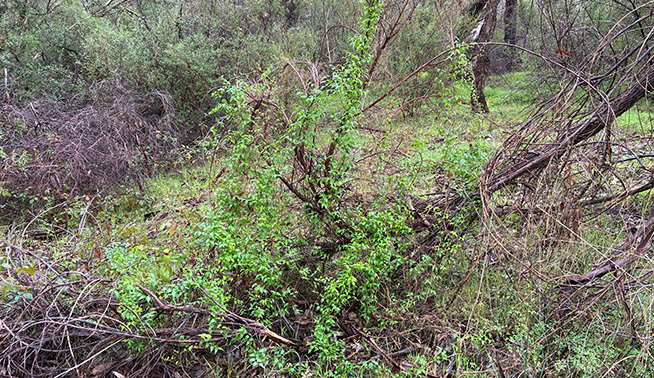
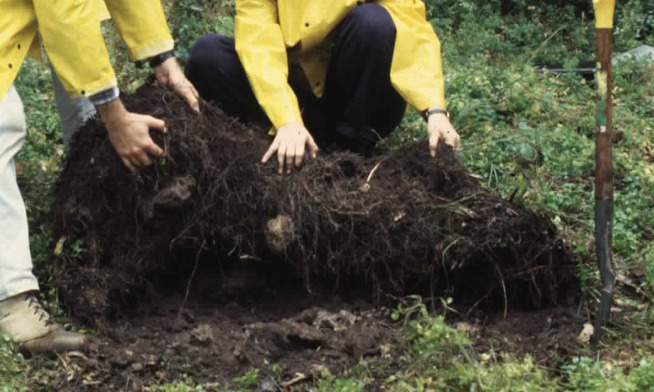
Image credits
References
-
 Atlas of Living Australia. (n.d.)
Asparagus asparagoides (L.) W.Wight. Atlas of Living Australia.
Atlas of Living Australia. (n.d.)
Asparagus asparagoides (L.) W.Wight. Atlas of Living Australia.
- Brown, K., & Brooks, K. J. (2003) Bushland weeds: a practical guide to their management With case studies from the Swan Coastal Plain and beyond. Environmental Weeds Action Network
-
CRC Weed Management. (2003)
Weed Management Guide - Bridal Creeper (Asparagus asparagoides). Commonwealth Department of the Environment and Heritage.
-
Department of Water, Land and Biodiversity Conservation. (2006, September).
Asparagus Weeds Best Practice Management Manual. Department of Water, Land and Biodiversity Conservation
-
Government of South Australia. (n.d.).
Bridal creeper. Landscape South Australia.
-
State of NSW. (2013).
Weeds of National Significance Asparagus Weeds Management Manual. Office of Environment and Heritage .
-
Urban Bushland Council WA. (n.d.)
Bridal Creeper. Urban Bushland Council WA.
-
Weeds Australia. (2019, March).
Bridal Creeper, Bridal Veil Creeper, Smilax, Florist’s Smilax, Smilax Asparagus. Weeds Australi
-
Weeds of Australia. (n.d.)
Asparagus asparagoides (L.) Druce. Weeds of Australia; Lucidcentral.
-
Western Australian Herbarium (1998–)
Florabase—the Western Australian flora. Department of Biodiversity, Conservation and Attractions.
Life Cycle
| JAN | FEB | MAR | APR | MAY | JUN | JUL | AUG | SEP | OCT | NOV | DEC | Notes | |
|---|---|---|---|---|---|---|---|---|---|---|---|---|---|
| Dormant | |||||||||||||
| Active growth | |||||||||||||
| Flowering | |||||||||||||
| Germination | |||||||||||||
| Fruiting |
Regularly or most commonly
Occasionally, given suitable conditions
Management
| JAN | FEB | MAR | APR | MAY | JUN | JUL | AUG | SEP | OCT | NOV | DEC | Notes | |
|---|---|---|---|---|---|---|---|---|---|---|---|---|---|
| Physical | |||||||||||||
| Chemical | |||||||||||||
| Fire |
Optimal
Potentially, but conditionally dependent