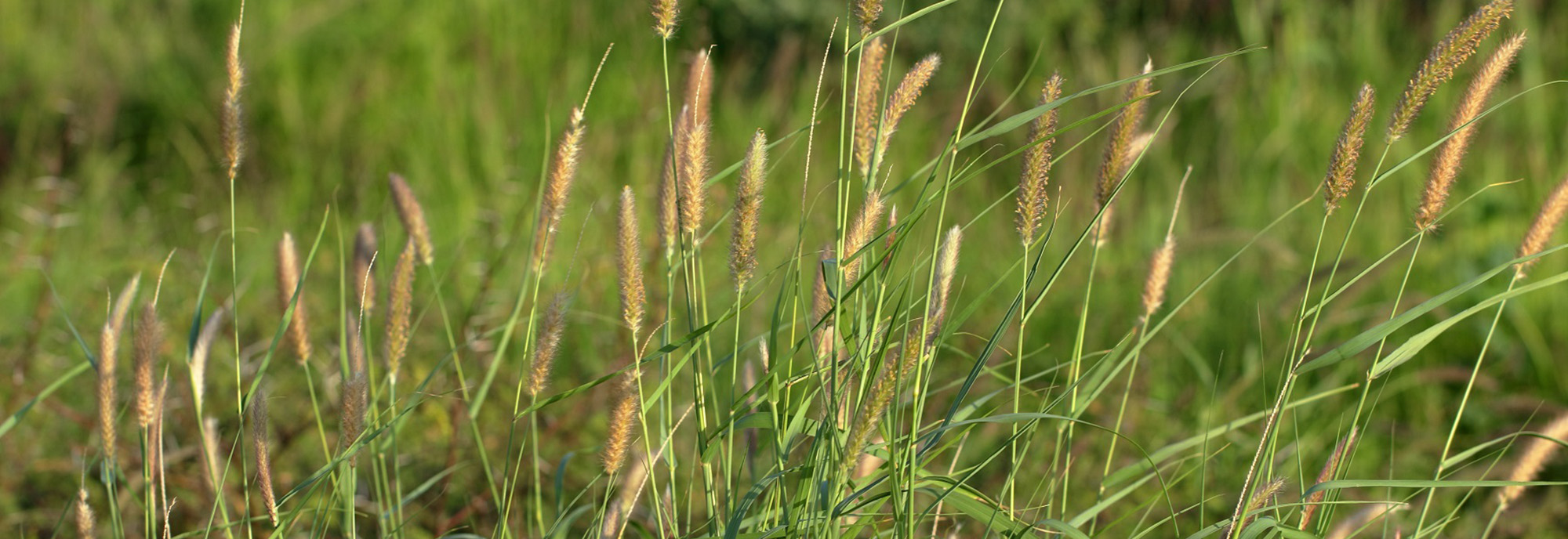

Plants reach maturity in as little as 6 weeks, but typically around three months and can grow from 0.2 to 1 m tall. Seeds can remain viable in the soil for more than five years. Following fire, plants typically resprout from surviving buried seed, while intense heat may kill some seed, seed buried deeper in the soil can survive and germinate after a fire event.
Buffel Grass
Cenchrus ciliaris
Quick facts

Status
Permitted s11

Life Cycle
Perennial

Growth Form
Grass

Origin
Sub-tropical and savannah areas of Africa, India and Asia

Flowers
Purple

Dispersal
Wind, water, animal fur
Form and function

Flowers
Leaves
Seed
Roots
Habitat
May be confused with...
How does it spread?
Why is it a weed?
History
How to control


Physical
Physical removal involves cutting out and extracting small populations and seedlings with a hoe, mattock or shovel, ensuring the entire plant—including dormant buds—is removed. Any partial removal, such as slashing, must be paired with herbicide application, and treatments applied after rainfall are often more effective.
Large‑scale mechanical removal can encourage buffel grass regrowth from remaining vegetative structures and from seed germination triggered by soil disturbance. Physical removal is most effective for immature plants in isolated populations; mature plants have a resilient crown and deep root system that make complete extraction difficult.
For the best chance of reducing or eradicating Cenchrus ciliaris, remove plants before seed set using a combination of herbicide treatment and mechanical removal, followed by regular monitoring and repeated treatments. Entirely removed plants should be burnt or buried.
Chemical
Herbicide treatments must be applied on foliage during active growth (leaves bright and glossy – refer to table displaying active growth periods, adaption may be necessary depending on location/environment). The active growth period is dependent on climate and can be unpredictable or shorter in arid/ semi-arid regions. Be wary when applying herbicide onto foliage that you are contacting live foliage, as dead foliage can act as a shield causing the herbicide to be ineffective – therefore single applications will unlikely be sufficient.
Non-selective foliar herbicides
Spot spraying only is recommended to avoid off target damage, particularly as buffel grass can grow very densely. Apply to actively growing leaves - slashing 2-3 weeks before spraying can promote fresh growth and will increase effectiveness.
Glyphosate 360g/L (100ml/10L) or Glyphosate 450g/L (50ml/10L). Add 2% pine oil for seed destruction.
Selective foliar herbicides
Spot spray with Halaxyfop (520g/L) at 16ml/10L + spray oil at 50ml/10L
Fluazifop-p (128 g/L) at 160ml/10L can be used on seedlings and young plants but is minimally affective on older plants.
Selective soil active herbicides
Flupropanate (745g/L) is a soil active herbicide and can gradually kill the plants over 2-12 months. It bonds tightly to soil particles, but buffel grass will gradually absorb it from the soil. While residual in the soil it will kill buffel seedlings. Fluproponate is grass selective, and will affect all other grasses while still active in the soil. Recommended for large areas due to the application method. Spray close to soil around plants at a rate of 30ml/10L plus wetting agent.
Granular flupropanate can be used in higher‑rainfall areas (>400 mm), applied at 15 kg/ha. However, granular formulations are generally less effective than foliar applications for buffel grass control. Granular forms should not be used in areas where high rainfall can result in soil run off
Managerial
Burning can assist buffel grass management, but only when combined with other treatments and followed by strict post‑burn monitoring. Fire is most effective in high‑density buffel grass stands, where it can reduce biomass and destroy surface seed; however, it will not kill mature tussocks. Burning also stimulates germination and tussock regrowth, making follow‑up herbicide treatment essential 3–4 weeks after the burn, once sufficient green leaf is present for foliar uptake.
Avoid burning for 1–2 years after applying flupropanate, as fire reduces soil residual activity (DEW, SA). Buffel grass burns extremely hot, so additional caution is required, and local government must be consulted before undertaking any fire‑based control.
 Permit PER96570 for glyphosate
Weed Distribution Map
LSID number: [2891090] | full LSID: [https://id.biodiversity.org.au/node/apni/2891090] | field_lsid: [] | taxon: ["Cenchrus ciliaris"]
ALA Reference
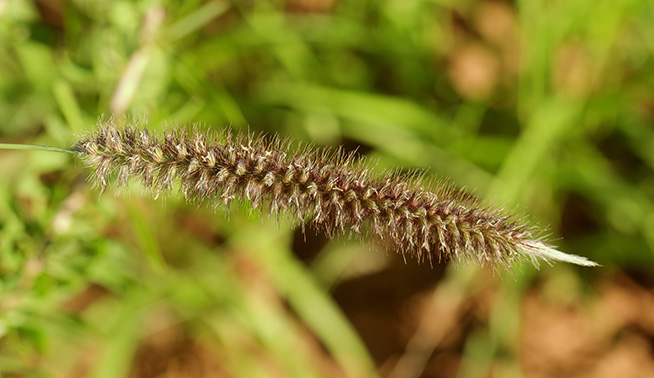
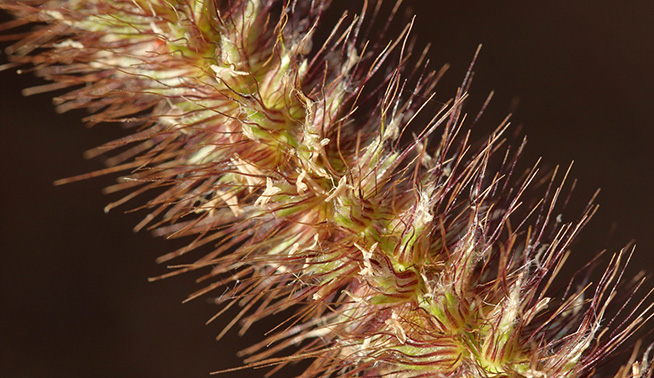
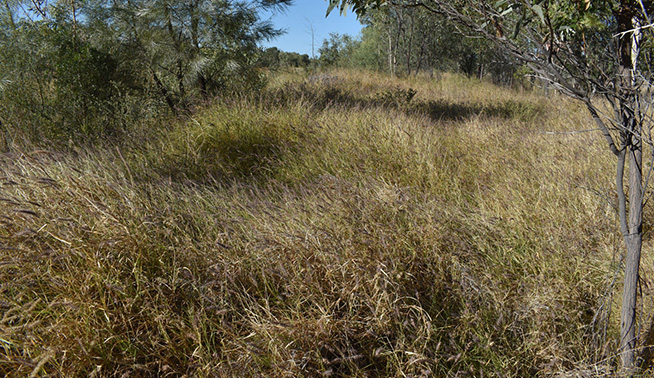
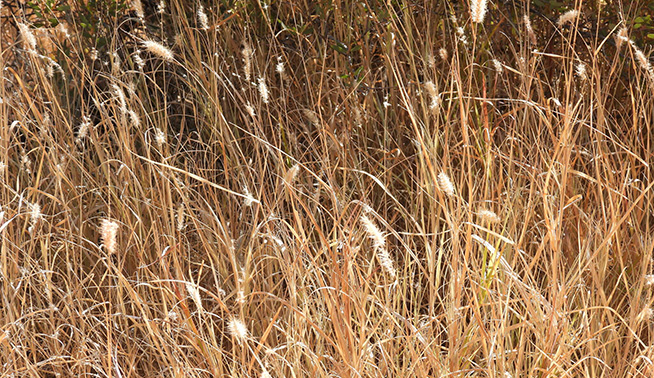
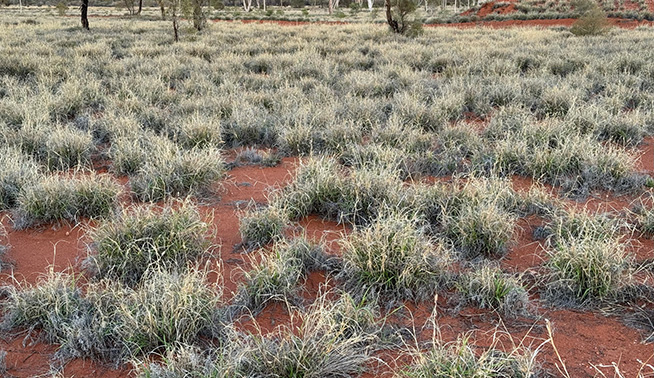
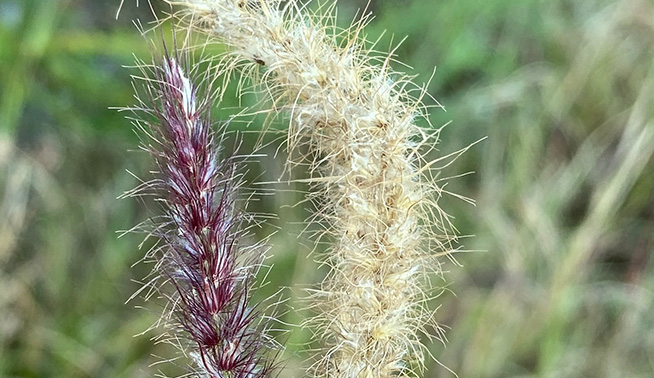
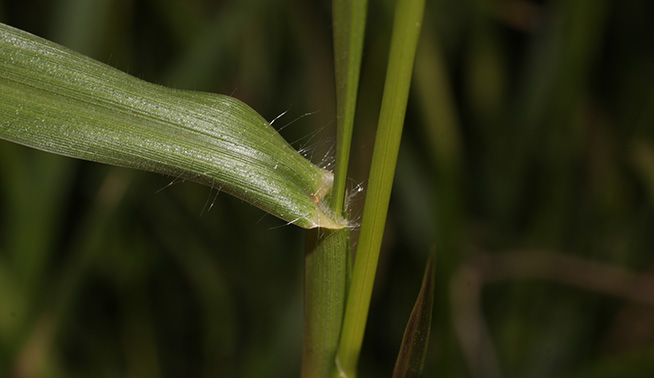
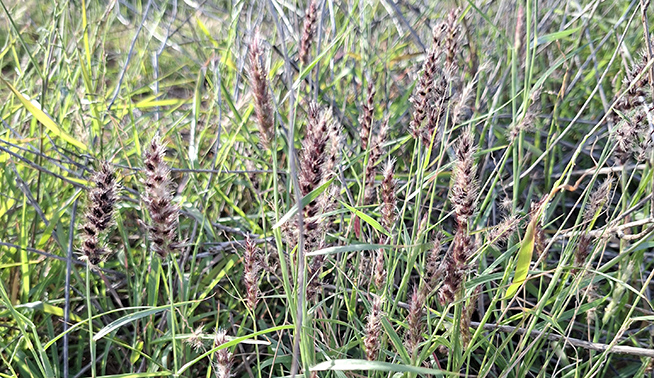
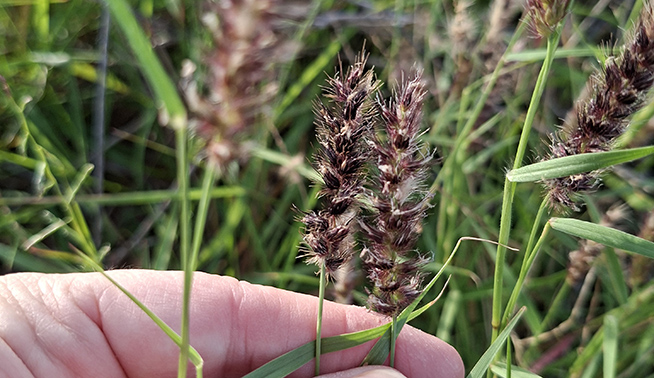
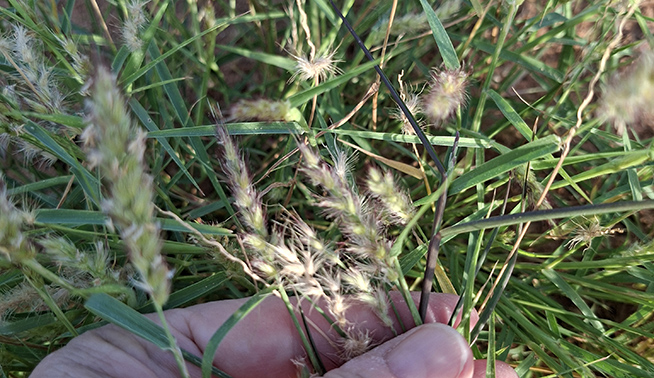
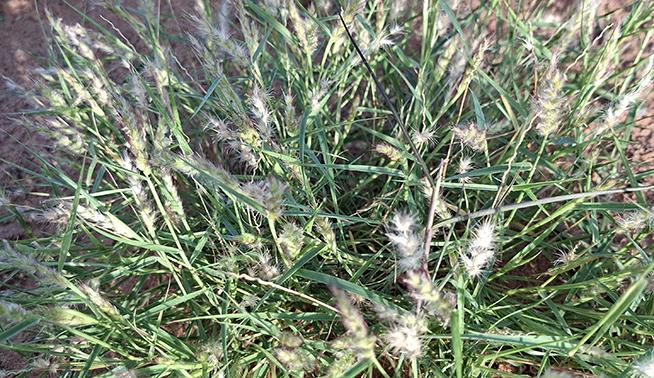
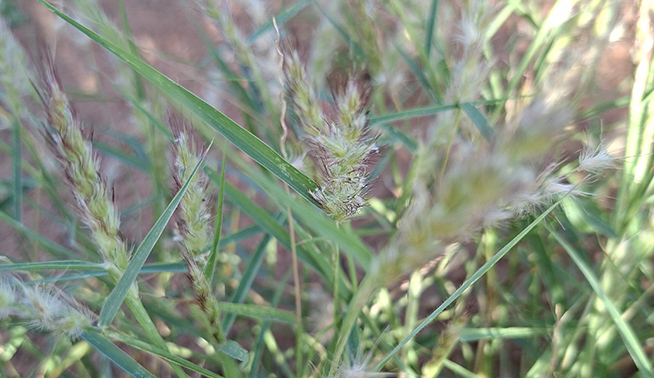
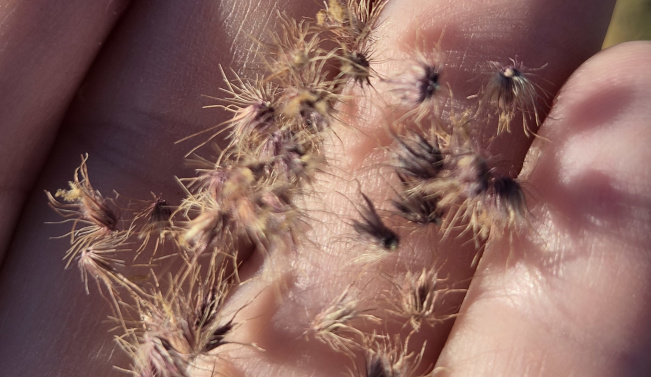
Image credits
References
- CRC for Australian Weed Management. (2008) Weed Management Guide: Buffel grass (Cenchrus ciliaris).
-
 Department of Biodiversity, Conservation (DBCA), and Attractions. (2006)
Mirima National Park (MNP) Draft Weed Control Plan. Government of Western Australia
Department of Biodiversity, Conservation (DBCA), and Attractions. (2006)
Mirima National Park (MNP) Draft Weed Control Plan. Government of Western Australia
-
Department of Primary Industries and Regional Development. (2026)
Western Australian Organism List (WAOL)
-
Department of Primary Industries and Regions, the Government of South Australia
Buffel grass, Cenchrus ciliaris and Cenchrus pennisetiformis.
-
Department for Environment and Water (February, 2024)
Buffel Grass (Cenchrus ciliaris and C. pennisetiformis) Fact Sheet.
-
Department for Environment and Water
FACT SHEET A Decision Tool for Buffel Grass Control. Government of South Australia.
-
Department for Environment and Water
FACTSHEET Buffel Grass – Collective term for Cenchrus ciliaris, C. pennisetiformis. Government of South Australia.
-
Western Australian Herbarium (1998–)
Florabase—the Western Australian flora. Department of Biodiversity, Conservation and Attractions.
Life Cycle
| JAN | FEB | MAR | APR | MAY | JUN | JUL | AUG | SEP | OCT | NOV | DEC | Notes | |
|---|---|---|---|---|---|---|---|---|---|---|---|---|---|
| Germination |
Will germinate after 20mL rain throughout the year.
|
||||||||||||
| Active growth |
Regularly or most commonly
Occasionally, given suitable conditions
Management
| JAN | FEB | MAR | APR | MAY | JUN | JUL | AUG | SEP | OCT | NOV | DEC | Notes | |
|---|---|---|---|---|---|---|---|---|---|---|---|---|---|
| Hand removal | |||||||||||||
| Chemical |
Optimal
Potentially, but conditionally dependent