


When woody weeds take over, endemic wildlife may have no choice but to use them as a food source and harbour. On the Beagle Islands, boxthorn was gradually removed while the native nitre bush re-established, so seabirds could still have somewhere to nest and sealion pups safe harbour.
The Problem
Beagle Islands Nature Reserve comprises three islands - South‑west Beagle Island, East Beagle Island and North‑west Beagle Island - located approximately 8 km offshore from Leeman and 260 km north of Perth.
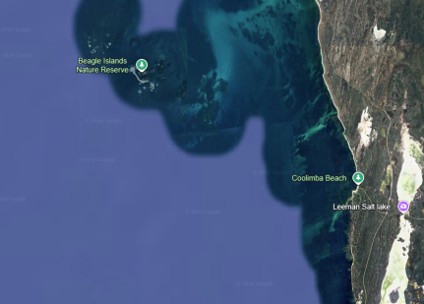
Over time, African boxthorn (Lycium ferocissimum) aggressively colonised areas disturbed by wildlife or human activity, displacing native vegetation and altering habitat structure. By 2006, nearly 25% of the islands’ vegetation cover consisted of boxthorn.
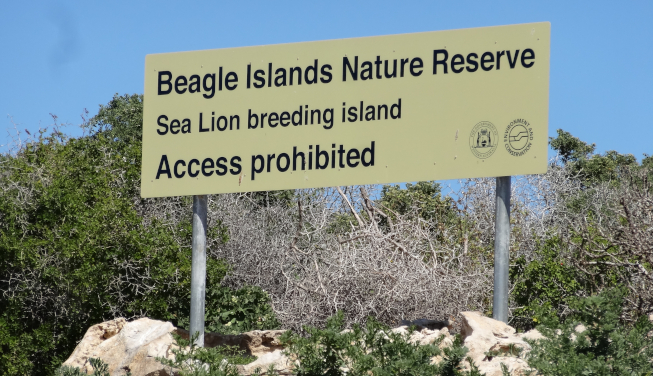
When weeds are both a curse and a saviour.
Wildlife using boxthorn as habitat
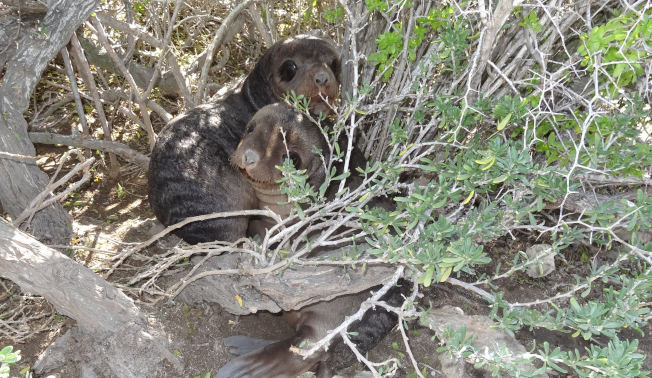
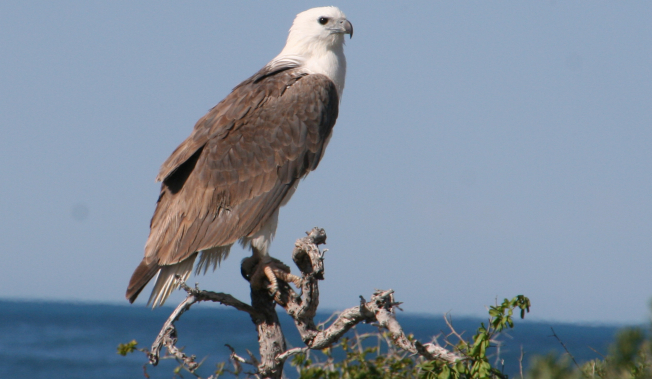
The protected Australian Sea Lion (Neophoca cinerea) and numerous seabird species rely on the vegetation of the Beagle Islands for breeding. Vegetation provides essential shelter for newborn sea lion pups, while burrow-nesters such as the wedge‑tailed shearwater and white‑faced storm‑petrel depend on it for protection. Other birds, such as the pied cormorant, silver gull, Caspian tern, roseate tern, bridled tern, and rock parrot, use the vegetation for surface or foliage nests. Additionally, boxthorn fruits are eaten by birds visiting the islands.
Wildlife injuries from boxthorn
Whilst boxthorn is providing habitat for sealions and birds, it is also causing them harm. The Australian sea lion adults and pups become wounded by the thorns and birds have been found impaled by or trapped in boxthorn thorns and branches.
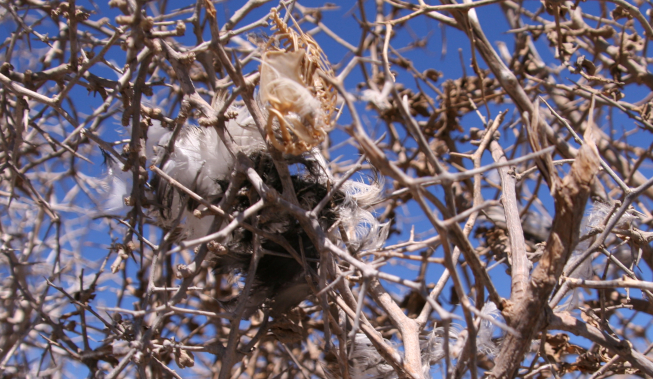
Bringing the island back into balance
Prior to boxthorn, the islands were dominated by nitre bush (Nitraria billardierei) and Scaevola (Scaevola crassifolia). The staged removal of boxthorn whilst also revegetating the islands with endemic vegetation will achieve weed control whilst also maintaining habitat for breeding.
What was tried
Beagle Island East supported the largest Boxthorn population, and a staged removal over five years was recommended to minimise disturbance to breeding seabirds. In contrast, Beagle Island West contained only a small number of Boxthorn plants and had sufficient native vegetation to sustain seabird colonies, making it suitable for a single‑year, whole‑island eradication effort.
1. Five-year plan for Beagle Island East
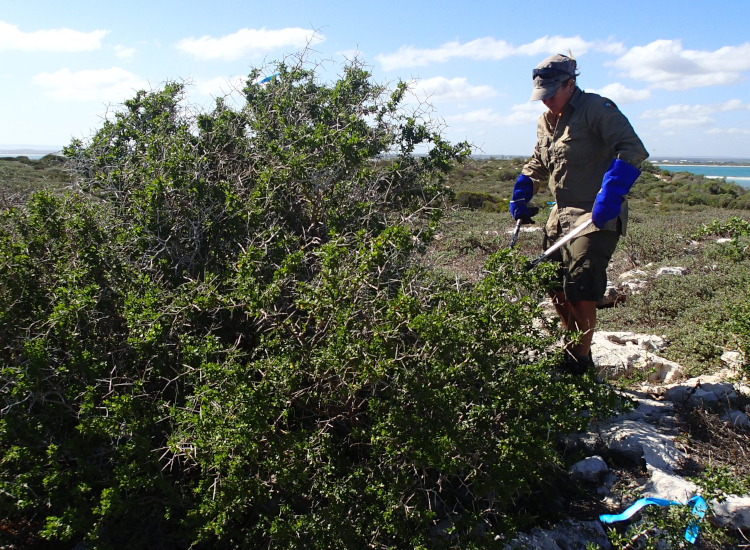
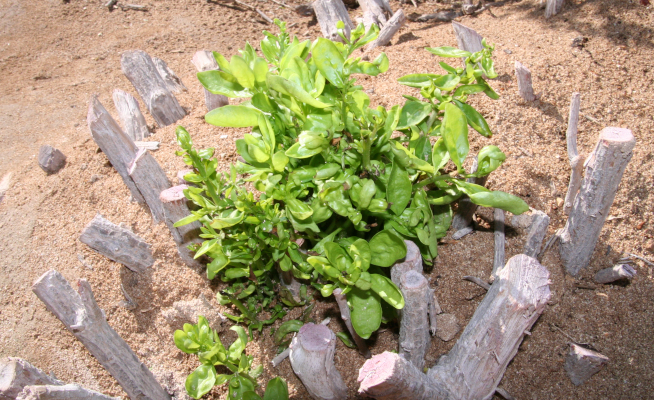
The control program on Beagle Island East involved selectively treating approximately 25% of Boxthorn plants each year to minimise disturbance to native vegetation and seabird nesting sites. Large plants were controlled using the cut‑stump method, while smaller individuals were hand‑weeded, as foliar spraying was not feasible under the island’s consistently high winds. For cut‑stump treatments, stems were cut within 10 cm of the base and immediately painted with a 1:3 mixture of Garlon 600 and diesel, with suckers treated similarly.
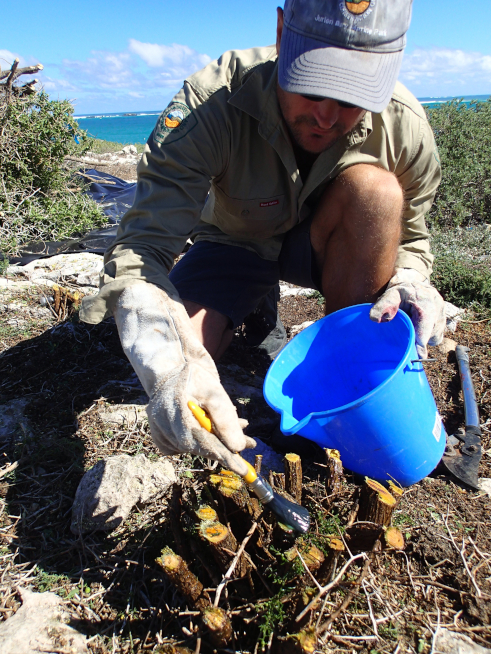
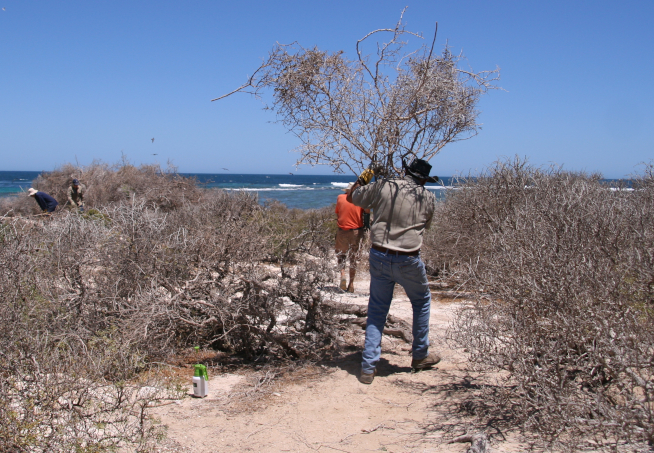
The excised canopies had all fruit and flowers removed and bagged for incineration on the mainland and then the canopies were then moved to a limestone area, arranged in windrows, and left to break down before being burnt the following year. Mulching the canopy foliage was attempted, but found to be laborious and impractical for the large amounts of boxthorn vegetation
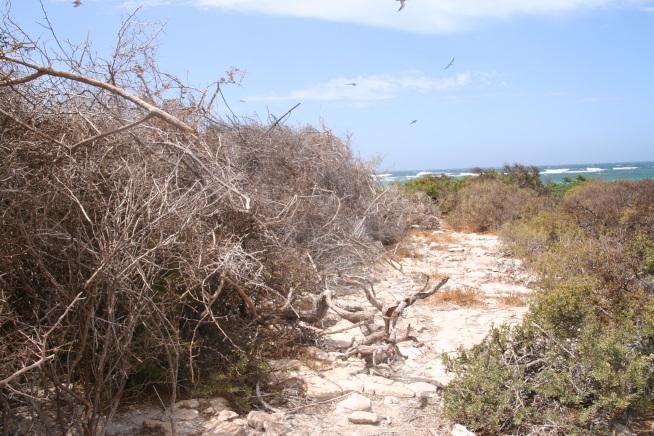
In dense infestations where boxthorn was intertwined with native vegetation, only the stump was treated and the canopy left in place after removing and bagging all reproductive material for off‑island incineration.
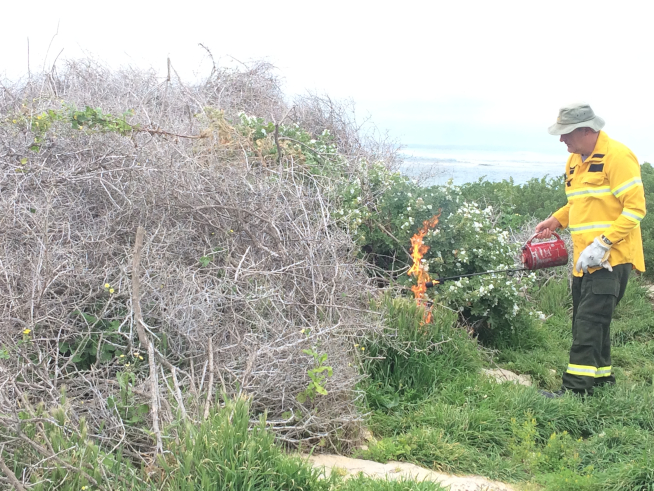
Follow‑up visits were conducted annually between July and August, coinciding with the boxthorn flowering period. Plants treated the previous year would often sprout new growth, which was treated with glyphosate.
2. One-year plan for Beagle Island West
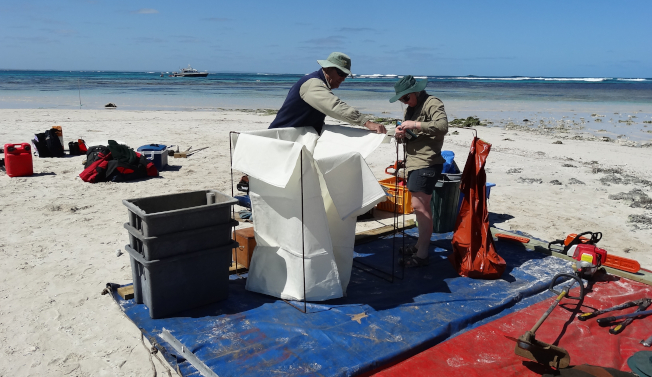
On Beagle Island West, all aboveground boxthorn vegetation was mounded and burnt on the island or bagged to be incinerated on the mainland. The cut stumps and suckers were painted with 1:3 mixture of Garlon 600 and diesel. The seedbank was removed by collecting all soil (shovel and sweep) below the original parent plants.
What was the outcome
Boxthorn is still a work in progress on the Beagle islands, but since the main infestation of plants were removed, follow up control now just requires visitation during spring to look for seedlings. DBCA visits the beagle islands between 1-4 times a year to monitor the welfare of sealions and does conducts surveillance for weeds including boxthorn. Vigilance will always to be required, as birds can disperse boxthorn seeds from infestations on the mainland.
Sucking from dead boxthorn has not been seen for several years. Nitre bush has been able to expand into the range previously occupied by boxthorn.
This work would not have been possible without DBCAs dedicated staff and the large numbers of volunteers that helped remove boxthorn, assist with annual surveillance and provide boat support. The initial work in 2012-2013 ran over 7 days (8 hr/day) with a team of 10 people. Essentially 560 hours of heavy work in the first few years is now supported by a few hours of annual surveillance each year to keep the Beagle Islands free of boxthorn.