Other Common Names: Port Lincoln wattle, willow-leaved wattle, winter wattle
Synonyms: Racosperma iteaphyllum
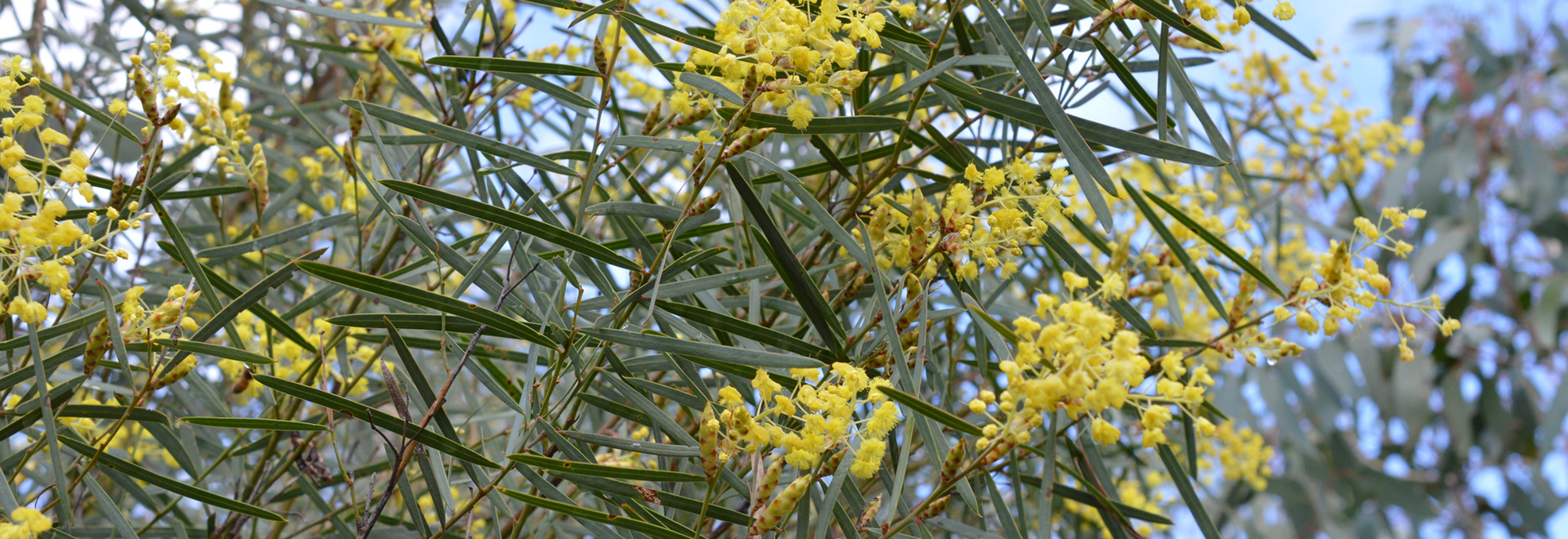

Acacia iteaphylla


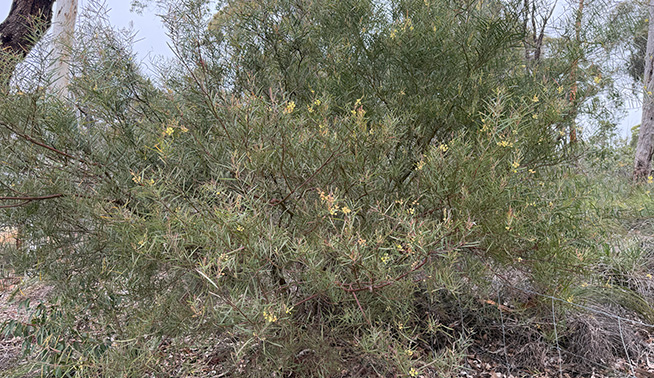
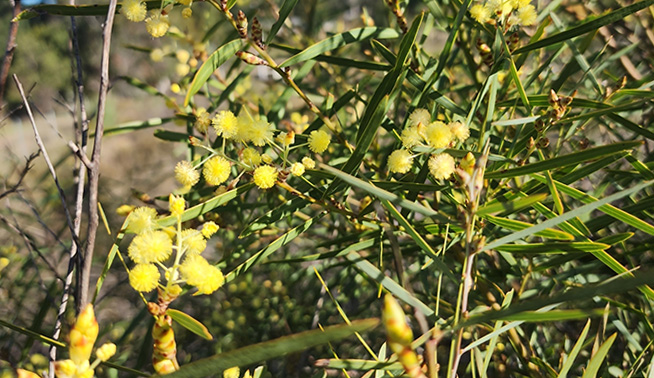
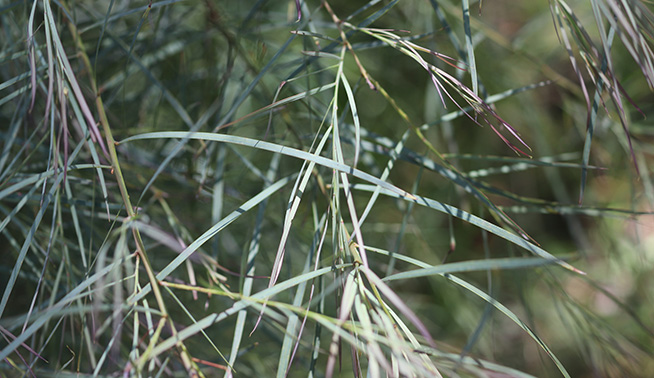
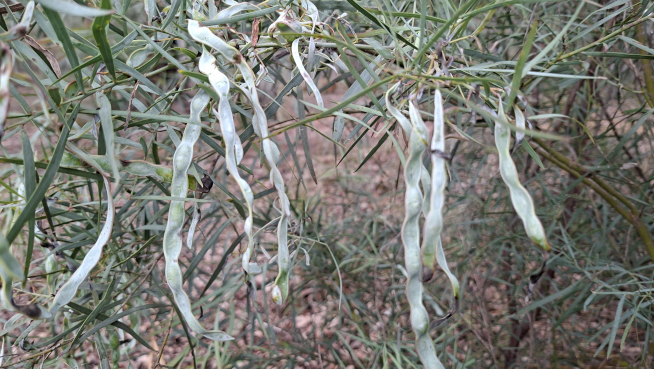
Flinders range wattle is relatively easy to control, similar to other weedy Acacia.
Seedlings can be easily removed by hand, ensuring the roots are removed with the seeding. Larger shrubs can be cut to the ground with a chainsaw and roots dug out with mattocks
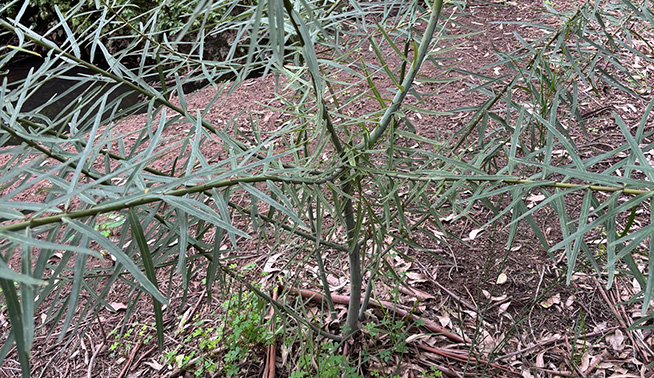
Small plants: Seedlings are most effectively controlled by herbicide prior to flowering and seeding stage between March and August. After hand-pull, paint with 10% solution glyphosate.
Mature Plants: Optimum treatment time is all year around. After cutting the trees, painting the stump with a solution of 50% glyphosate to prevent regrowth of the plant. Alternatively, trees can be killed without cutting down by injecting them with a 50% glyphosate solution, or by painting the bark around the base of the tree with a 250 ml mix of 240 g/L Triclopyr and 120 g/L Picloram (e.g. Access®) in 15 L of diesel.
Revegetation of area that have been cleared of weed by planting native perennial species, such as native wattle in WA called golden wreath wattle (Acacia saligna), can potentially prevent the regrowth of Flinders Ranges wattles.
LSID number: [2919200] | full LSID: [https://id.biodiversity.org.au/node/apni/2919200] | field_lsid: [] | taxon: [Acacia iteaphylla]
ALA Reference
 Moore, J., & Wheeler, J. (2008)
Southern weeds and their control. Department of Agriculture and Food, Western Australia.
Western Australian Herbarium (1998–)
Florabase—the Western Australian flora. Department of Biodiversity, Conservation and Attractions
5 Rivers NRM. (2023, November 8)
Is your Acacia friend or foe?
Dewing, J. & Kemp, C. (2002)
Weeds of the South West Region. Department of Conservation and Lend Management.
Lower Blackwood Catchment Land Conservation District Committee. (n.d.)
4 Common Riparian Weeds in the South West and their Management.
Shire of Mandaring. (n.d.)
Weedy wattles from the Eastern States can replace our native plants and increase bushfire risk.
Weeds of Australia. (n.d.)
Acacia iteaphylla
Moore, J., & Wheeler, J. (2008)
Southern weeds and their control. Department of Agriculture and Food, Western Australia.
Western Australian Herbarium (1998–)
Florabase—the Western Australian flora. Department of Biodiversity, Conservation and Attractions
5 Rivers NRM. (2023, November 8)
Is your Acacia friend or foe?
Dewing, J. & Kemp, C. (2002)
Weeds of the South West Region. Department of Conservation and Lend Management.
Lower Blackwood Catchment Land Conservation District Committee. (n.d.)
4 Common Riparian Weeds in the South West and their Management.
Shire of Mandaring. (n.d.)
Weedy wattles from the Eastern States can replace our native plants and increase bushfire risk.
Weeds of Australia. (n.d.)
Acacia iteaphylla
| JAN | FEB | MAR | APR | MAY | JUN | JUL | AUG | SEP | OCT | NOV | DEC | Notes | |
|---|---|---|---|---|---|---|---|---|---|---|---|---|---|
| Germination | |||||||||||||
| Flowering | |||||||||||||
| Fruiting |
pods may persist on tree after fruiting
|
| JAN | FEB | MAR | APR | MAY | JUN | JUL | AUG | SEP | OCT | NOV | DEC | Notes | |
|---|---|---|---|---|---|---|---|---|---|---|---|---|---|
| Hand removal |
Wattles are best controlled while young
|
||||||||||||
| Foliar spray |
Before flowering
|
||||||||||||
| Cut stump |


 PER96570 - Glyphosate