
Grasses

Understanding Grass weeds

Poaceae, the grass family

Image
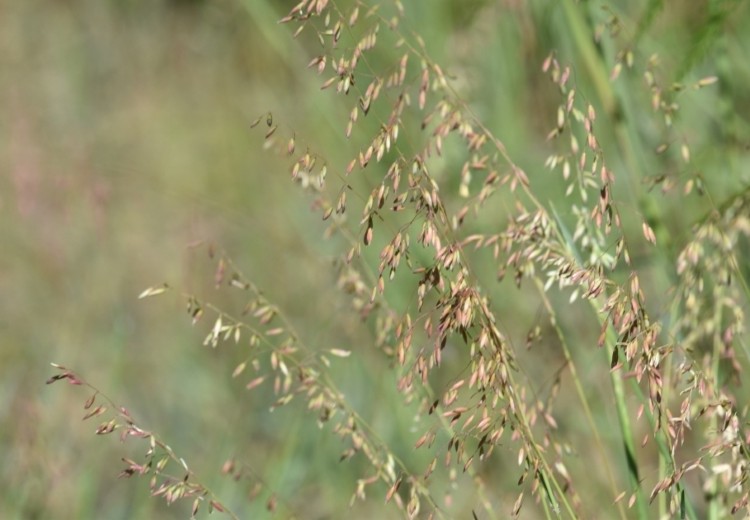
Perennial veldt grass © Barry Lingham

Grasses

The grass weeds as a group, particularly the South African perennial species, are a serious threat to bushland around Perth. In terms of number of individuals, biomass, area covered and diversity of habitat, grasses are one of the most successful plant families in the world. And yes, grasses all hail from the single plant family—Poaceae!

Over 800 species of grass occur within Western Australia, yet more than a quarter of those are alien (not native)! Many of these are considered weeds of bushland. Some of the serious invasive grasses of the Swan Coastal Plain and Jarrah Forest include African Lovegrass (Eragrostis curvula), Perennial Veldt grass (Ehrharta calycina), Tambookie Grass (Hyparrhenia hirta), Kikuyu (Pennisetum clandestinum), Fountain Grass (Pennisetum setaceum).

Introduced grasses are competitive in many native ecosystems; they may displace the native understorey and alter fire regimes. The impact a particular grass species has is partly determined by the characteristics of the invaded site (i.e. how disturbed or degraded the site is, and how susceptible the ecosystem is).

Grasses often colonise disturbed edges or patches within bushland. This edge colonisation allows the grass to take advantage of any disturbance event within the bushland, establishing rapidly after fire, clearing or soil disturbances. Many grasses use the disturbance caused by bushfire to get a foothold within bushland areas. In turn, grass invasions increase fuel loads which indirectly impact on the native ecosystem by changing fire frequency, intensity, patchiness, size and timing.

Biology

Grasses are broadly grouped into two lifeform categories—annuals and perennials:

Annual grasses complete their life-cycle in a single growing season, storing all their excess energy within the seed it develops. Annual grasses all rely entirely on seedling recruitment to establish within an area. Annual grasses are usually tussock forming (caespitose), although occasionally tillers of prostrate grasses may root at the nodes.

Perennial grasses reproduce vegetatively as well as by seed, storing excess energy within rhizomes, stolons, seed and occasionally corms-like structures. Perennials develop winter- or summer-hardy buds capable of resuming growth the following season. They can be sterile and still reproduce vigorously, spreading by stolon, rhizome and dispersal of grass root fragments in water and soil. Perennial grasses generally fall into one of three descriptive growth forms, caespitose (tussock-forming), rhizomatous or stoloniferous.

Grass growth forms

Caespitose grasses or tussock grasses

Stoloniferous grasses are creeping or mat-forming

Rhizomatous grasses form dense mats

<insert Libby's grass illustrations>

References

Brown, K & Brooks, K (2002). Bushland Weeds: A practical guide to their management with case studies from the Swan Coastal Plain and beyond. Environmental Weeds Action Network

Humphries, S.E., Groves, R.H. & Mitchell, D.S. (eds) (1991) Plant invasions of Australian ecosystems. Endangered Species Program, Project No. 56. Australian National Parks and Wildlife Service Publications, Canberra

For a scientific description of Poaceae, see Florabase.