
Image
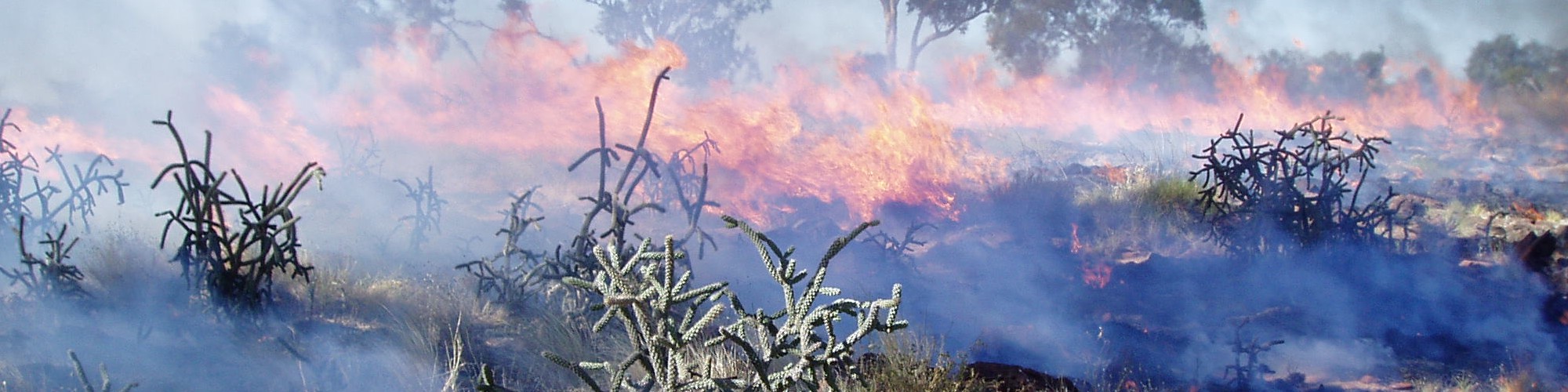
Burning for cactus control - DBCA

Managerial Control

The term managerial control encompasses cultural and managerial practices that directly or indirectly reduce or eliminate weed populations. Managerial control typically involves changing or managing the environment to make it more suitable for native flora and fauna, and less suitable for weeds. It can include the use of methods such as revegetation, fencing, hygiene management, and fire.

Managerial control should always be implemented as part of an integrated weed management (IWM) plan—no control works on its own!

Key points of managerial control:
  • Preventative and strategic
  • Requires planning and site-specific knowledge
  • Enhances overall environmental health
  • May not be sufficient alone for aggressive weeds
  • Reduces reliance on chemical treatment options
  • Results are often gradual
  • Can be affected by unpredictable weather and market demands
  • Supports improved soil fertility and biodiversity.

See below for details about different managerial control methods.
Revegetation & Regeneration

Eliminating—or at least reducing—a weed population is excellent, but what will occupy the space once the weed is gone? Revegetation involves planting native vegetation—including trees, shrubs and grasses—for restoration of degraded or bare areas. It may provide enough competition to limit or eliminate minor weed invasions. However, revegetation alone does not address the seedbank of weed seeds in the soil, meaning that the infestation may continue to persist.

An application example: revegetation of disturbed dunes following weed removal using [non-weedy] fast-growing colonisers to stabilise the dunes and shade-out emerging weeds.

Alternatively, measures can be implemented to foster natural regeneration of native species. One way to achieve this is by fencing sites. This removes the grazing pressure allowing the re-establishment of native (desirable) plants. Another way is by controlling access to areas by constructing designated walkways and roads. This reduces the opportunities for weeds to be spread into native areas and reduces the trampling of regeneration.

Mulching & Solarisation

Involves using organic (mulches) or inorganic (plastic sheeting) substrates to shade-out weeds. Mulches can be used to cover treated/exposed areas and reduce the likelihood of weed seed emergence.

Plastic sheeting is a low-cost option that can be used on a small scale in some situations. It can also be used to kill weeds that have been removed and piled on site. Plastic sheeting will need to be monitored and maintained to ensure it has not become an environmental hazard (i.e. plastic will corrode over time if left unmonitored for long periods and shed microplastics).

Caution—ensure mulch is free from weed seed or weed species that have the ability to reproduce vegetatively. Mulch can introduce weeds and diseases if it is not clean.

Minimise Disturbance & Prevent Spread

Various different management actions may contribute towards minimising disturbance on site and preventing spread of weeds. One way to achieve both is to use fencing (or other ways of closing off access), which prevents disturbance from grazing animals and human activities, and reduces the risk of spread into or out of the fenced areas. 

Keeping disturbance to a minimum when operating in natural environments reduces the risk of degradation—and subsequently reduces the risk of weed invasion. It can be as simple as swapping higher disturbance methods for lower disturbance ones. Choosing low-disturbance methods may take longer than other high-impact control methods, but they offer the benefits of minimal site disturbance.

An application example: using ringbarking on woody weeds in riparian zones, rather than felling, which would increase erosion.

Important Note—implementing minimal disturbance as a control method should always be considered, especially in the dieback vulnerable zone.

Hygiene

Ensuring all operations are conducted with good hygiene eliminates the spread of weeds into and from an area. Weed seeds and specialised vegetative material can be easily transported and dispersed by various vectors—including:

  • Animals (mostly birds) that eat the fruits then spread the seeds in their droppings,
  • Watercourses (streams, rivers, floodplains, rains),
  • Wind (i.e. specialised seeds),
  • Humans and human activities (soil movement, illegally-dumped garden waste, vehicles, etc.)

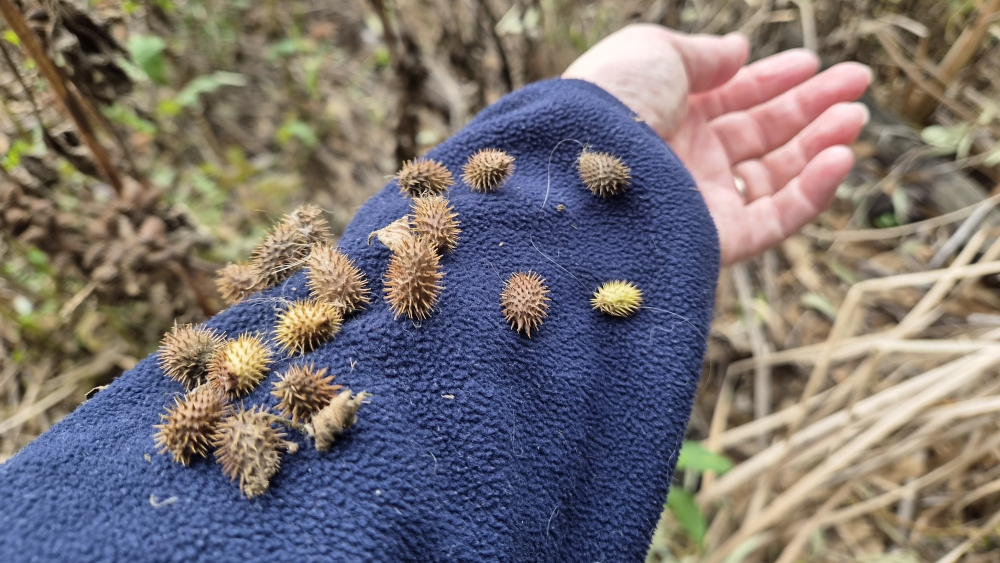
Specialised adaptions that help plants disperse are what make some of our weeds so good at spreading. For example, Xanthium species—Noogoora burr and Bathurst burr—have burrs on the mature fruits (like spikes/hooks) which very easily attach to almost everything—clothing, hair, animal fur, feathers, tyres, you name it! Similarly, many of the Opuntioid cacti have many-spined plantlets that readily fall off and attach to whatever it can—then hitching a ride to a new destination.

Noogoora burr seedpods attached to clothing.
Noogoora Burr seedpods (burrs) attached to clothing. DBCA

Good hygiene practices also prevent the spread of soil-borne diseases—such as Phytophthora Dieback—through weed management activities. Phytophthora Dieback is a serious threatening process and has a huge impact on native vulnerable areas, opening areas up for weed invasion. Read more about dieback, disease hygiene, and more on the department's website.

Hygiene should be a part of all weed control activities!

Burning

Fire can be an effective management tool against weeds when used as part of a strategic IWM plan.

Burning may be used to remove woody weed debris, or kill emerging seedlings and some surface seeds. Determining whether fire is an appropriate tool for your situation depends on many factors. The intensity of a burn will yield different results—weeds may be wiped out from a hot, intense burn, whereas a cooler burn may scarify seeds and induce mass seed germination.

Unmanaged or uncontrolled fires can also exacerbate weed establishment by burning too hot and too fast. These fires cause minimal damage to weed seeds in the soil but can significantly damage native vegetation, creating an ideal environment for post-fire weed regeneration.

Fire is not appropriate for all situations. Consider the surrounding environment and the history of fire for your site.

How fire is used as a tool for weed management

Fire may be used for weed control in the form of a controlled burn, or individual plants may be burnt using a flame wand (flame weeding). Flame weeding with a handheld wand may either burn and kill the target weeds, or cause them to wilt and die due to being subject to prolonged intense heat. Fire is best used in combination with other methods of control.

Consider the target weed's response to fire to help determine whether fire is a suitable tool for management. Some weeds are tolerant and generally survive fire, many are known to resprout after being burnt. Fire can break seed dormancy and trigger germination, or can break geophyte dormancy (corms, bulbs, tubers, etc.), stimulating mass regrowth. Check our weed profiles to see if the response to fire is known for your target weed 

Burning must only be undertaken under suitable conditions by trained personnel using safe and appropriate equipment.