
Image
Typha orientalis

Typha

Typha orientalis

Quick facts

Life cycle
Perennial
Growth form
Sedge
Origin
Native to Australia including WA
Reproduction
Seed and vegetative
Dispersal
Wind, animals

Form and Function

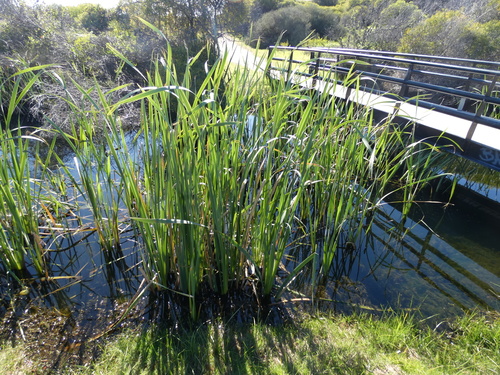
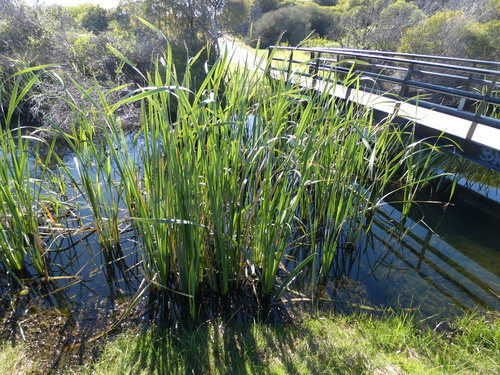
Typha is a native Australian species that behaves like a weed in certain situations. It can be found in irrigation channels and drains, artificial and altered wetlands, lakes, swamps and lagoons. It produces prolific amounts of seed—more than 300,000 seeds per inflorescence. 

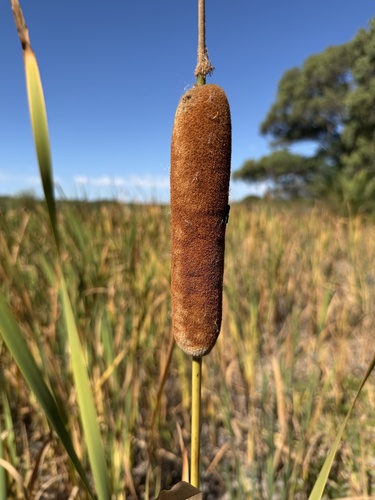
Also known as Bullrush, Cumbungi and Cattail. Also native to temperate and tropical Asia and New Zealand. Can be confused with another native Typha species—Typha domingensis—however can be distinguished by its numerous, broadly shaped floral bracts and cinnamon-brown mature spike.  
 

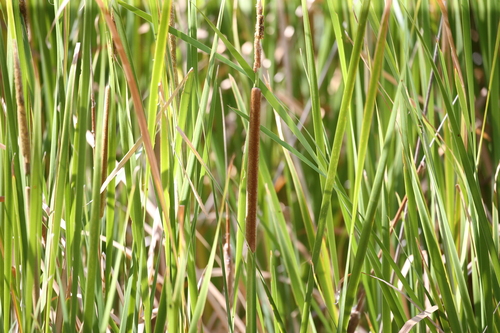
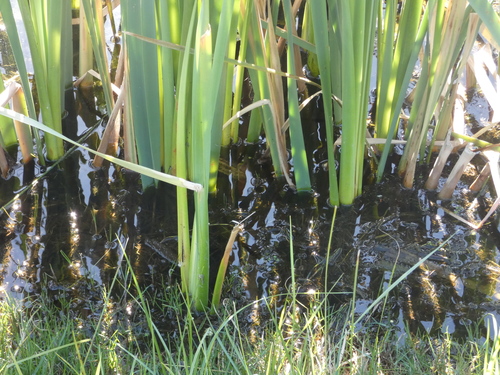
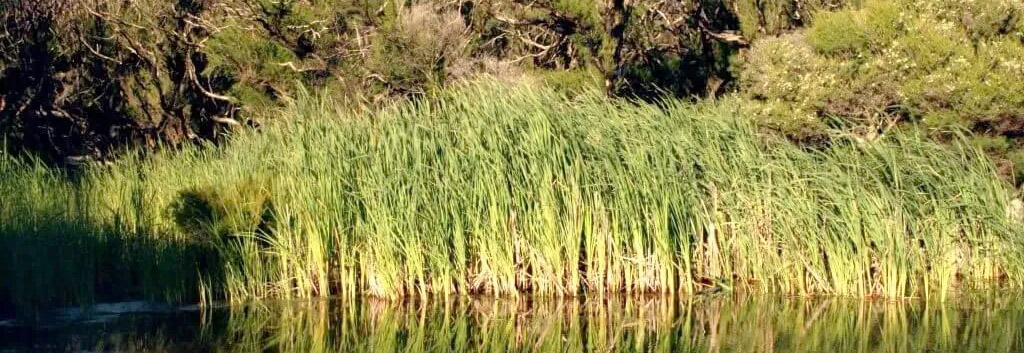
Typha in waterways

Flowers

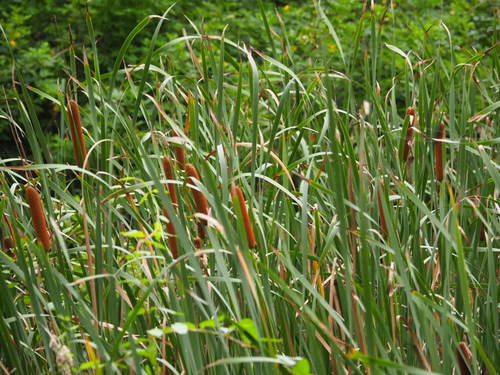
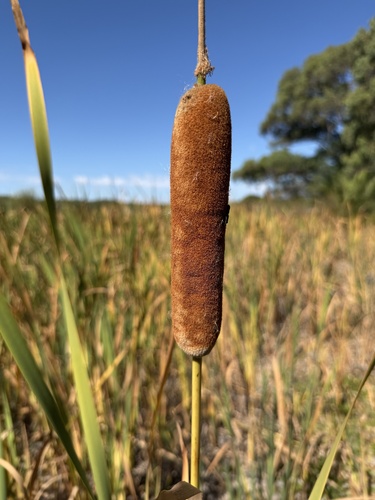
Mature inflorescence is brown and arranged in dense, cylindrical spikes at the top of the stem, consisting of two adjoining or slightly separated spikes. A small gap may be present between the male and female sections. The male flowers are very small and occur in the upper part of the inflorescence, forming a spike that is 10–30 cm long and 5–15 mm in diameter. The female flowers are equally small and form a dense, velvety cylindrical spike in the lower part of the inflorescence. Female spikes are 8–30 cm long and 10–40 mm in diameter.
 

Typha flower spike

Seed Dispersal

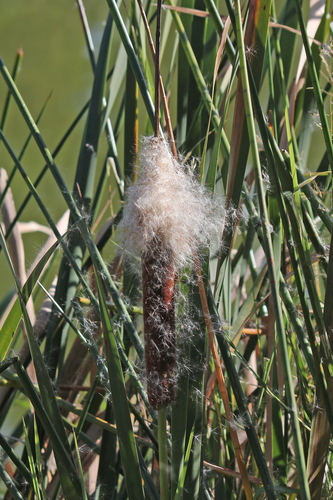
Typha seed develop within the dense female spike, with each fruit containing a single seed. The seeds are spindle-shaped, having one flat end and one pointed end, which gives them a distinctly tapered appearance.

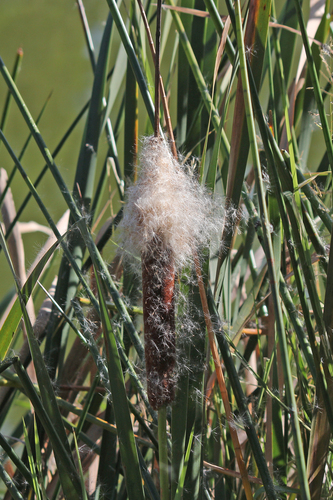
Typha is wind dispersed, aided by the feathery attachment on the follicle that the seed lies in and as a result can be transported many kilometres. Also dispersed by attaching to the feet of animals, birds and humans and on earth moving or agricultural equipment

Seed

Root system

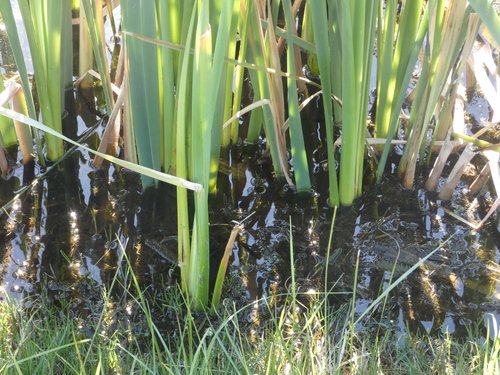
The root system consists of thick, creeping, and branched rhizomes that grow underground and produce upright shoots. These rhizomes are approximately 20 mm in diameter and enable the plant to spread vegetatively while supporting the growth of new stems.  Root and rhizome activity is highest during low temperatures and short photoperiods.

Typha

Habitat and Impact

Prefers high temperatures (above 20°C) and long photoperiods. Found in irrigation channels and drains, artificial and altered wetlands, lakes, swamps and lagoons. This species is a strong competitor in aquatic and riparian environments. Dense stands grow rapidly and can dominate the canopy during summer and early autumn, reducing the availability of light and space for other vegetation. Its large rhizomes occupy much of the available space within the substrate, allowing it to spread extensively and outcompete neighbouring plants. 

As infestations become denser, they can displace native sedges and rushes, resulting in reduced plant diversity and altered habitat structure.

How to control

Physical controls

For individual plants or small infestations, hand removal can be done at any stage ensuring that all the rhizomatous root is removed and the plant material is bagged and removed off site.   For individual plants or infestations, while the seed head is still green, repeated slashing may provide some control, however slashing alone will not kill the plant.                                                           

For individual plants or infestations, cut shoots 15 cm below the water surface two to three times in a season when actively growing but before seeds are formed (Moore & Wheeler 2020). Repeat treatment annually to ensure against reinfestation. To avoid loss of water quality by anaerobic decomposition of dead plant material in water, consider physical removal of dead biomass or burning 6 weeks after spraying.

Chemical controls

For actively growing individual plants or infestations, in or near waterways used for household or recreational purposes, apply 13mL glyphosate bioactive (360g/L) with 1L of water, using a wick application or foliar application method., ensuring complete coverage of foliage. Avoid producing run-off or spray drift. Using a wiper minimises the risk of run-off and spray drift and applies an even amount of chemical on the target plant.

Plants with one third of the stem below water may not absorb enough herbicide to be killed by spraying, either wait till water levels are lower or plants have matured.

Managerial controls

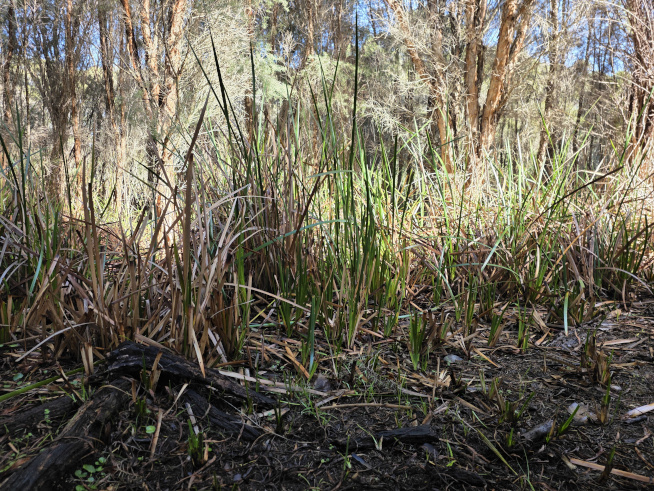
For large infestations, burn the beds of the plant and cut the new regrowth at the time of flooding. Maintaining a cover of native species in fringing vegetation will keep light levels down and prevent germination of seeds. 

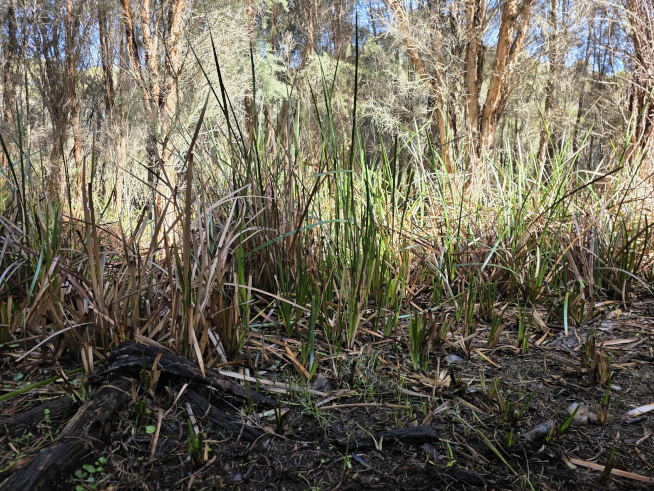
Typha regrowth after burn (DBCA)

Weed Distribution Map

LSID number: [2894677] | full LSID: [https://id.biodiversity.org.au/node/apni/2894677] | field_lsid: [] | taxon: ["Typha orientalis"]

ALA Reference

References

  • Brown, K. & Brooks, K. J. (2003). Bushland weeds: a practical guide to their management with case studies from the Swan Coastal Plain and beyond. Environmental Weeds Action Network
  • City of Canning. (n.d.). Typha orientalis Management Plan Yagan Wetland Reserve. City of Canning
  • Graham, G. (1991, February) Typha (Bullrush) Management.
  • Moore, J., & Wheeler, J. (2020) Southern weeds and their control. Department of Agriculture and Food, Western Australia.
  • Weeds Australia. (2019). Cumbungis, Cumbungi, Bulrush, Cattail, Common Cat’s Tail, Miranda, Maranda, Reedmace, Giant Reedmace, Wonga, Yanget. Weeds Australia.
  • Western Australian Herbarium (1998–). Florabase—the Western Australian flora. Department of Biodiversity, Conservation and Attractions.

Introductory text

Weed lifecycle calendar

JAN FEB MAR APR MAY JUN JUL AUG SEP OCT NOV DEC Notes
Active Growth
Germination
Flowering
Fruiting
Regularly or most commonly
Occasionally, given suitable conditions

Management

JAN FEB MAR APR MAY JUN JUL AUG SEP OCT NOV DEC Notes
Chemical use
Physical control
Managerial
Burning near beds of plants.
Optimal
Potentially, but conditionally dependent
Last updated: October 2026