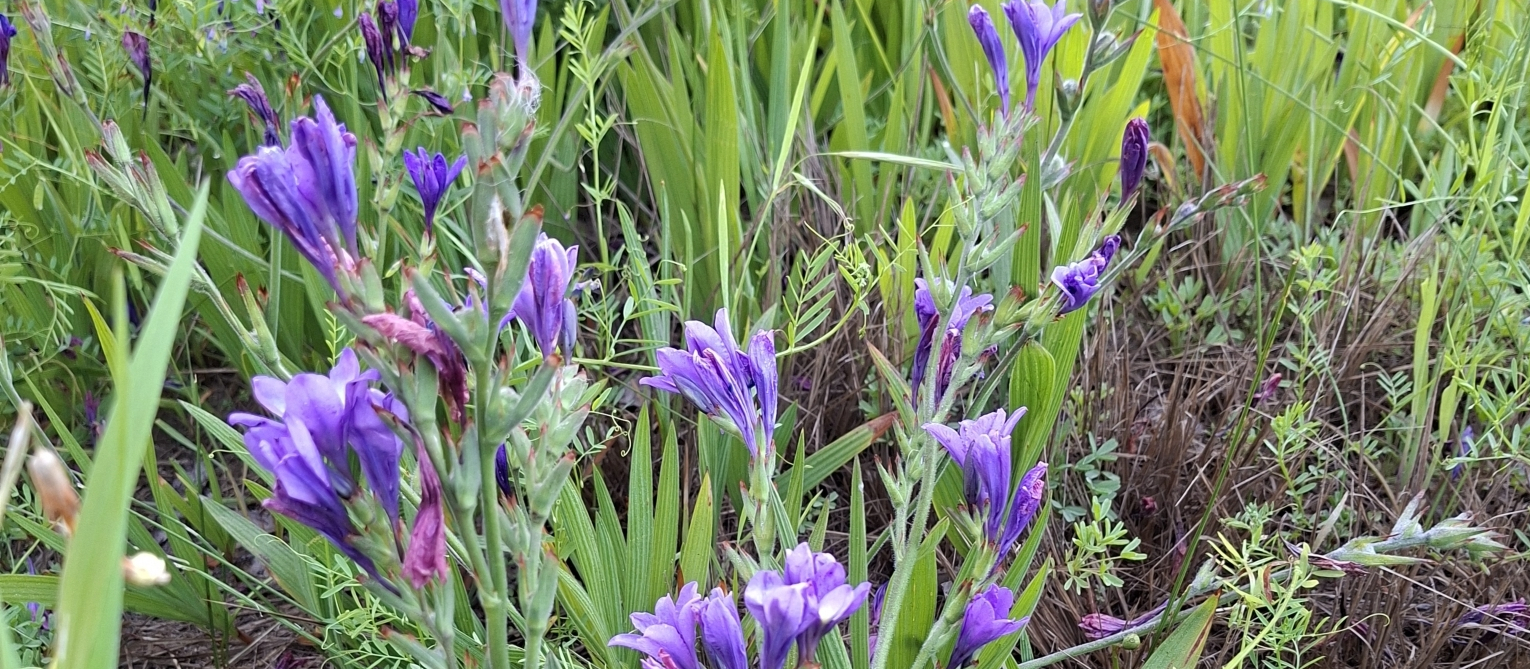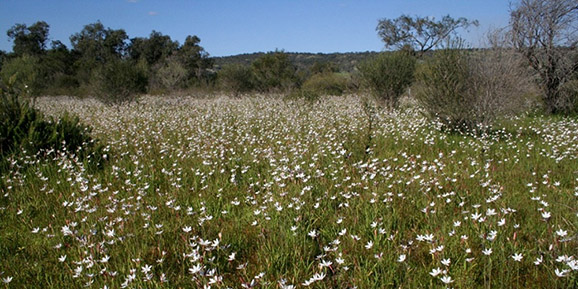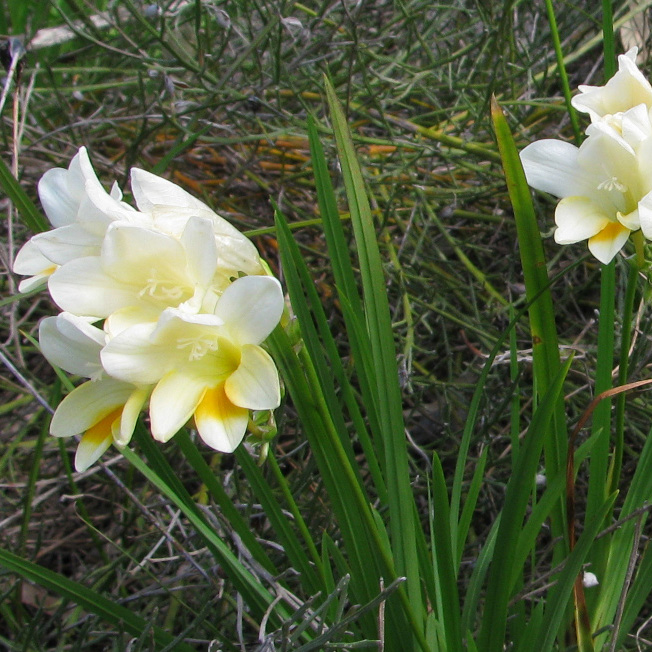



Sparaxis and Freesia species are major geophyte weeds in southern Australia. Although these species are commonly referred to as bulbs, their underground storage organs are actually corms. They can be difficult to control because effective herbicides, such as glyphosate, also damage or kill surrounding desirable vegetation.
The Problem
2,2-DPA (Dalapon) is a selective, systemic herbicide used primarily to control grasses and monocot weeds. It is absorbed through both the roots and foliage and acts by disrupting lipid and fatty acid synthesis, which interferes with cell division and growth in root and shoot meristems. As a result, symptoms develop slowly, with visible effects often taking 6–8 weeks to appear.
The active ingredient 2,2-DPA has been successfully trialled on Watsonia, another invasive bulbous weed species. Given that Watsonia has a larger bulb and greater underground storage reserves than Freesia or Sparaxis, it is possible that effective control of these species could be achieved at lower application rates. Watsonia is a monocot, as are Freesia and Sparaxis.
What was tried
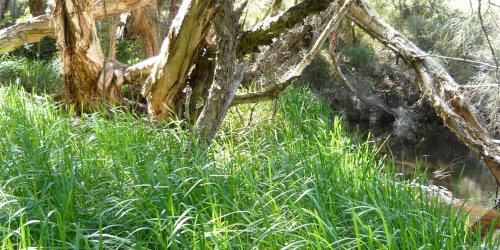
This trial was conducted in 2015 at Minkarra Park (35.06° S, 138.58° E), part of Aberfoyle Park in the Onkaparinga Ranges, South Australia using Dalapon (740 g/kg 2,2-DPA, APVMA registration 95207) which is registered on the manufacturers label to be used against Watsonia. We tested application rates of 25g/10L 30g/10L and 35g/10 L. The optimal application period was identified as June to July, with a single annual treatment proving effective.
What was the outcome
South Australian Indigenous Flora (SAIF) found these species to be susceptible to the herbicide 2,2 DPA (trade name Dalapon) at a concentration of 35g/10 L of water, combined with a wetting agent. This rate is significantly lower than the 100g/10 L (applied over 100m2) recommended on the manufacturers label for Watsonia control, yet it achieves effective suppression of Sparaxis and Freesia, likely due to their comparatively smaller bulb size with no visible off target damage. The lower rates of 25g/10L 30g/10L showed some herbicidal activity, they were insufficient for reliable control.
These findings suggest that Dalapon, at reduced rates, may offer a targeted and efficient approach for managing these species with minimal off-target impact.
Research permit for 2,2 DPA
DBCA has a research permit to fine tune the application of 2,2 DPA on other bulbous weeds and monocots. Contact the DBCA weeds program to discuss.