Other Common Names: Mexican prickle poppy, Mexican thistle, devil's fig, golden thistle of Peru, prickly poppy, white thistle, yellow poppy
Synonyms: Argemone mexicana.
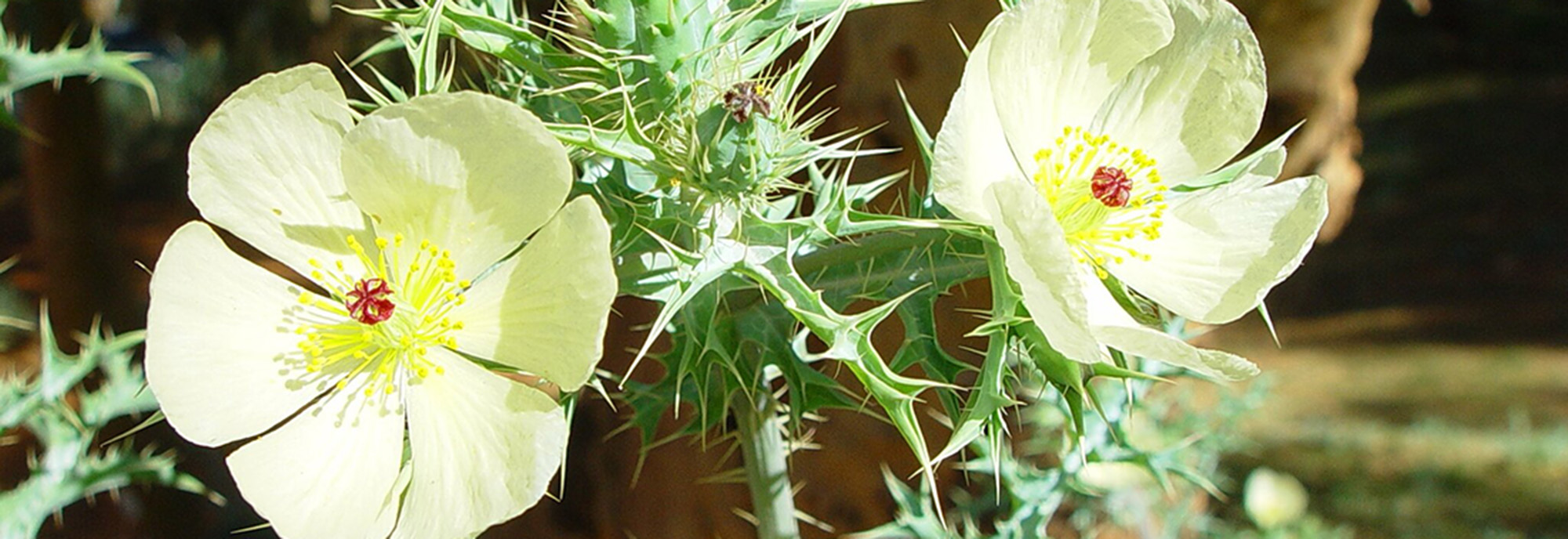

Argemone ochroleuca


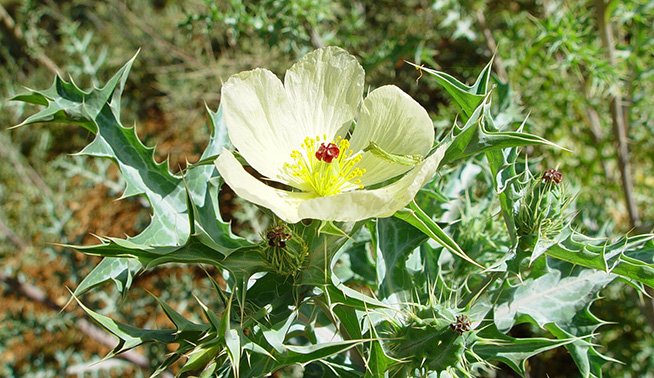
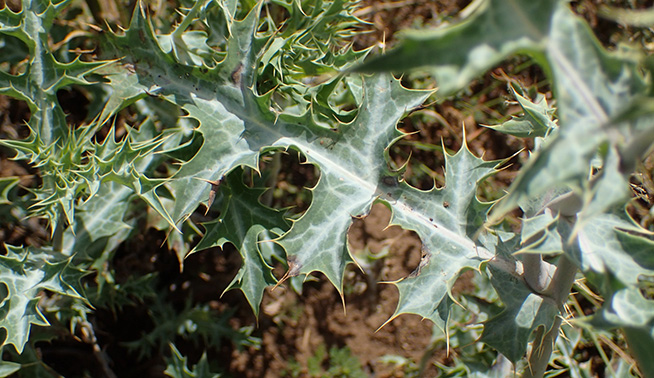
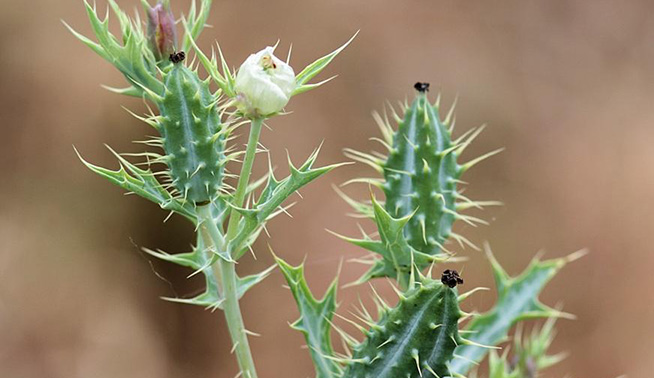
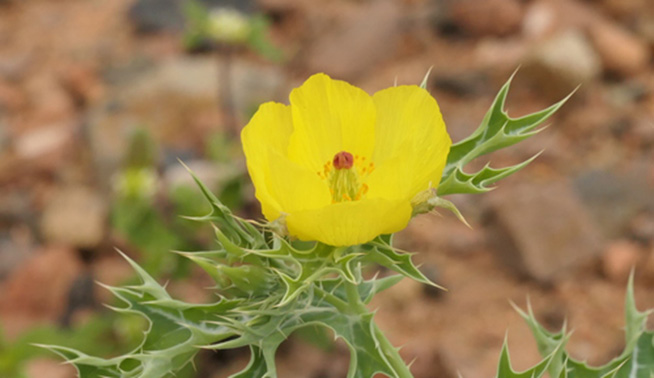
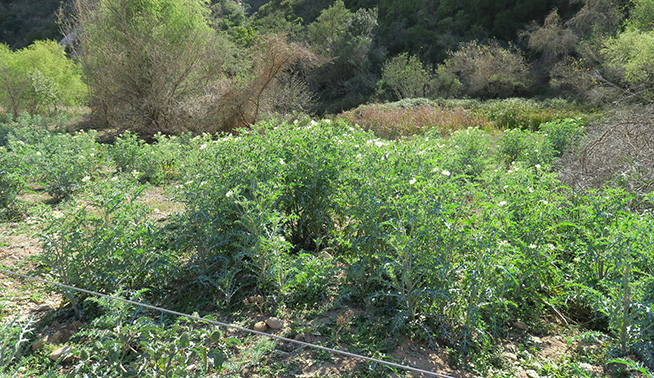
Preventing seed production is critical for effective Mexican poppy control due to its prolific seed production. Hand-pulling is suitable for isolated plants and small infestations but is generally impractical for larger infestations because of the labour required. Care should be taken to prevent seed spread when removing mature plants. As seeds can remain viable in the soil for up to seven years, follow-up monitoring and control are essential.
For small infestations, removing flowers before they set seed can help reduce future infestations and gradually deplete the seedbank.
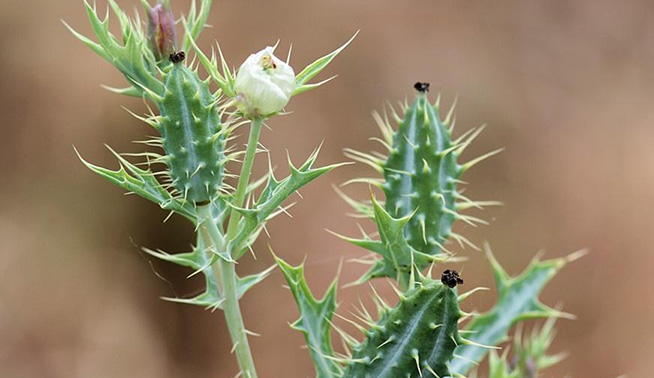
PPE: Wear gloves when handling plants, as the spines are sharp and the sap is poisonous.
For small infestations, spot spray with glyphosate (360g/L) at 1-2% w/v or use the following broadleaf selective herbicides
Spray evenly across the foliage until leaves are thoroughly wet. Seedlings are generally easier to control than mature plants.
For large infestations, apply a foliar spray with glyphosate (360g/L) at 1-2% w/v before flowering or use the following broad leaf selective herbicides:
Spray evenly across the foliage until leaves are thoroughly wet. Seedlings are generally easier to control than mature plants.
LSID number: [2905482] | full LSID: [https://id.biodiversity.org.au/node/apni/2905482] | field_lsid: [] | taxon: ["Argemone ochroleuca"]
ALA Reference
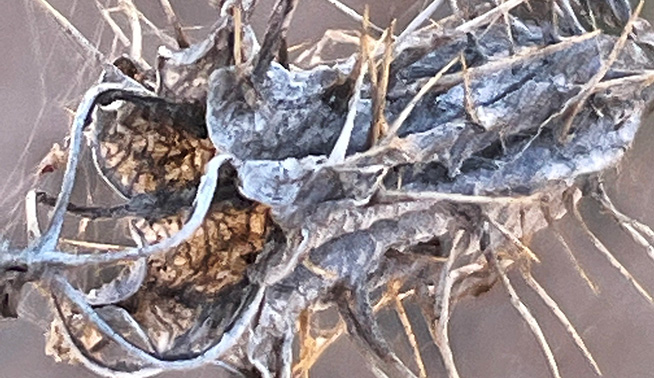
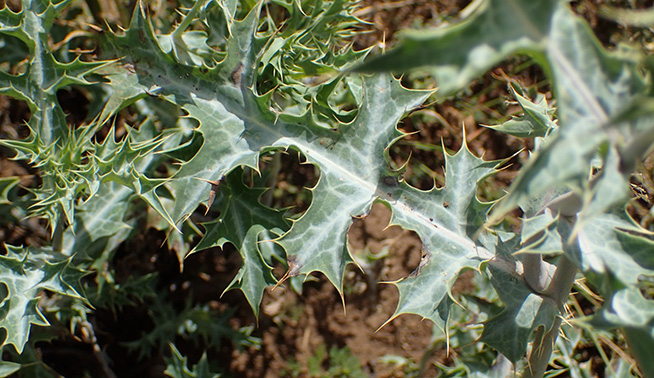
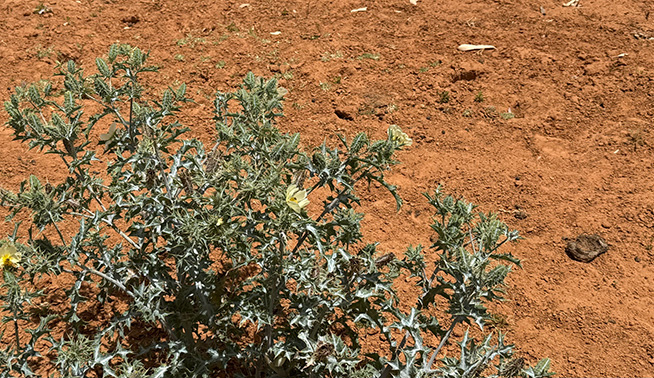
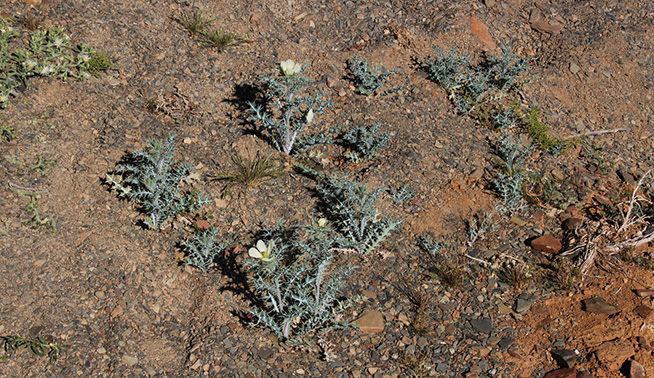
 Northern Territory Government of Australia (n.d.)
Mexican poppy - Control Methods
Department of Environment and Natural Resources (n.d.)
Mexican poppy (Argemone ochroleuca)
The Weeds Society of Western Australia. (2022)
Mexican poppy.
Weed Australia. (2024)
Mexican Poppy, Prickly Poppy, Mexican Thistle, Mexican Pricklepoppy, White Thistle, Yellow Poppy, Devil’s Fig.
Weed Australia. (2024)
Mexican Poppy
Northern Territory Government of Australia (n.d.)
Mexican poppy - Control Methods
Department of Environment and Natural Resources (n.d.)
Mexican poppy (Argemone ochroleuca)
The Weeds Society of Western Australia. (2022)
Mexican poppy.
Weed Australia. (2024)
Mexican Poppy, Prickly Poppy, Mexican Thistle, Mexican Pricklepoppy, White Thistle, Yellow Poppy, Devil’s Fig.
Weed Australia. (2024)
Mexican Poppy
| JAN | FEB | MAR | APR | MAY | JUN | JUL | AUG | SEP | OCT | NOV | DEC | Notes | |
|---|---|---|---|---|---|---|---|---|---|---|---|---|---|
| Germination | |||||||||||||
| Flowering |
| JAN | FEB | MAR | APR | MAY | JUN | JUL | AUG | SEP | OCT | NOV | DEC | Notes | |
|---|---|---|---|---|---|---|---|---|---|---|---|---|---|
| Physical | |||||||||||||
| Chemical |


 Permit PER96645 for 2,4-D