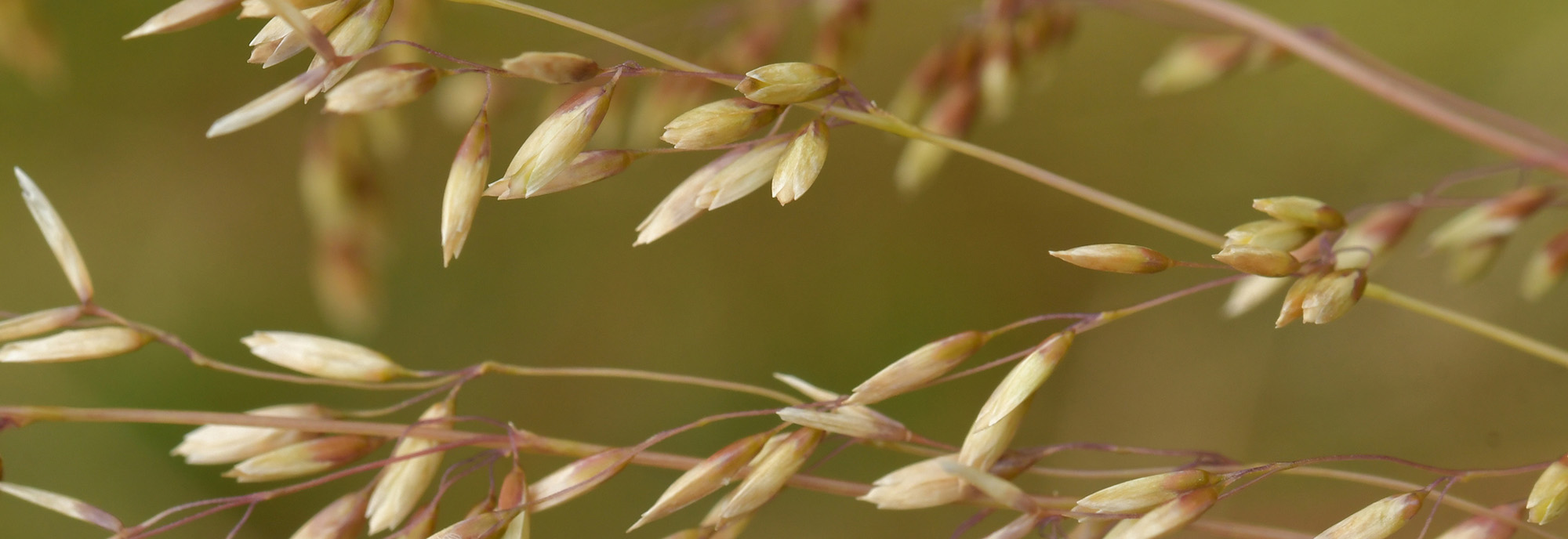

Other Common Names: Ehrharta, Perennial Veld Grass, Veldt Grass and Purple veldtgrass
Perennial Veldt grass
Ehrharta calycina
Quick facts

Status
Permitted s11

Life Cycle
Perennial

Growth Form
Grass

Origin
Southern Africa

Flowers
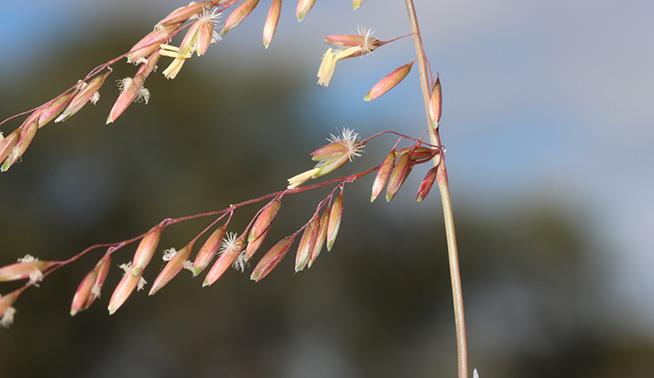
Reddish/Purple

Dispersal
Birds, other animals, wind
Names

Form and function
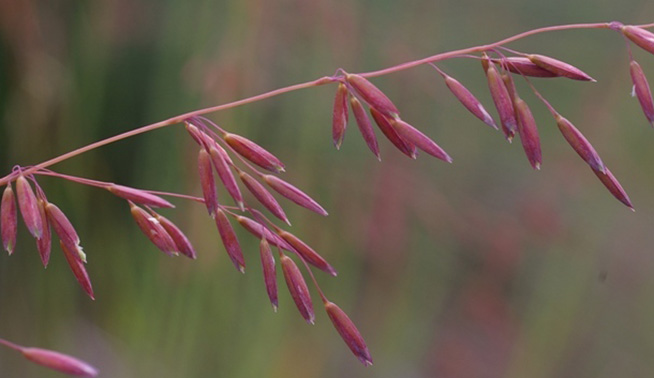
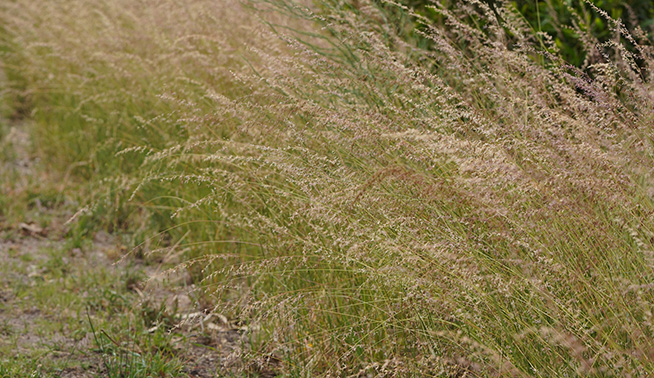
Flowers
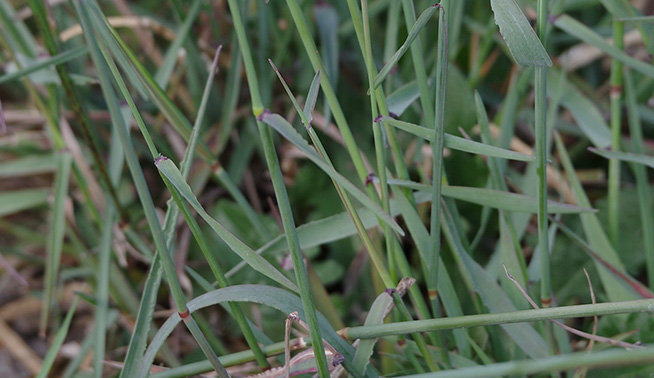
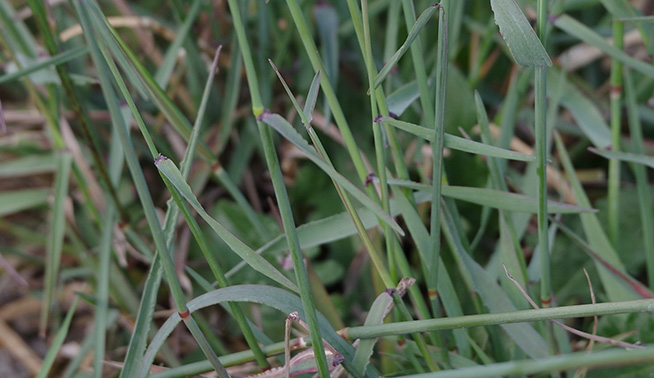
Leaves
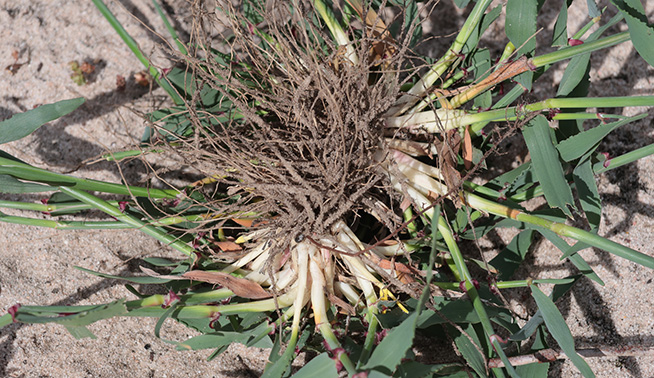
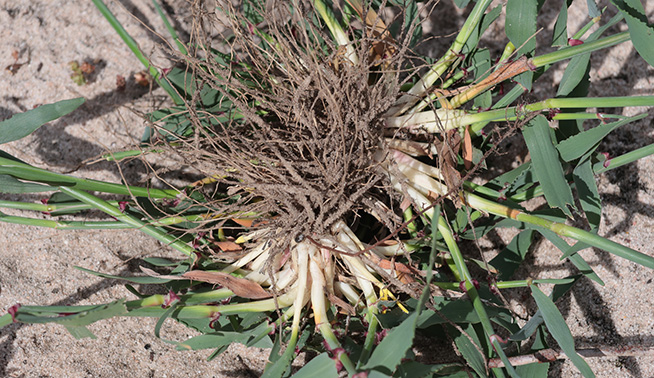
Roots
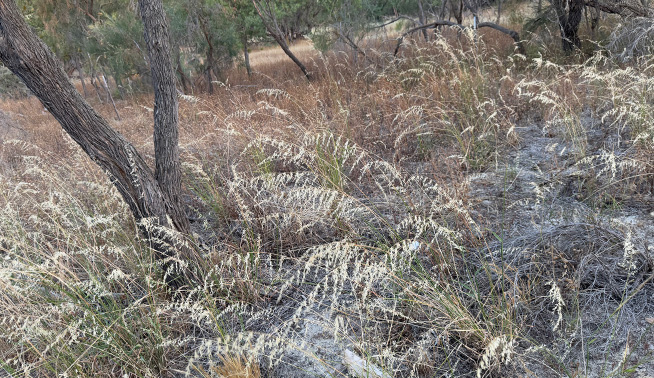
Habitat
May be confused with...
How does it spread?
Why is it a weed?
History
How to control


Physical
For small infestations, hand pull or using 'grubbing removal methods', remove plants ensuring full crown removal.
Do not slash any infestations as the plants will resprout vigorously from the base after being cut and will help promote further regrowth and spread.
Chemical
For small infestations, spot spray using either 160 mL Fluazifop (128 g/L), 100 mL Fluazifop (212 g/L), or 60 mL Haloxyfop (520 g/L) in 10 L of water. For large infestations with actively growing plants, apply 3.3 L Fluazifop (212 g/L) in 100 L of water per hectare. Where infestations are dense, increase the spray volume to 250 L/ha to ensure good coverage. A wetting agent is recommended for all applications.
Follow up treatments may be required in subsequent years. Fluazifop is a selective grass herbicide; however, tolerance to this herbicide has been observed in some urban bushland populations. The non-selective herbicide glyphosate at 1% w/v is also effective for controlling veldt grass.
 Permit PER96570 for glyphosate
Weed Distribution Map
LSID number: [2921246] | full LSID: [https:/id.biodiversity.org.au/node/apni/2921246] | field_lsid: [] | taxon: [Ehrharta calycina]
ALA Reference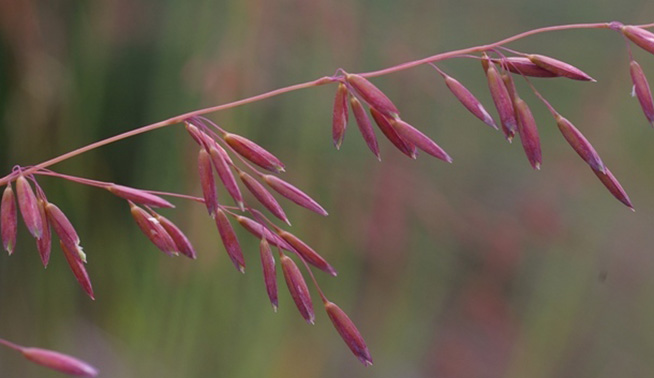
References
-
 Atlas of Living Australia. (n.d.)
Ehrharta calycina Sm. Atlas of Living Australia.
Atlas of Living Australia. (n.d.)
Ehrharta calycina Sm. Atlas of Living Australia.
-
Bell, U. (2008)
Common Native Grasses of South-West WA. Department of Environment and Conservation.
- Brown, K., & Paczkowska, G. (2005). Managing weeds in bushland - The perennial tussock forming grass weeds. Environmental Weeds Action Network.
-
Department of Biodiversity, Conservation and Attractions. (1989)
Veld Grass Control in Kings Park - An Outline of Measures to Eradicate and Control Veld Grass.
-
Stephen. (2016, October 5)
Trouble from the Veldt. Recreating the Country Blog.
-
Urban Bushland Council WA. (n.d.).
Perennial Veldt Grass. Urban Bushland Council WA.
-
Weeds of Australia. (n.d.).
Ehrharta calycina Sm. Weeds of Australia; Lucidcentral.
-
Western Australian Herbarium (1998–)
Florabase—the Western Australian flora. Department of Biodiversity, Conservation and Attractions.
Life Cycle
| JAN | FEB | MAR | APR | MAY | JUN | JUL | AUG | SEP | OCT | NOV | DEC | Notes | |
|---|---|---|---|---|---|---|---|---|---|---|---|---|---|
| Germination | |||||||||||||
| Active growth | |||||||||||||
| Flowering | |||||||||||||
| Fruiting |
Regularly or most commonly
Occasionally, given suitable conditions
Management
| JAN | FEB | MAR | APR | MAY | JUN | JUL | AUG | SEP | OCT | NOV | DEC | Notes | |
|---|---|---|---|---|---|---|---|---|---|---|---|---|---|
| Physical | |||||||||||||
| Foliar spray |
Optimal
Potentially, but conditionally dependent