Other Common Names: Tree Leucaena.
Synonyms: Leucaena glauca, Acacia leucocephala, Acacia glauca, Mimosa leucocephala, Mimosa glauca.
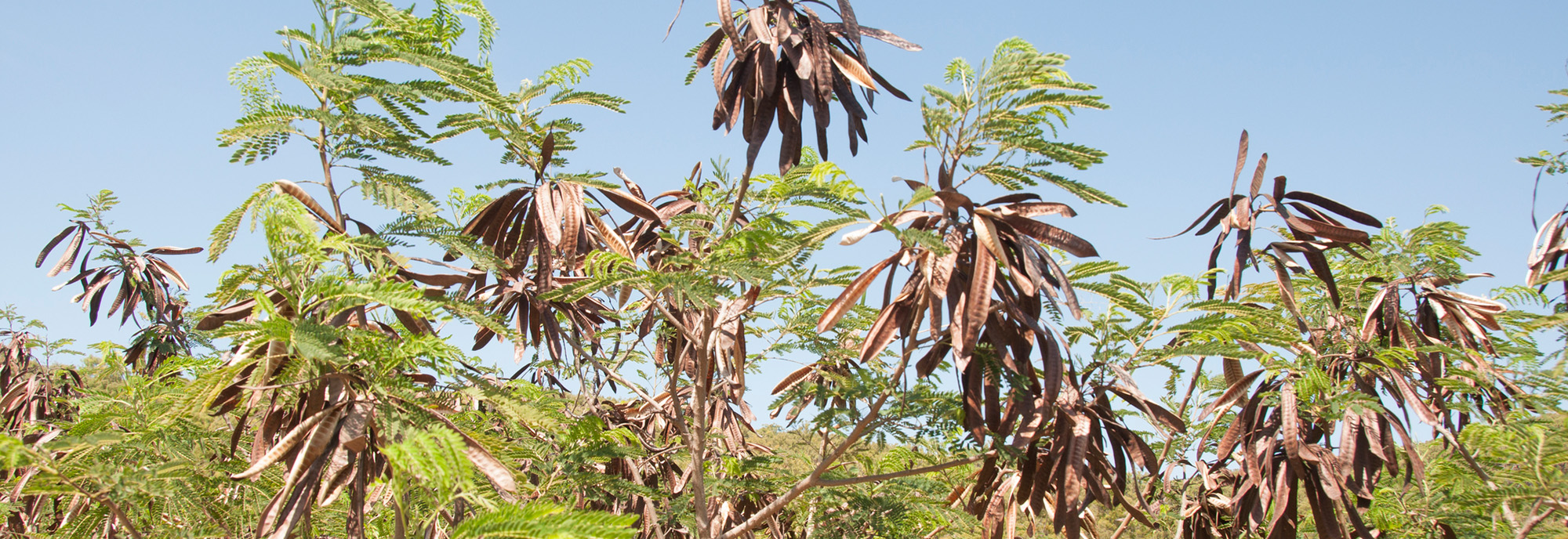

Leucaena leucocephela


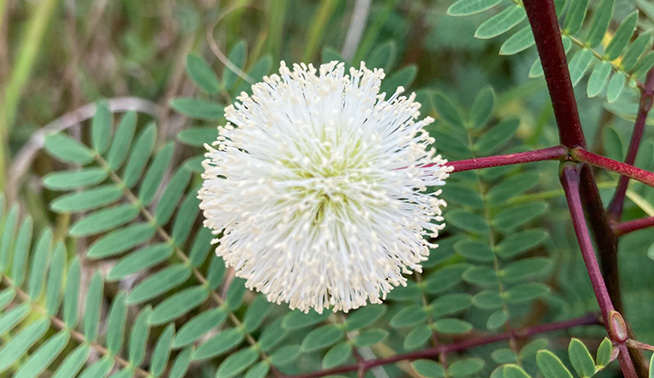
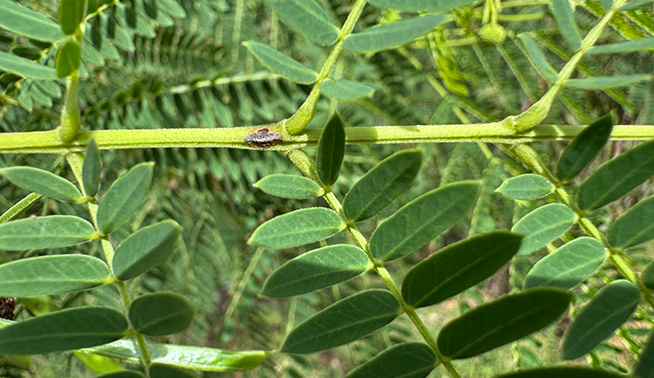
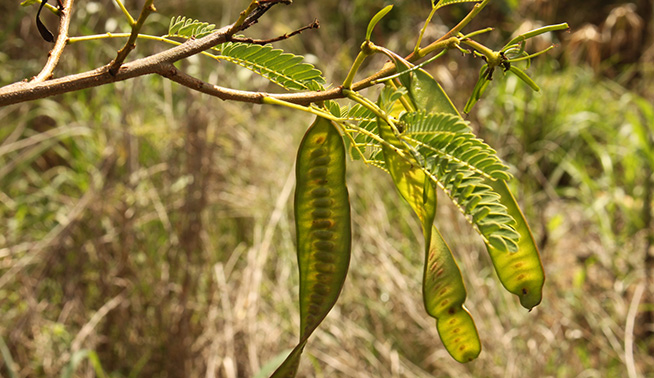
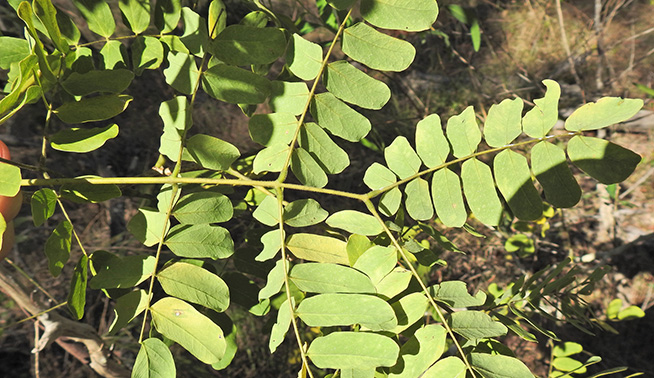
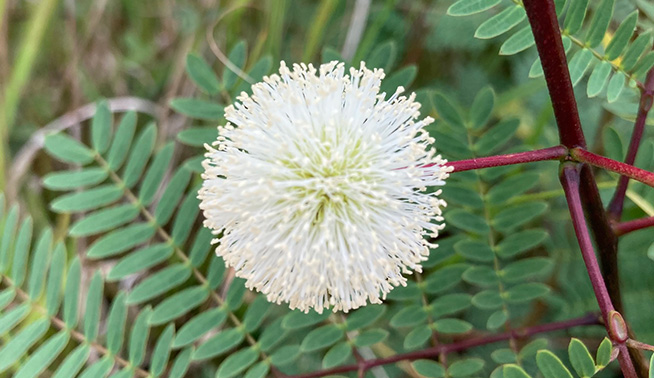
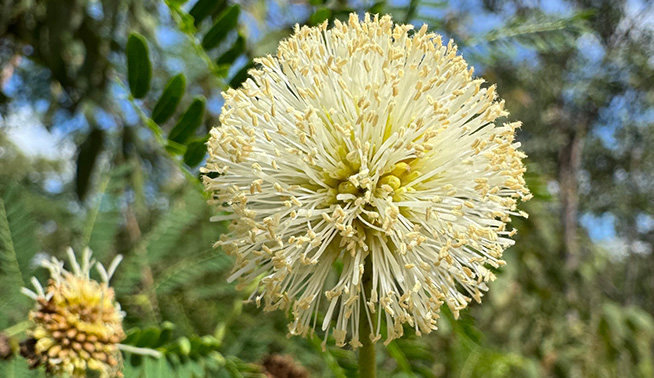
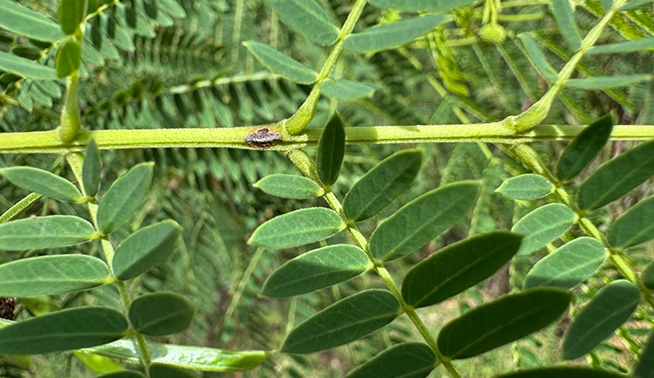
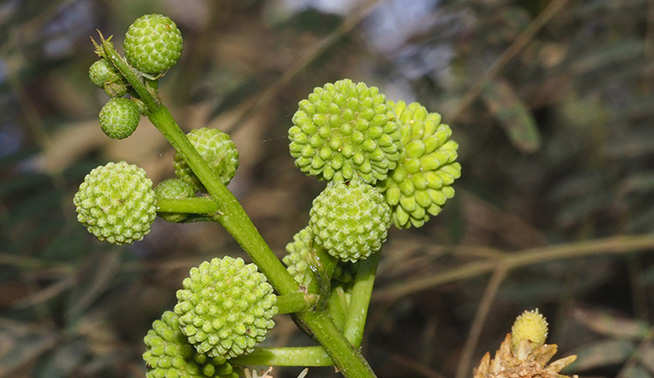
Similar native species: Similar to Indian siris (Albizia lebbeck) but can be distinguished by the Indian siris's much larger leaflets (25 to 40mm long and 10 to 20 mm wide) and powder puff like clusters of pale yellow, cream and greenish white flowers.
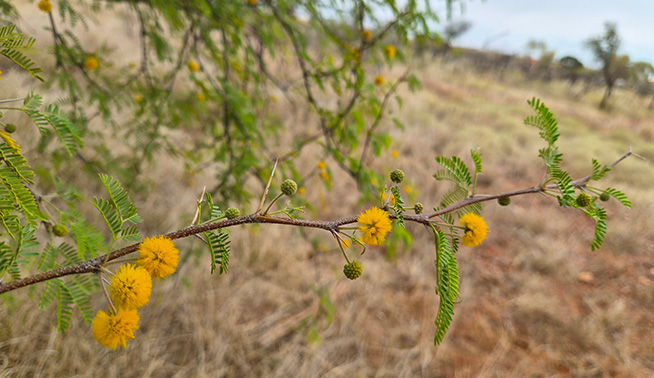
Similar non-native species: Similar to Mimosa bush (Vachellia farnesiana) which has yellow pom-pom like flowers and the foliage is not as dense.
Repeated control will be required over several years to deplete the seedbank once initial control has reduced weed density. Grub young plants, removing as much of the root as possible. For dense infestations, mechanical control that severs the root below ground should result in high mortality (30 cm below ground for best results). Consider whether this option is appropriate for the site conditions as it requires highly destructive equipment (machinery with blade attachments). Reshooting is highly likely if plants are cut off at ground level. Follow up reshooting activity with foliar herbicide application.
Leucaena is difficult to control with herbicide when compared with other reshooting woody weeds but can be managed by applying a combination of different treatment types (i.e. develop an integrated weed management plan that incorporates physical and chemical control).
For large plants/trees:
For the best and most consistent results, basal bark plants with stem diameter over 5 cm with triclopyr 240 g/L + picloram 120 g/L at a rate of 1 L per 60 L diesel or biodegradable spray oil. Alternatively, use the cut stump method.
For trees with a stem diameter less than 5 cm, treat with triclopyr 240 g/L + picloram 120 g/L using the “Thinline” application technique. This involves applying 1L of triclopyr and picloram mix per 10L of diesel to the bottom 5cm of the tree, spraying the bark around the stem from the ground level up to 5cm high. Apply treatment while plants are actively growing.
For small plants/seedlings:
For foliar chemical treatment, it is recommended to spray seedlings with triclopyr 300 g/L + picloram 100 g/L or triclopyr 300 g/L + picloram 100 g/L + aminopyralid 8 g/L at a rate of 350 mL per 100 L water. Highest mortality is usually achieved by controlling younger plants, as mortality success rates tend to decrease with increasing plant size.
High-intensity fire (early summer hot fires) can reduce Leucaena infestations, particularly among smaller plants.
LSID number: [2909789] | full LSID: [https:/id.biodiversity.org.au/node/apni/2909789] | field_lsid: [] | taxon: [Leucaena leucocephela]
ALA Reference
 Western Australian Herbarium (1998–)
Florabase—the Western Australian flora. Department of Biodiversity, Conservation and Attractions
PlantNet (n.d.)
Leucaena leucocephala (Lam.) de Wit. PlantNet - FloraOnline
Bakewell-Stone, P. (2023).
Leucaena leucocephala (leucaena). CABI Compendium. CAB International
NSW WeedWise (2026)
Leucaena (Leucaena leucocephala). NSW WeedWise
Brisbane City Council (n.d)
Leucaena Leucaena leucocephala. Brisbane City Council Weed Identification Tool
Department of Primary Industries and Regional Development (2022)
Leucaena leucocephala - environmental weed risk assessment 2022. Department of Primary Industries and Regional Development.
Weeds of Australia (2016)
Leucaena leucocephala (Lam.) de Wit. Weeds of Australia.
Western Australian Herbarium (1998–)
Florabase—the Western Australian flora. Department of Biodiversity, Conservation and Attractions
PlantNet (n.d.)
Leucaena leucocephala (Lam.) de Wit. PlantNet - FloraOnline
Bakewell-Stone, P. (2023).
Leucaena leucocephala (leucaena). CABI Compendium. CAB International
NSW WeedWise (2026)
Leucaena (Leucaena leucocephala). NSW WeedWise
Brisbane City Council (n.d)
Leucaena Leucaena leucocephala. Brisbane City Council Weed Identification Tool
Department of Primary Industries and Regional Development (2022)
Leucaena leucocephala - environmental weed risk assessment 2022. Department of Primary Industries and Regional Development.
Weeds of Australia (2016)
Leucaena leucocephala (Lam.) de Wit. Weeds of Australia.
| JAN | FEB | MAR | APR | MAY | JUN | JUL | AUG | SEP | OCT | NOV | DEC | Notes | |
|---|---|---|---|---|---|---|---|---|---|---|---|---|---|
| Germination | |||||||||||||
| Active growth | |||||||||||||
| Flowering | |||||||||||||
| Fruiting |
| JAN | FEB | MAR | APR | MAY | JUN | JUL | AUG | SEP | OCT | NOV | DEC | Notes | |
|---|---|---|---|---|---|---|---|---|---|---|---|---|---|
| Physical | |||||||||||||
| Chemical |


 PER96642 for triclopyr and picloram