Other Common Names: Cockleburr, Clotbur, Large Cockleburr, Rough Cockleburr, Californian Burr, European Cocklebur
Synonyms: Xanthium chinense, Xanthium strumarium, Xanthium pungens.
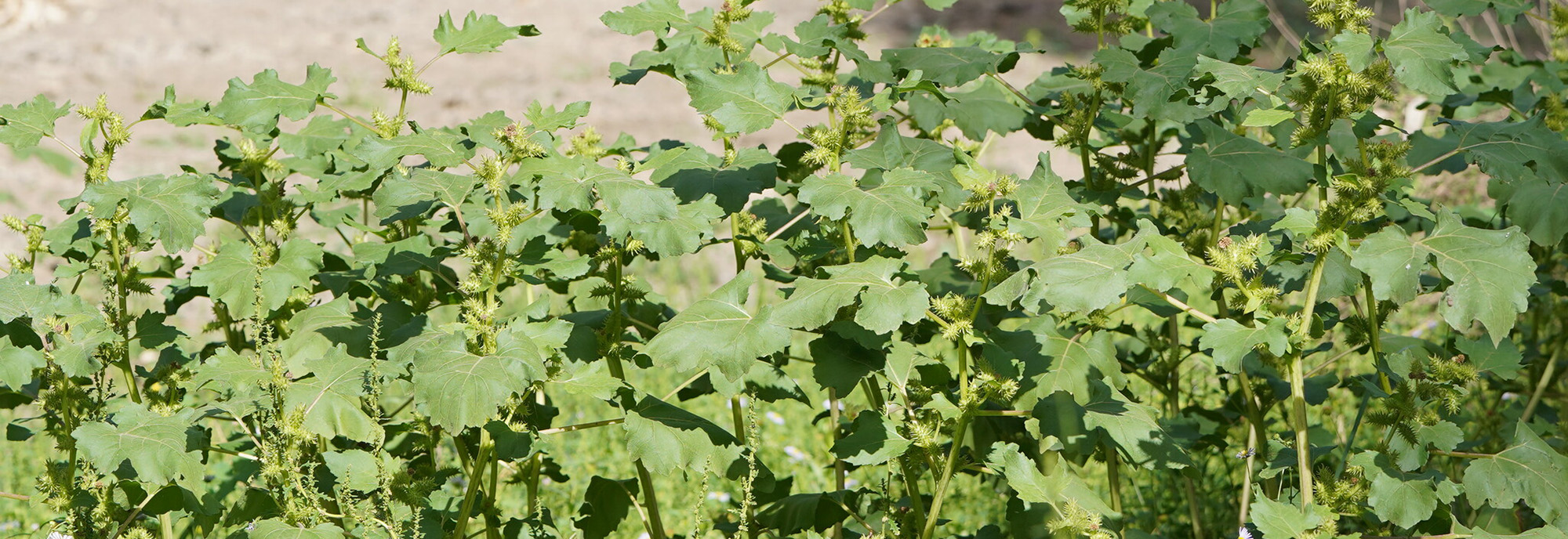

Xanthium occidentale


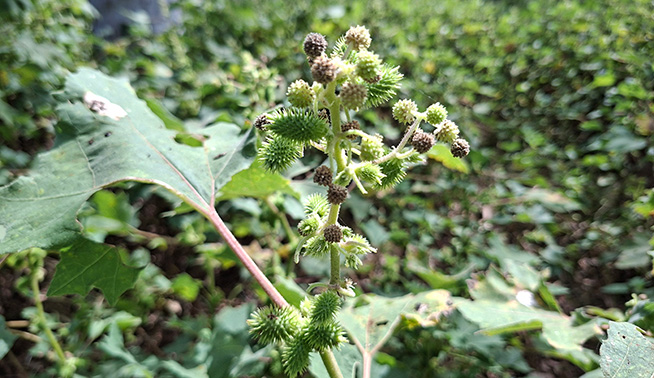
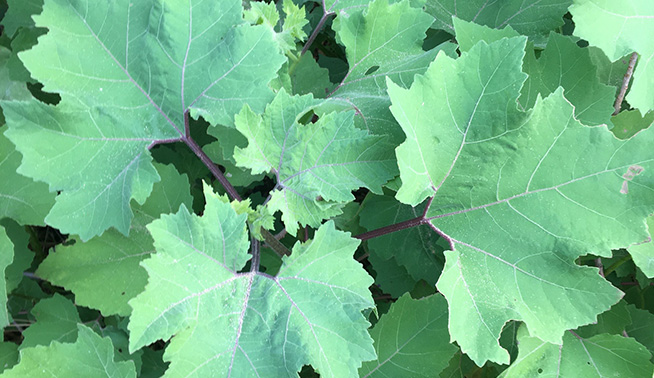
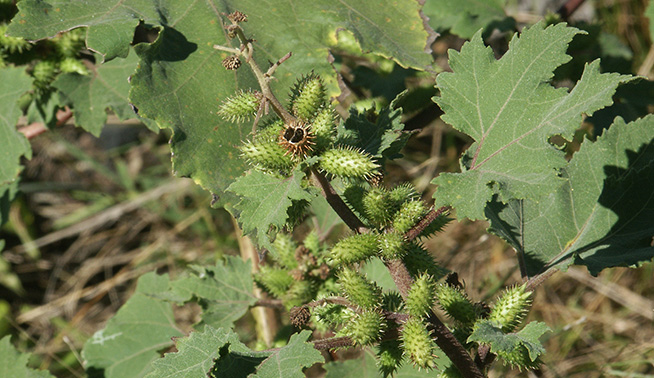
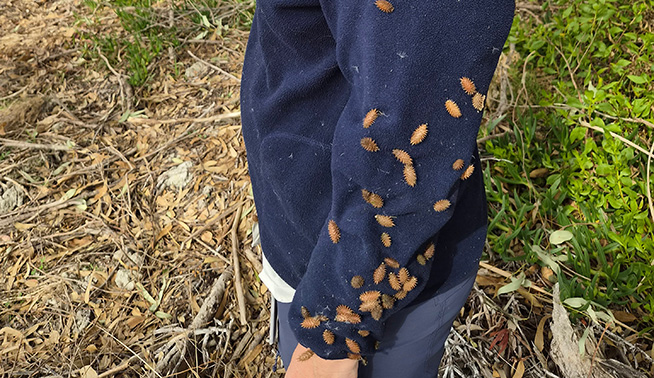
Noogoora burr* is a Declared Pest in Western Australia under section 22(2) of the BAM Act.
Noogoora burr* is a Declared Pest in Western Australia under section 22(2) of the BAM Act. It is assigned C2 Eradication for most of the state and C3 Management in the state's north (Broome, Derby-West Kimberley, Halls Creek, and Wyndham-East Kimberley), and a Prohibited keeping category
This weed MUST BE REPORTED. Notify Pest and Disease Information Service (DPIRD)/
*Listed as the synonym Xanthium strumarium L.
Manual removal, using equipment such as chippers or hand hoe, is only effective in early stage and small infestations before flowering and burr formation. Slashing or mowing can be used in clean-up operation following chemical treatment but required additional attentions on burrs of the plants to be collected so that they cannot set the seed anymore. Also, periodical monitors should be conducted especially on the flood prone areas as they have higher risk of germination.
Different herbicides are recommended based on the different time of year/season.
Actively growing plant (600 g/kg metsulfuron methyl)
Apply 7.5 g of metsulfuron methyl (600g/kg) in 100L to actively growing plants using a foliar application method, ensuring full leaf coverage. Plants under moisture stress will not be controlled so it is better to obtain rainfall within 4 weeks of application to wet the soils to maximise weed control.
Prior to burr formation (360g/L, 540g/L and 700g/L glyphosate)
Use the lower rate for plants up to 15 cm height and use the upper rate for taller weed or dense weed infestation.
1. 360 g/L Glyphosate present
Apply a mix of 500 to 700 mL of glyphosate (360 g/L) per 100 L of water for handgun application, or 75 to 100 mL of glyphosate (360 g/L) per 15 L of water for knapsack application.
2. 540 g/L Glyphosate
Apply a mix of 330 to 480 mL of glyphosate per 100 L of water for handgun application, or 50 to 70 mL of glyphosate per 15 L of water for knapsack application. Apply when plants are actively growing and not under stress from drought.
3. 700 g/L Glyphosate present
Apply a mix of 3 to 5 g of glyphosate per litre of water for handgun or knapsack application. Apply when plants are actively growing and not under stress from drought.
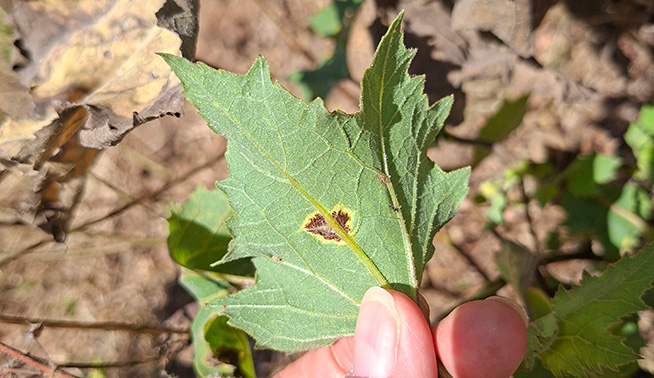
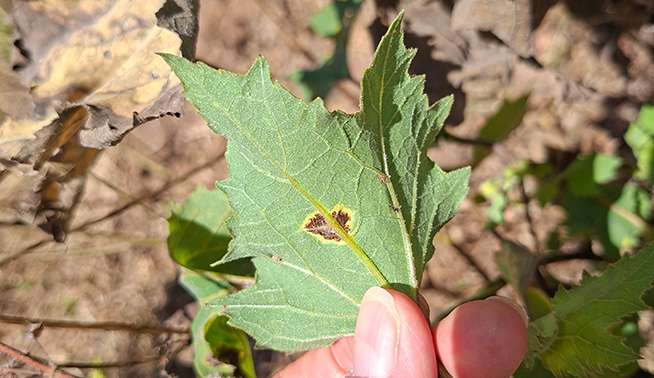
A rust fungus (Puccinia xanthii) was accidentally introduced into Brisbane in 1975 and has been shown to attack Noogoora burr, reducing plant growth. The fungus is best suited to Mediterranean climates and is less effective during the hot, low-humidity conditions under which Noogoora burr actively grows in the Kimberley. The rust is being released in bushland areas of southern Western Australia from 2026.
Another biological control agent, the moth Epiblema strenuana, is widely established in the Northern Territory, where it damages stems and reduces seed production. Although it is not currently known from the Kimberley, efforts may be made to introduce it to Western Australia if Noogoora burr becomes a significant weed in bushland environments.
LSID number: [51311048] | full LSID: [https://id.biodiversity.org.au/taxon/apni/51311048] | field_lsid: [] | taxon: [Xanthium occidentale]
ALA Reference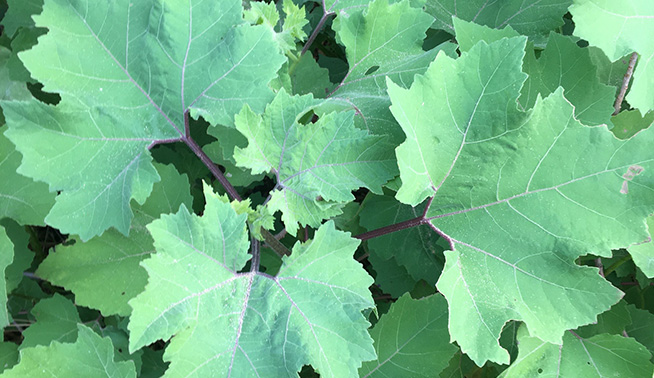
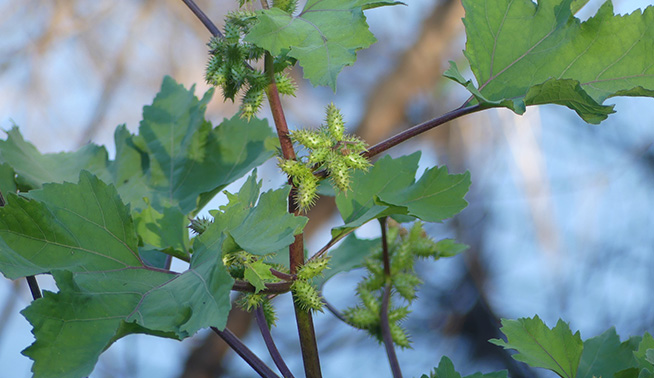
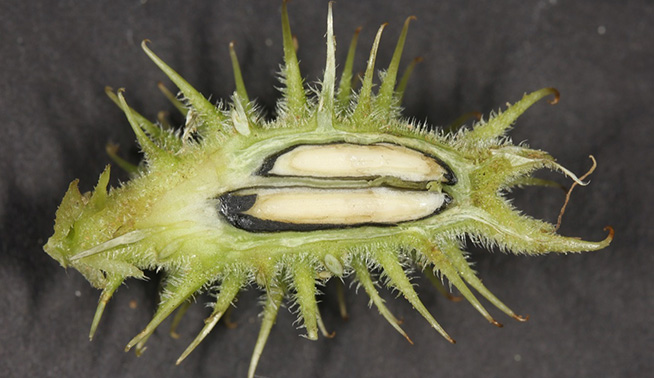
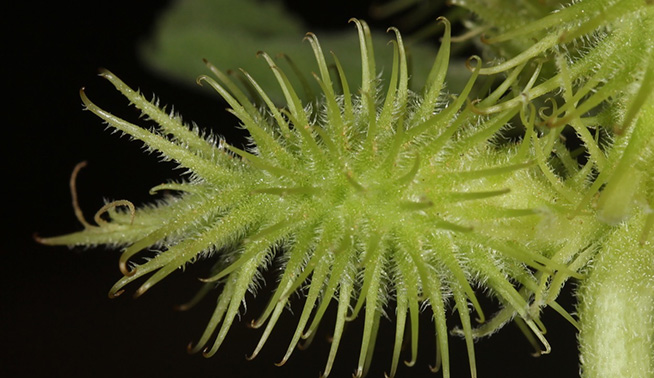
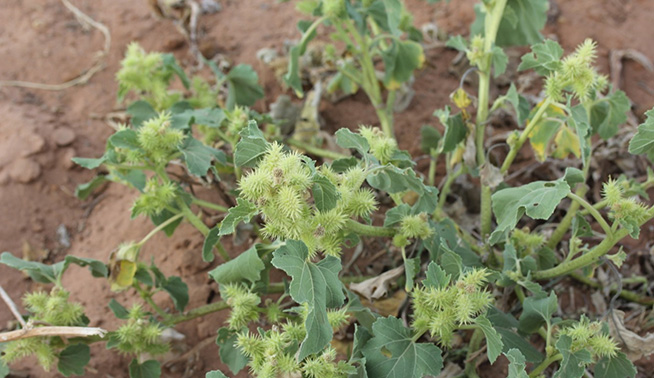
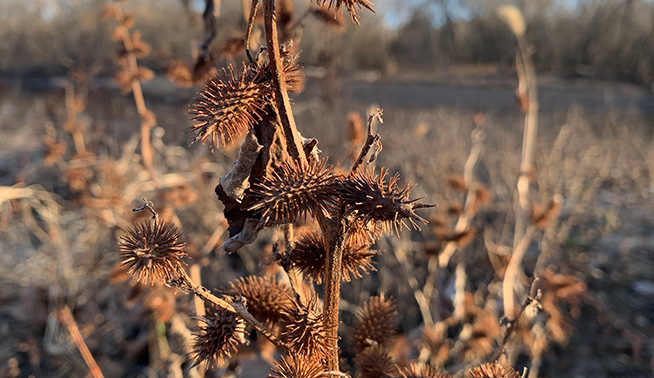
 Agriculture Protection Board of Western Australia. (1990)
Noogoora burr. APB infonote.
Centre for Invasive Species Solutions (CISS). (2024).
Noogoora Burr, Cockleburr, Clotbur, Large Cockleburr, Rough Cockleburr, Californian Burr, European Cocklebur. Xanthium strumarium L. weeds Australia
Department of Energy, Environment and Climate Action. (2026)
Noogoora burr. Agriculture Victoria.
Department of Environment and Natural Resources. (n.d.).
Biological control of Noogoora burr in the Katherine Region. Northern Territory Government.
Department of Primary Industries and Regional Development. (2024)
Noogoora burr and its control. Government of Western Australia. Factsheet DPIRD-170.
Department of Primary Industries & Regional Development. (2023)
Noogoora burr (Xanthium occidentale). NSW WeedWise.
Edgar, V. & Grace, B. (2004)
Experimental inoculations of the rust fungus Puccinia xanthii, a biological control agent against Noogoora burr (Xanthium occidentale) in northern Australia. Plant Protection Quarterly,19(3).
Brisbane City Council Weed Identification Tool
Noogoora burr Xanthium occidentale
Agriculture Victoria
Noogoora burr
Agriculture Protection Board of Western Australia. (1990)
Noogoora burr. APB infonote.
Centre for Invasive Species Solutions (CISS). (2024).
Noogoora Burr, Cockleburr, Clotbur, Large Cockleburr, Rough Cockleburr, Californian Burr, European Cocklebur. Xanthium strumarium L. weeds Australia
Department of Energy, Environment and Climate Action. (2026)
Noogoora burr. Agriculture Victoria.
Department of Environment and Natural Resources. (n.d.).
Biological control of Noogoora burr in the Katherine Region. Northern Territory Government.
Department of Primary Industries and Regional Development. (2024)
Noogoora burr and its control. Government of Western Australia. Factsheet DPIRD-170.
Department of Primary Industries & Regional Development. (2023)
Noogoora burr (Xanthium occidentale). NSW WeedWise.
Edgar, V. & Grace, B. (2004)
Experimental inoculations of the rust fungus Puccinia xanthii, a biological control agent against Noogoora burr (Xanthium occidentale) in northern Australia. Plant Protection Quarterly,19(3).
Brisbane City Council Weed Identification Tool
Noogoora burr Xanthium occidentale
Agriculture Victoria
Noogoora burr
| JAN | FEB | MAR | APR | MAY | JUN | JUL | AUG | SEP | OCT | NOV | DEC | Notes | |
|---|---|---|---|---|---|---|---|---|---|---|---|---|---|
| Germination | |||||||||||||
| Active growth | |||||||||||||
| Flowering | |||||||||||||
| Seeding |
| JAN | FEB | MAR | APR | MAY | JUN | JUL | AUG | SEP | OCT | NOV | DEC | Notes | |
|---|---|---|---|---|---|---|---|---|---|---|---|---|---|
| Germination | |||||||||||||
| Active Growth | |||||||||||||
| Flowering | |||||||||||||
| Seeding |
| JAN | FEB | MAR | APR | MAY | JUN | JUL | AUG | SEP | OCT | NOV | DEC | Notes | |
|---|---|---|---|---|---|---|---|---|---|---|---|---|---|
| Physical | |||||||||||||
| Chemical |


 Permit PER96598 for metsulfuron methyl