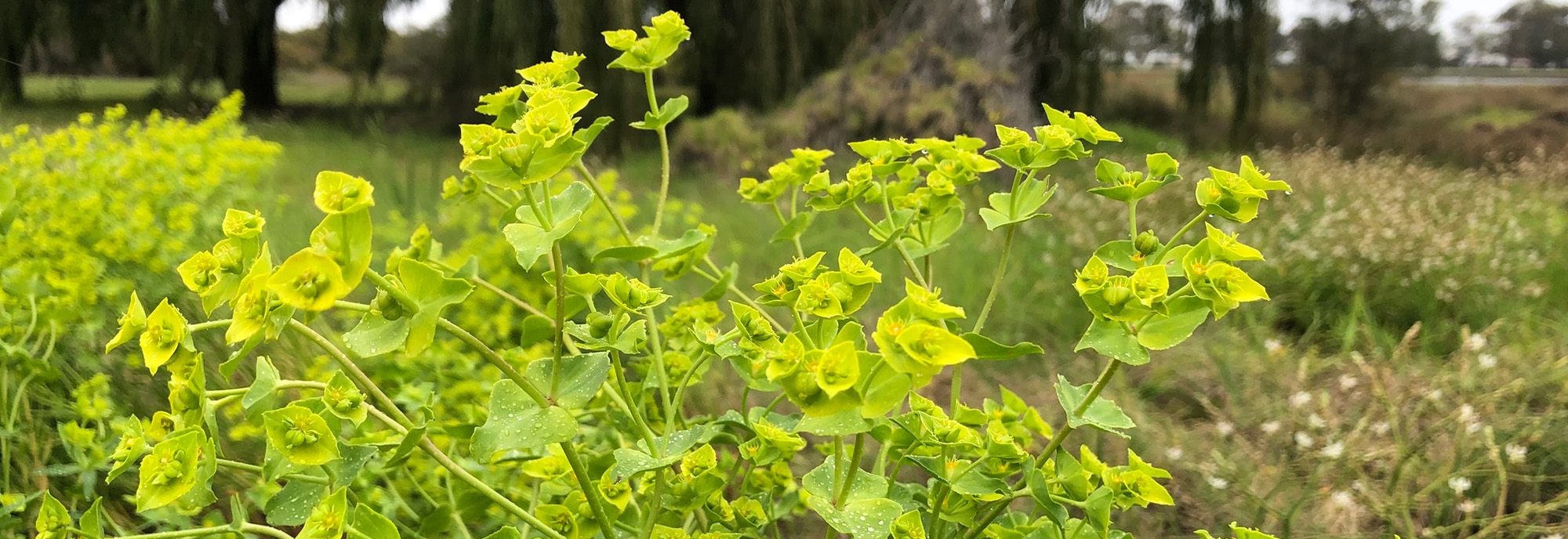

Other Common Names: Terracina Spurge, Geraldton Carnation Spurge
Geraldton Carnation Weed
Euphorbia terracina
Quick facts

Status
Permitted s11

Life Cycle
Perennial

Growth Form
Herb

Origin
Southern Europe and western Asia

Flowers
Yellow/green

Dispersal
Birds, other animals

Toxicity
Skin irritation, temporary vision loss
Names

Form and function
Flowers
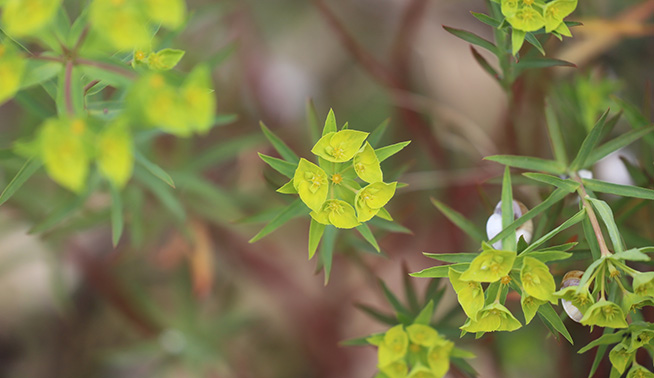
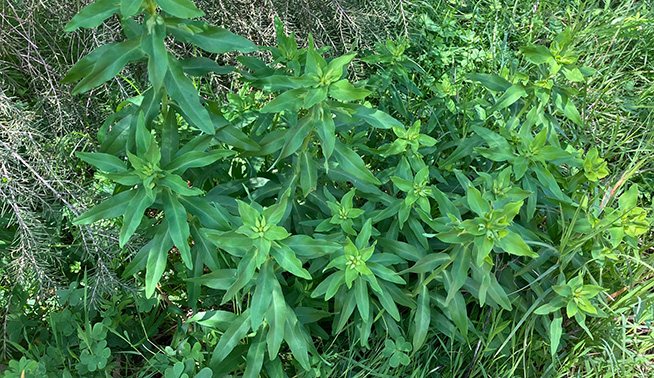
Leaves
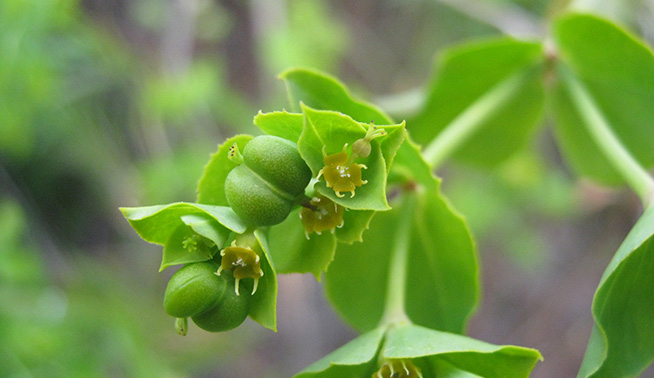
Fruits
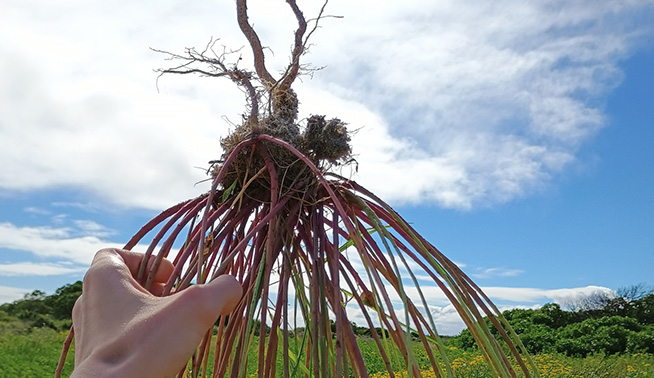
Roots
Habitat
May be confused with...
How does it spread?
Why is it a weed?
History
How to control


With any control of Geraldton carnation weed, wear appropriate personal protective equipment to avoid contact with plant sap.
Physical
For scattered individual plants or small infestations, hand pulling is an effective method, particularly if the plants are fruiting, as seed can be prevented from spreading. Plants as young as three weeks must be completely removed with their roots or they will regrow and go on to produce the same amount of seed as an ungrubbed plant. However, hand removal and disturbance to the topsoil can stimulate the germination of the soil seedbank.
An alternative would be using mechanical removal methods by cutting plants at ground level at the base by hand or with a brush cutter, although this is only effective after plants have seeded. Any material, particularly any containing flowers or fruit, should be disposed off-site otherwise plants left on the soil surface can go on to produce seed.
Chemical
Small infestations
For actively growing plants in small infestations, apply a foliar spray containing 20 mL glyphosate (450 g/L), 0.2 g metsulfuron-methyl (600 g/kg) and 25 mL penetrant in 10 L of water.
Large infestations
For large infestations with young plants, apply a foliar spray containing 0.1 g metsulfuron-methyl (600 g/kg) and 30 mL penetrant in 15 L of water. This treatment is reasonably effective but may not provide complete control of mature plants.
Where large infestations contain both adult and juvenile plants, apply a foliar spray containing 1.25 g triasulfuron (750 g/kg) and 1 mL penetrant in 1 L of water. This treatment is expected to have minimal impact on surrounding native vegetation.
 Permit PER96570 for glyphosate
Weed Distribution Map
LSID number: [2918542] | full LSID: [https://id.biodiversity.org.au/node/apni/2918542] | field_lsid: [] | taxon: [Euphorbia terracina]
ALA Reference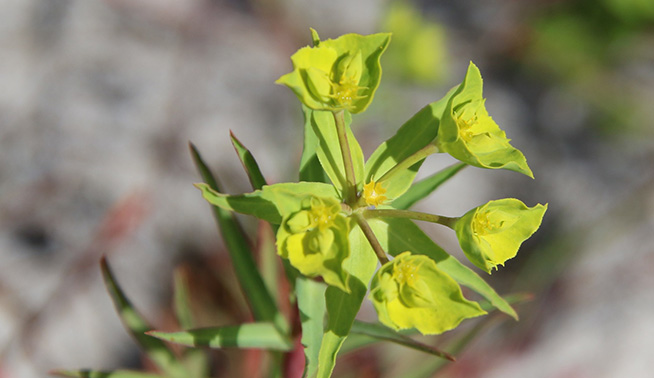
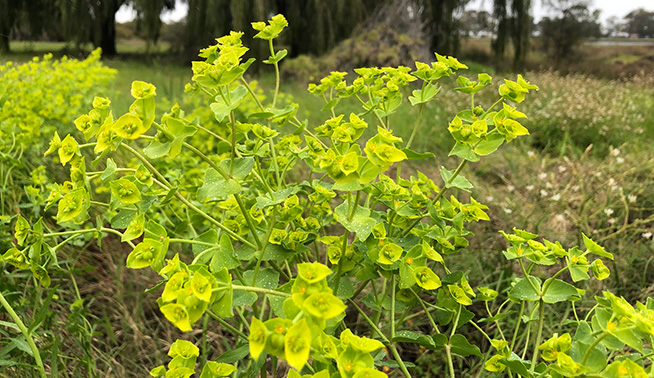
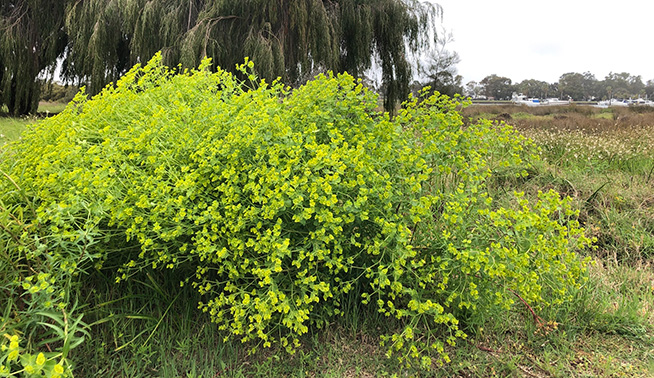
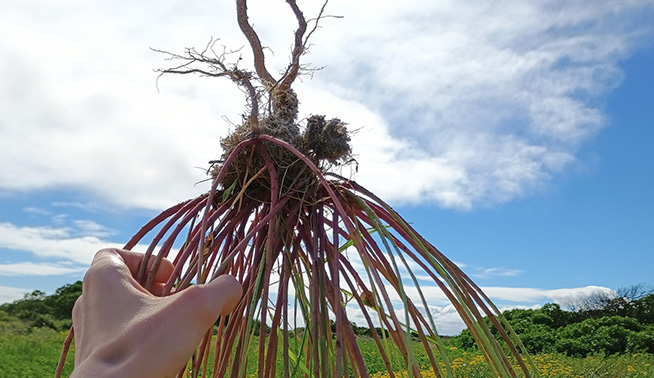
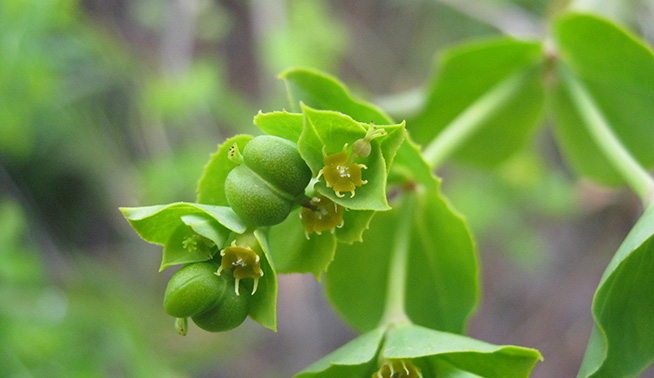
Image credits
References
-
 Atlas of Living Australia. (n.d.)
Euphorbia terracina L. Atlas of Living Australia.
Atlas of Living Australia. (n.d.)
Euphorbia terracina L. Atlas of Living Australia.
-
Bettink, K. (2009, December)
Geraldton carnation weed Euphorbia terracina Draft strategic plan for the Swan NRM Region . Department of Environment and Conservation .
- Brown, K., & Brooks, K. J. (2003) Bushland weeds: a practical guide to their management With case studies from the Swan Coastal Plain and beyond. Environmental Weeds Action Network
-
Moore, J., & Wheeler, J. (2008)
Southern weeds and their control. Department of Agriculture and Food, Western Australia.
-
Stajsic, V. (2018b, June 6).
Euphorbia terracina L. Terracina Spurge. VicFlora Flora of Victoria.
-
Weeds Australia. (2019, March)
False Caper, Geraldton Carnation Weed, Terracina Spurge, Geraldton Carnation Spurge. Weeds Australia.
-
Weeds of Australia. (n.d.)
Euphorbia terracina L. Weeds of Australia.
-
Western Australian Herbarium (1998–)
Florabase—the Western Australian flora. Department of Biodiversity, Conservation and Attractions.
Life Cycle
| JAN | FEB | MAR | APR | MAY | JUN | JUL | AUG | SEP | OCT | NOV | DEC | Notes | |
|---|---|---|---|---|---|---|---|---|---|---|---|---|---|
| Germination | |||||||||||||
| Active growth | |||||||||||||
| Flowering | |||||||||||||
| Fruiting | |||||||||||||
| Dormant |
Regularly or most commonly
Occasionally, given suitable conditions
Management
| JAN | FEB | MAR | APR | MAY | JUN | JUL | AUG | SEP | OCT | NOV | DEC | Notes | |
|---|---|---|---|---|---|---|---|---|---|---|---|---|---|
| Physical | |||||||||||||
| Chemical |
Optimal
Potentially, but conditionally dependent