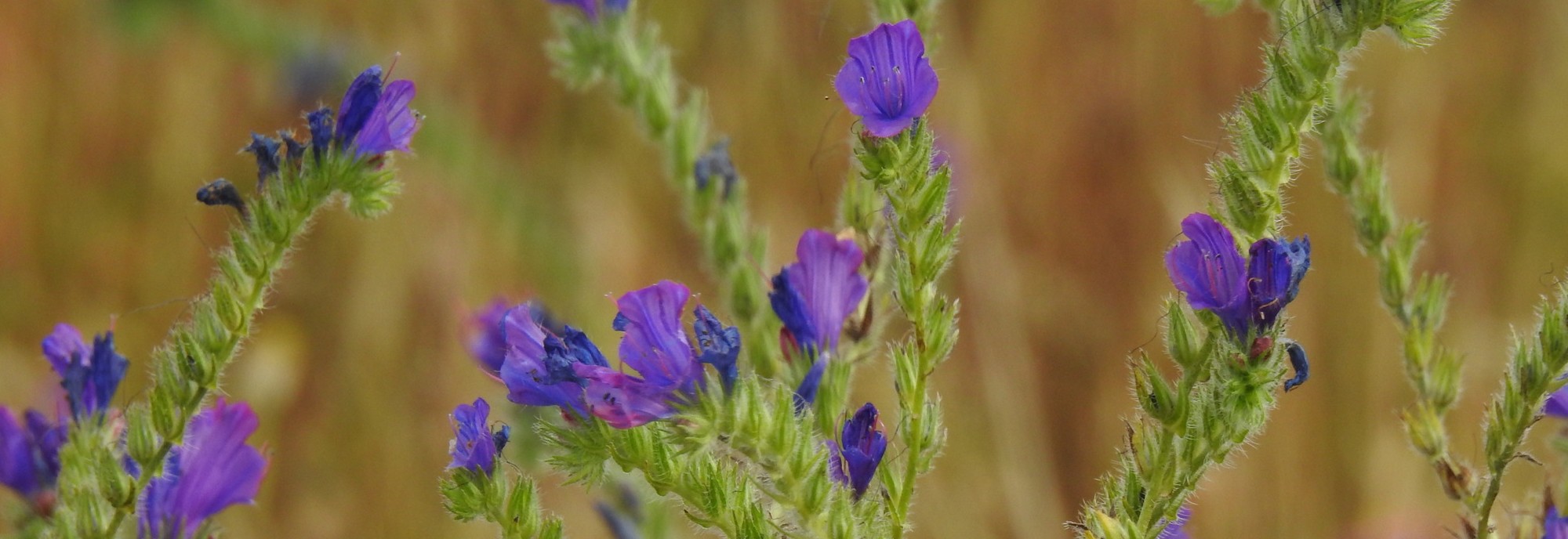

Other Common Names: Salvation Jane, Blueweed, Lady Campbell, Riverina Bluebell, Purple Viper's-Bugloss
Paterson's Curse
Echium plantagineum
Quick facts

Status
Declared Pest (s22) Exempt

Life Cycle
Annual

Growth Form
Herb

Origin
Mediterranean region, northern Africa

Flowers
Purple

Primary Reproduction
Seed

Toxicity
Toxic to livestock
Names

Form and function
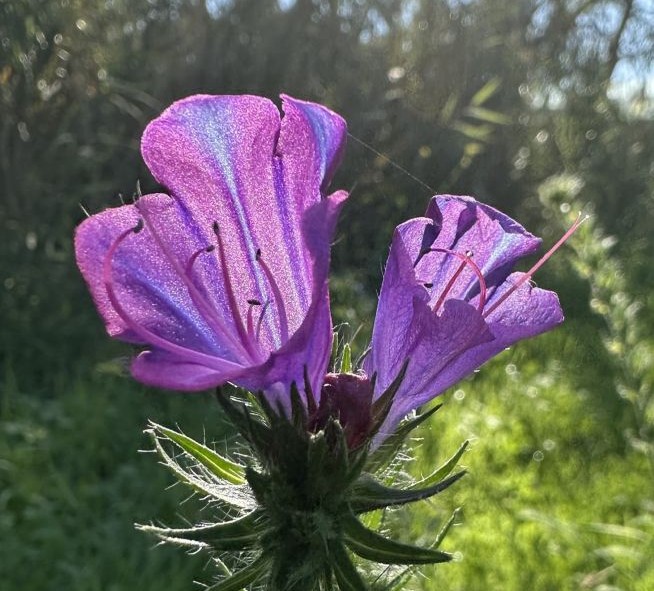
Flowers
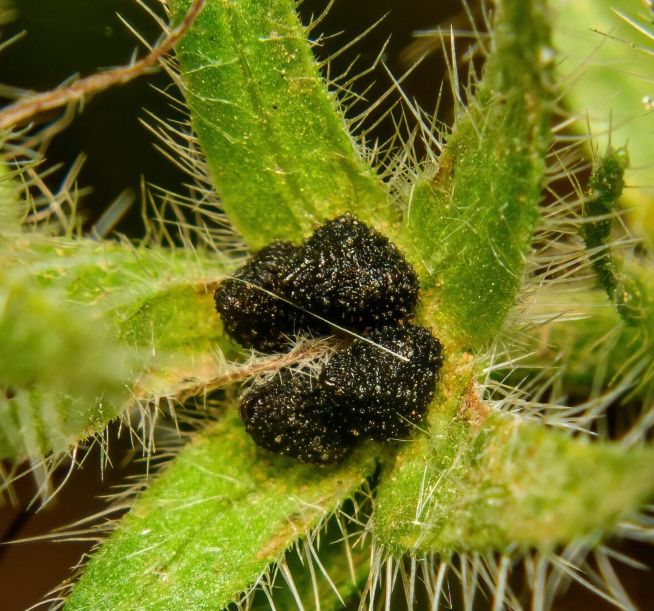
Seeds
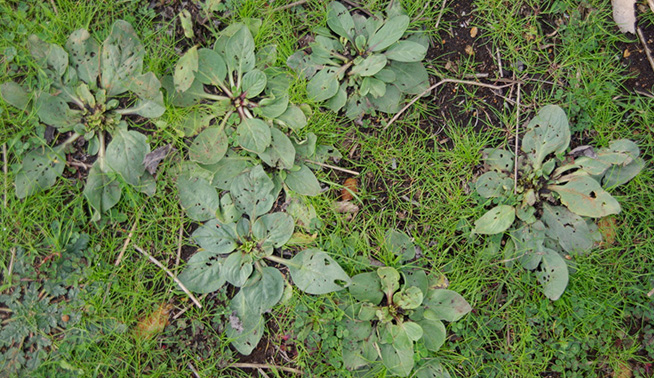
Leaves
Habitat
How does it spread?
Why is it a weed?
May be confused with...
How to control


It is essential to develop an integrated weed management plan when dealing with Paterson's curse to prevent seed set and reduce populations in the long term.
Physical
Isolated plants or patches can be physically or mechanically removed.
Hand-weed: Before the Paterson‘s curse begins to flower, hand weed or dig plants out using a hoe or shovel, ensuring that 20 to 40mm of taproot is removed. Paterson’s curse does not regenerate from small root segments left in the ground. If removal occurs after flowering, it is important that plants are removed from the site prior to the seeds dropping to prevent viable seed adding to the seedbank.
Slashing: Regular slashing can be used as a short-term control tool and should be used in combination with other control methods. Slashing does not kill Paterson’s curse but can delay flowering. The plants need to be slashed regularly (fortnightly or monthly) during flowering as they regrow quickly from the crown after slashing and slashing can cause out of season flowering and seed production.
Chemical
When most seed has germinated for the year, apply a mix of with 0.5g chlorsulfuron (750g/kg) and 25mL of wetting agent with 10L of water, using a foliar application method, ensuring full leaf coverage.
To actively growing plants, apply a mix of 5-7mL of glyphosate (360g/L) with 1L of water using a foliar application method, ensuring full leaf coverage. Use the lower rate on weeds up to 15cm tall and increase to the higher rate where weeds are over 15cm tall.
Managerial
Isolated plants can be burnt if flowering or seeding. Burning will kill seeds on the surface but can stimulate others to germinate. Although it can help control some infestations, it may not be a suitable option for bushland infestations and most likely, follow up treatment of herbicides will be required.
Biological
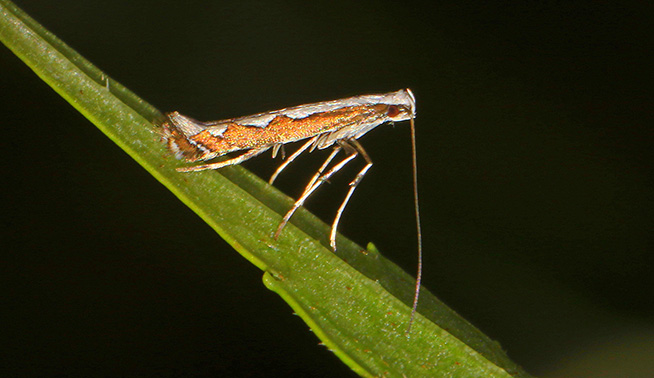
Seven insects that attack all stages of Paterson’s curse have been released in Australia and are established in the field except for the root hair flea beetle (Longitarsus aeneus) which was released but did not establish. These insects attack the plant at all stages of growth. These include the Echium leaf-mining moth (Dialectica scalariella) (top image), which reduces plant competitiveness by mining leaves, the Paterson's Curse Crown Weevil (Mogulones larvatus) (bottom image) and root weevil (Mogulones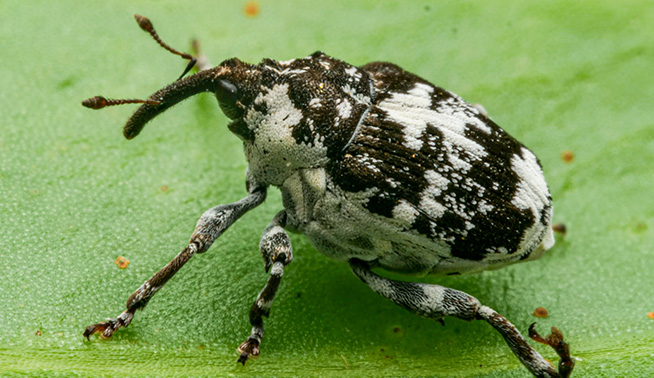 geographicus), whose larvae damage root crowns and taproots, often killing plants, two flea beetles (Longitarsus echii established, L. aeneus failed), which feed on rosette leaves and roots, the stem beetle (Phytoecia coerulescens), which bores into stems and the pollen beetle (Meligethes planiusculus), which destroys flower buds and seeds. Together these insects weaken Paterson’s curse by reducing growth, reproduction and survival.
 Permit PER93063 for chlorsulfuron
Weed Distribution Map
LSID number: [2889451] | full LSID: [https://id.biodiversity.org.au/node/apni/2889451] | field_lsid: [] | taxon: [Echium plantagineum]
ALA Reference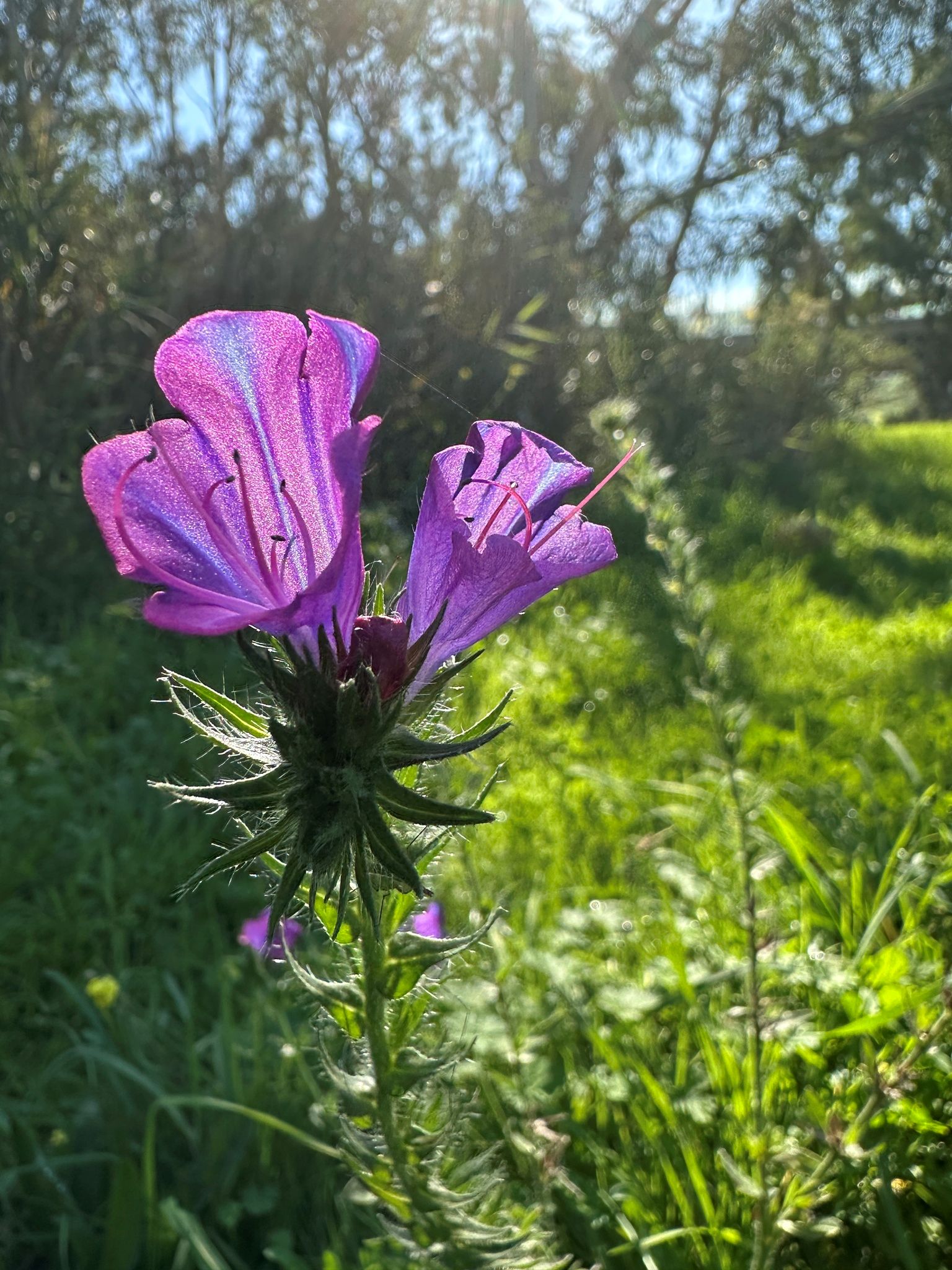
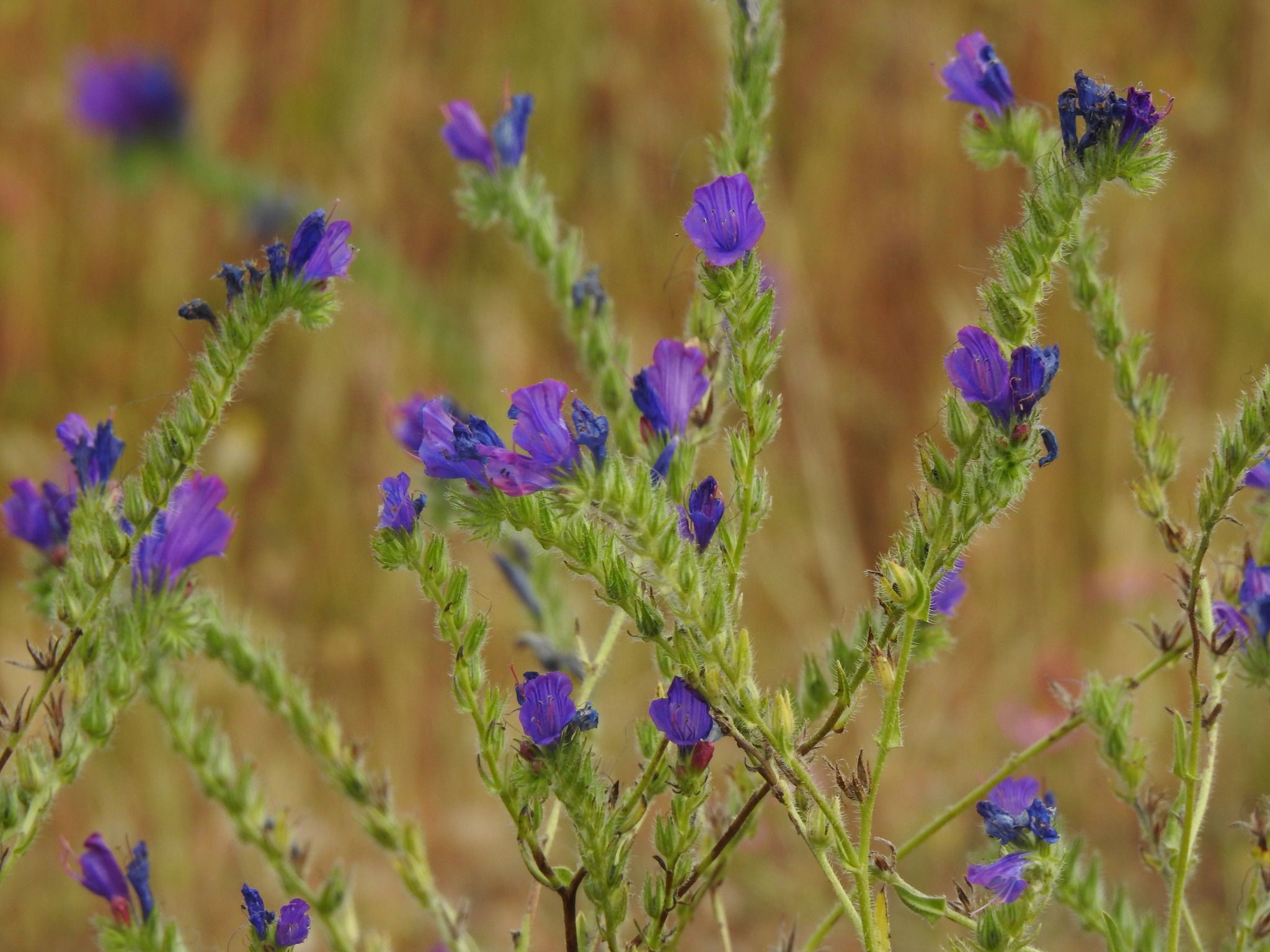
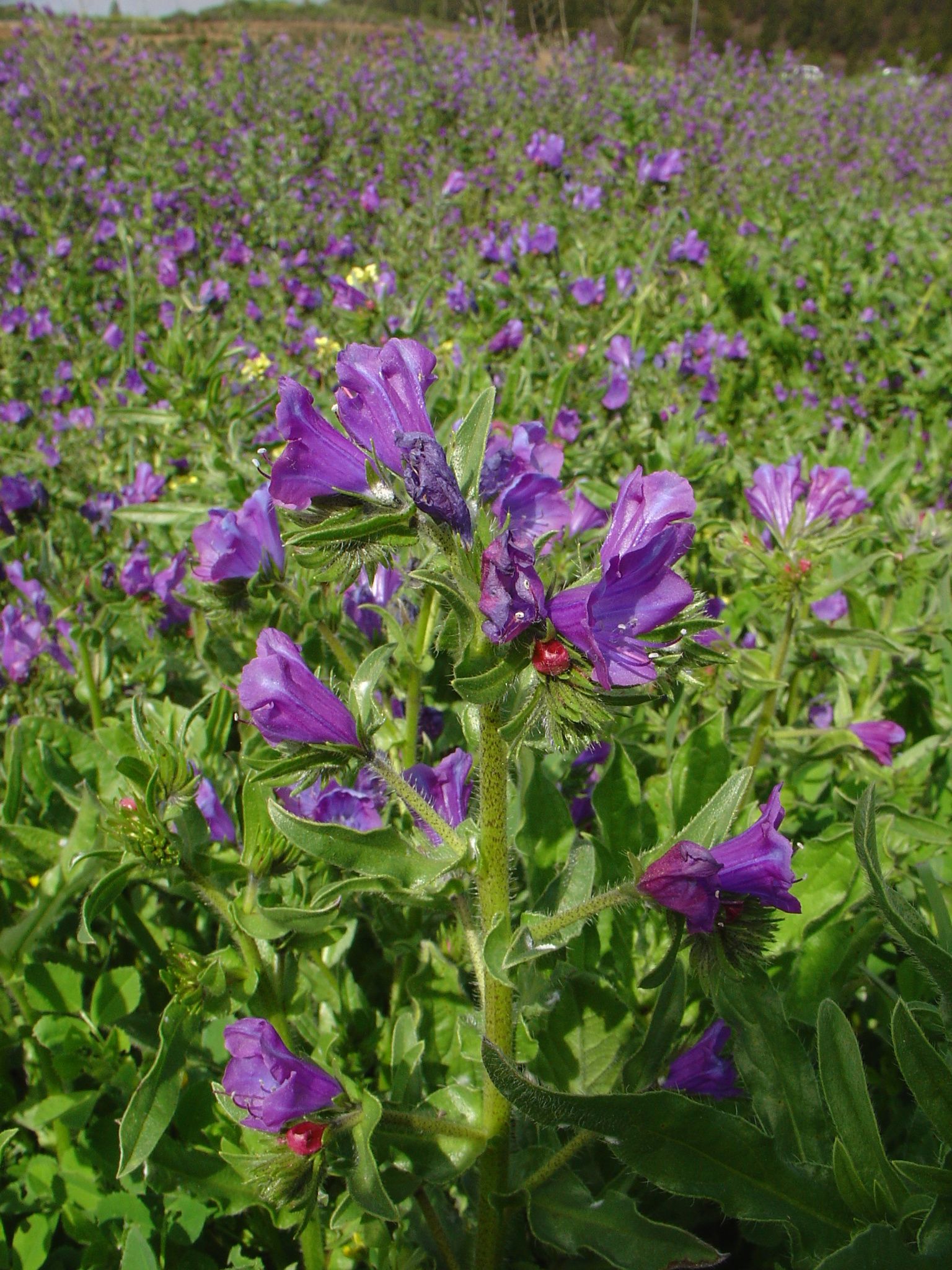
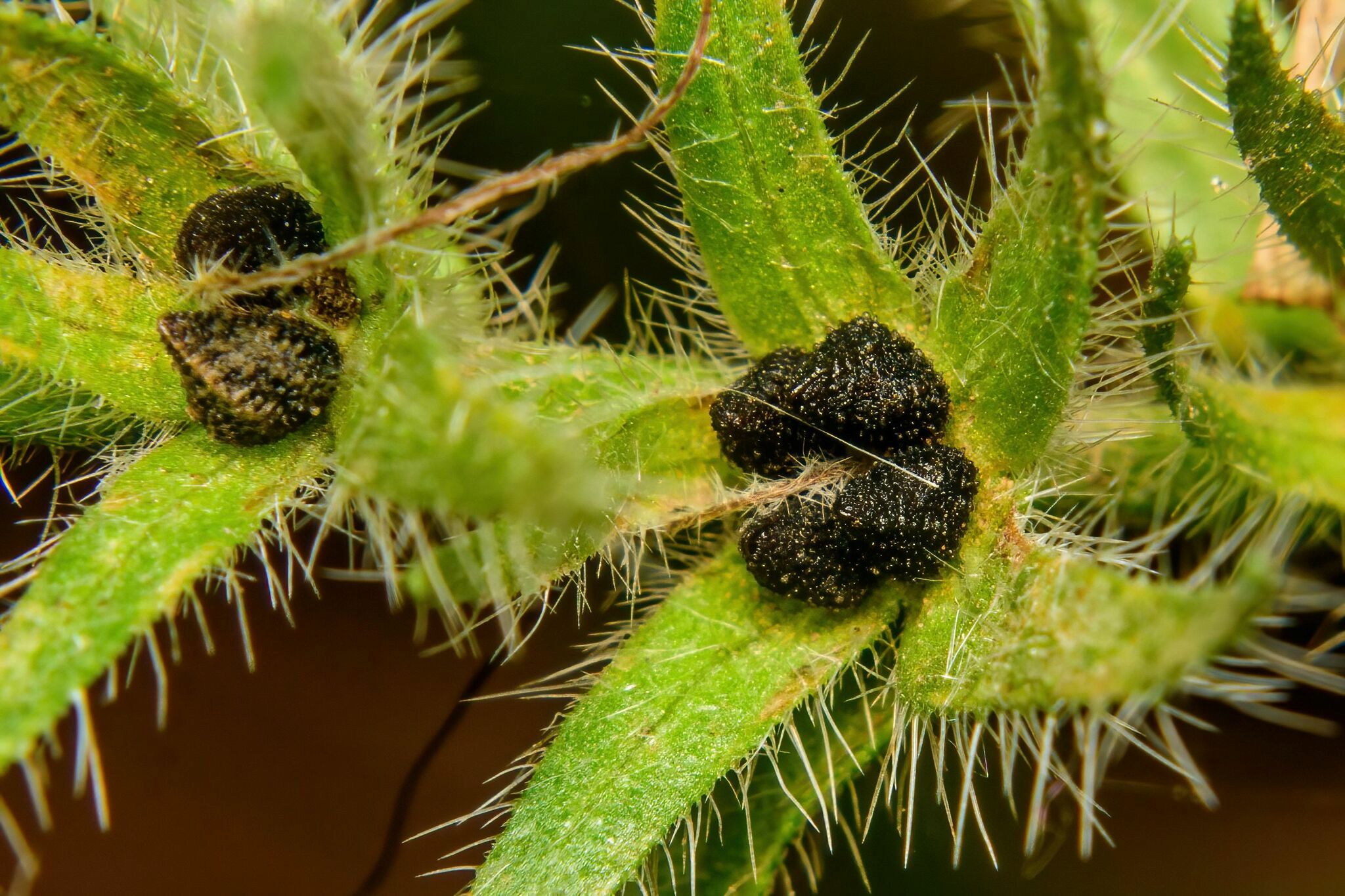
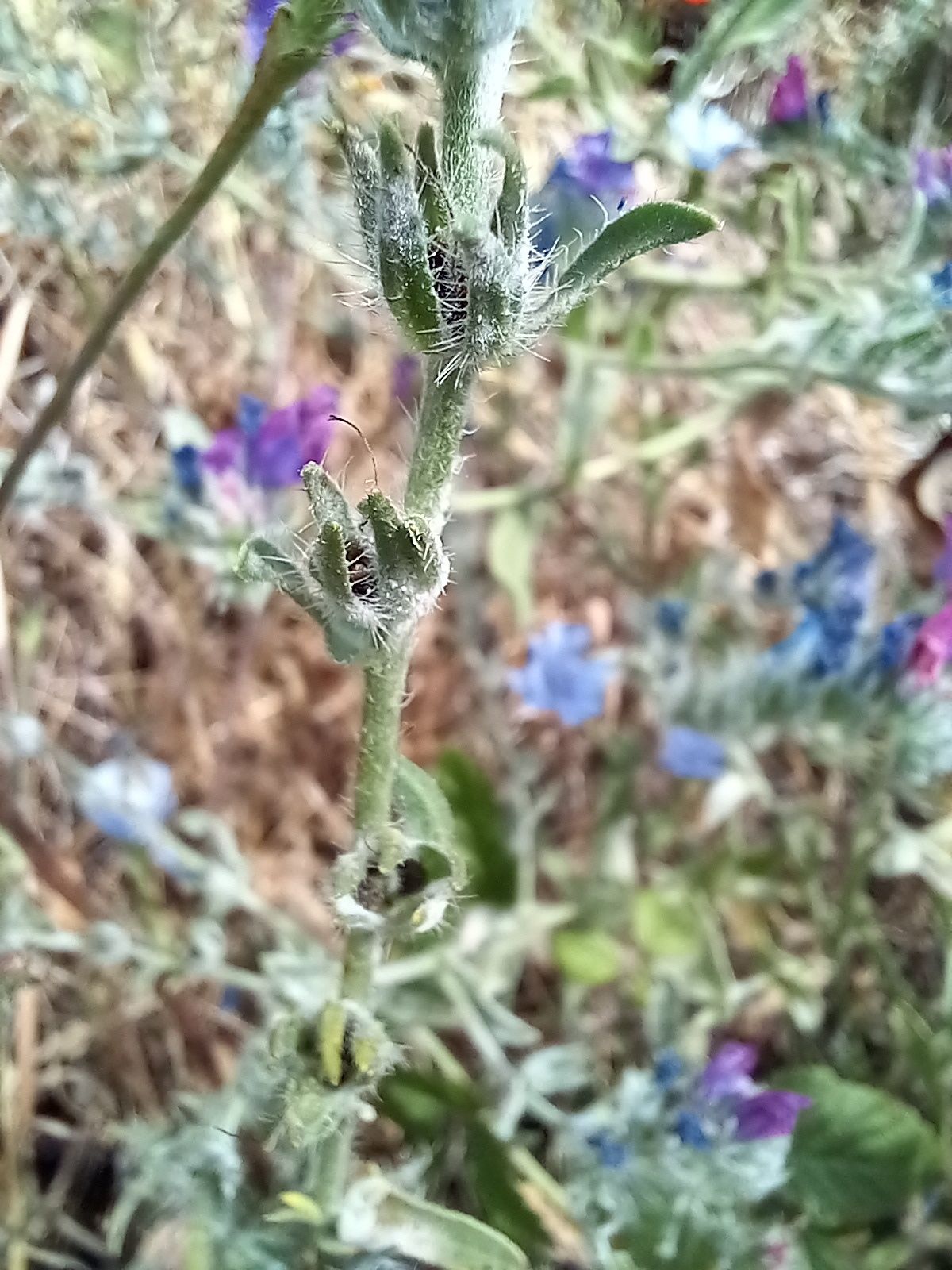
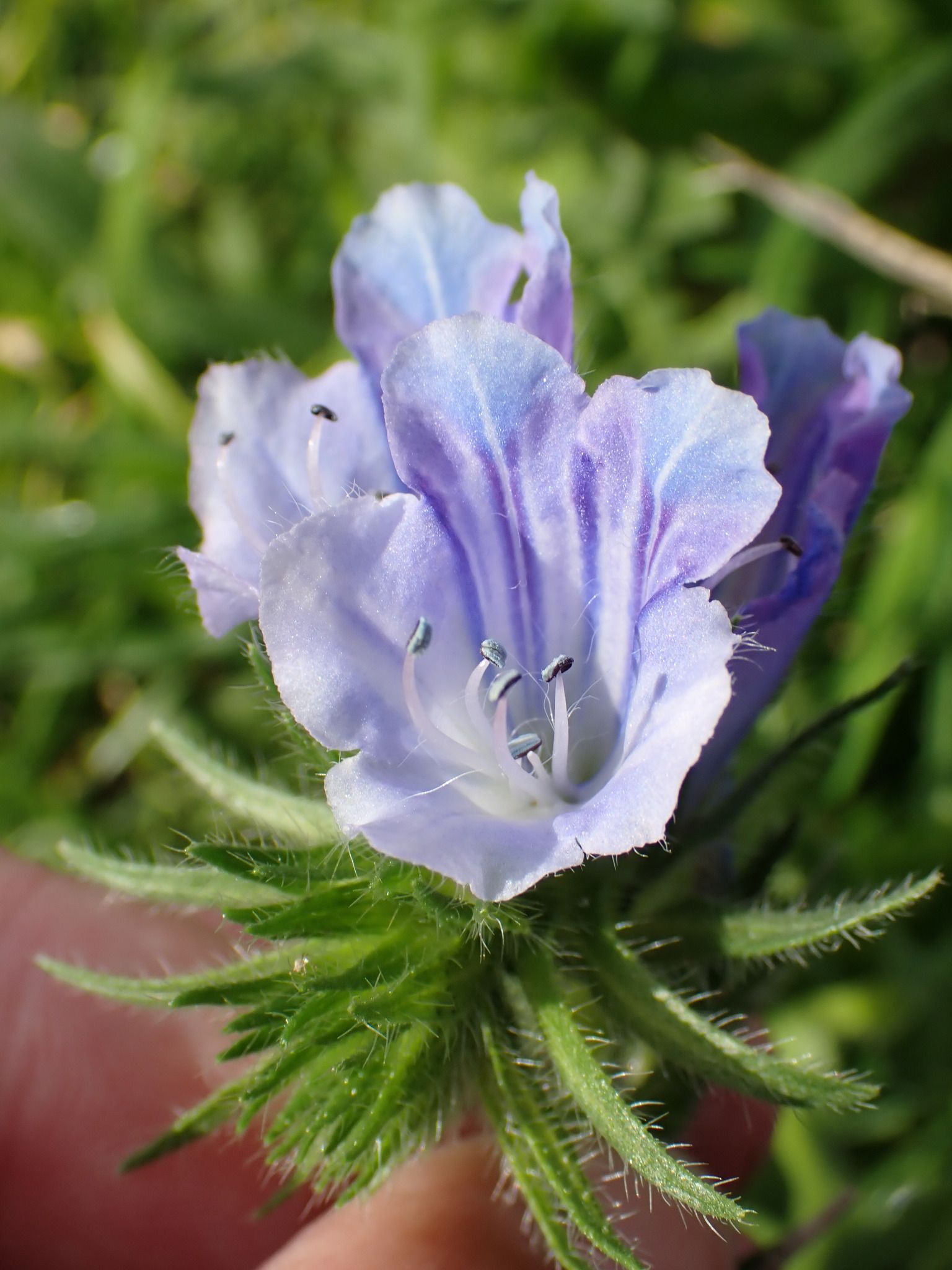
Image credits
References
-
 Atlas of Living Australia. (n.d.).
Echium plantagineum L. Atlas of Living Australia.
Atlas of Living Australia. (n.d.).
Echium plantagineum L. Atlas of Living Australia.
- Brown, K., & Brooks, K. J. (2003) Bushland weeds: a practical guide to their management With case studies from the Swan Coastal Plain and beyond. Environmental Weeds Action Network
-
McLarty, A., Kruger, E., Stubbs, P., Peirce, J., Hawkins, C., Wilson, P., & Merewether, S. (2001)
Paterson's curse management handbook. Department of Primary Industries and Regional Development.
-
Naughton, M., Kidston, J., Sullivan, P., & Bourke, C. (2006)
Patersons Curse. PrimeFacts, 109
-
NSW Government. (2019)
Paterson’s curse (Echium plantagineum). NSW WeedWise
-
Weeds of Australia. (n.d.)
Echium plantagineum L. Weeds of Australia; Lucidcentral.
-
Western Australian Herbarium (1998–)
Florabase—the Western Australian flora. Department of Biodiversity, Conservation and Attractions.
-
Xiaocheng Zhu, David Gopurenko, Dominik Skoneczny, Brendan J. Lepschi, Mark A. Spencer, Geoff M. Gurr, Ragan M. Callaway, Miguel Serrano and Leslie A. Weston (2016).
Introduction of Paterson’s curse (Echium plantagineum) to Australia – unravelling the story by DNA sequence analysis. 20th Australasian Weeds Conference Proceedings, pp.157-161.
Life Cycle
| JAN | FEB | MAR | APR | MAY | JUN | JUL | AUG | SEP | OCT | NOV | DEC | Notes | |
|---|---|---|---|---|---|---|---|---|---|---|---|---|---|
| Germination | |||||||||||||
| Active Growth | |||||||||||||
| Flowering | |||||||||||||
| Fruiting |
Regularly or most commonly
Occasionally, given suitable conditions
Management
| JAN | FEB | MAR | APR | MAY | JUN | JUL | AUG | SEP | OCT | NOV | DEC | Notes | |
|---|---|---|---|---|---|---|---|---|---|---|---|---|---|
| Hand removal |
Remove prior to seed set.
|
||||||||||||
| Slashing |
Slash during or just prior to flowering.
|
||||||||||||
| Foliar spray |
Apply during active growth, after most seeds have germinated.
|
Optimal
Potentially, but conditionally dependent
Not likely but conditionally dependant