
Image
Acacia longifolia (DBCA)

Sydney Golden Wattle

Acacia longifolia

Quick facts

Status
Permitted, Eastern Australian Native
Life Cycle
Perennial
Growth Form
Tree
Origin
southeastern Australia
Flowers
Yellow
Dispersal
Insects, birds, water, wind
Seedbank
up to 20 years

Names

Other Common Names: Long-leaved acacia, golden wattle, coast wattle, sallow wattle

Subspecies: There are two recognised subspecies: Acacia longifolia subsp. longifolia and Acacia longifolia subsp. sophorae

Synonyms: Racosperma longifolium ,Mimosa longifolia 

Form and function

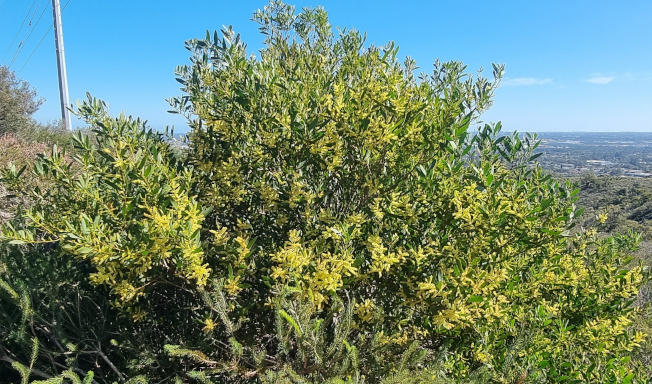
Sydney golden wattle is tree up to 10m and native to eastern Australia, introduced as a garden or revegetation species and escaped cultivation to be become a major weed in southern Western Australia. A prolific seeder, it invades native bushland by spreading in water, through birds ingesting seed, seed transported by ants, propagules attaching to animals fur or feathers, soil movement and garden refuse.  Flowers earlier than most of the native Western Australian Acacia.

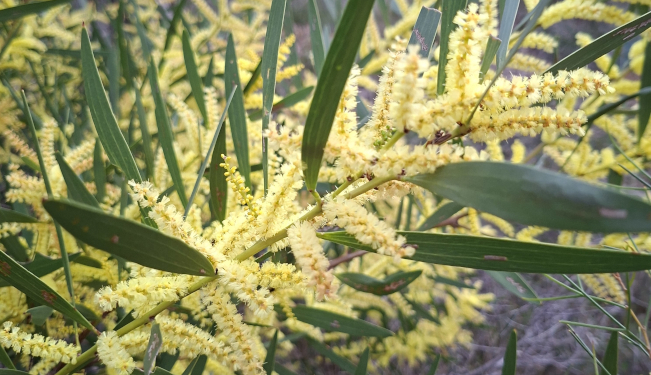
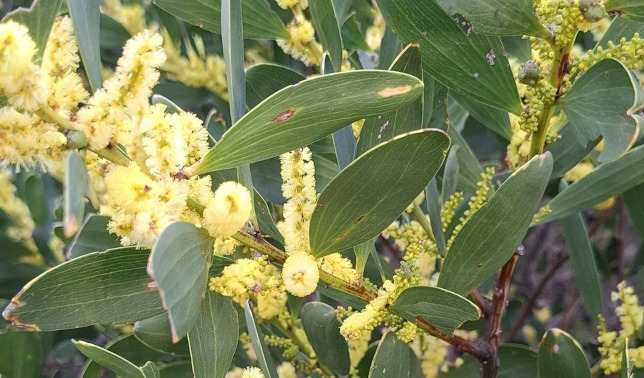
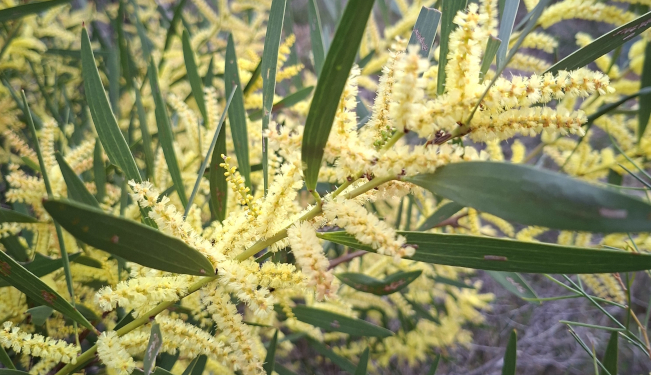
Flowers

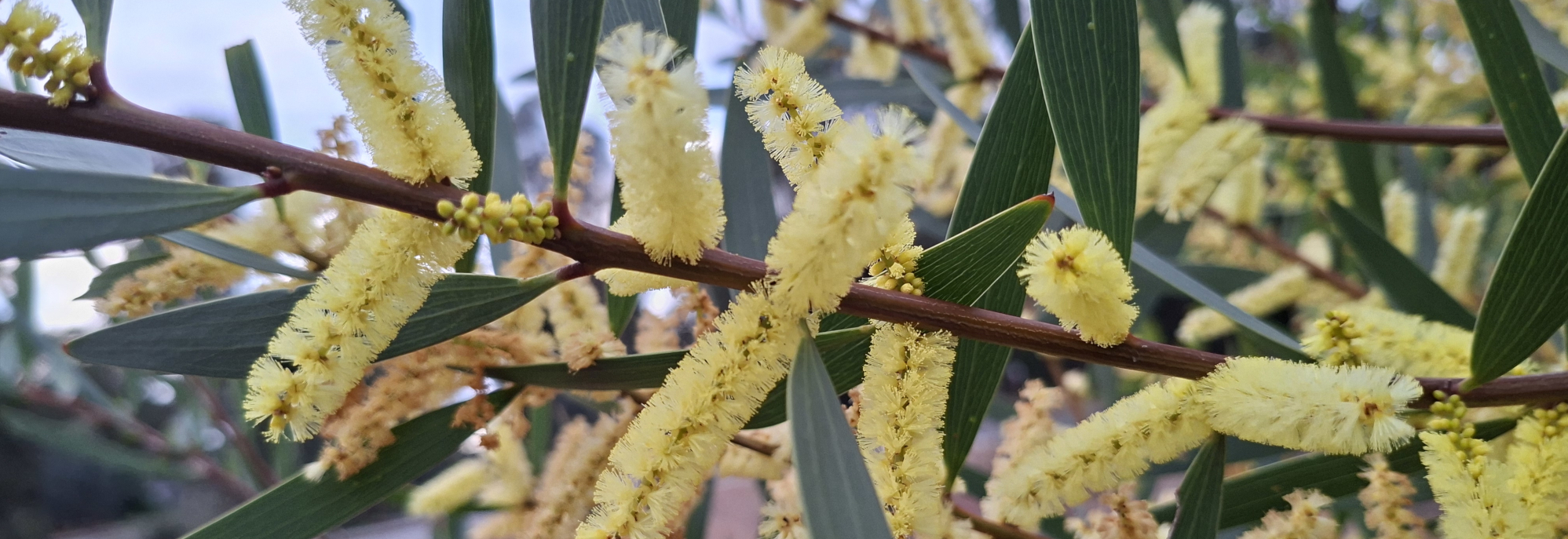
  • Bright yellow, cylindrical heads 20 to 50 mm long
  • Occur individually or in pairs in leaf axils, often on very short or no stalks
  • Elongated flower clusters
  • Small flowers densely packed (fluffy appearance)

Flowers DBCA

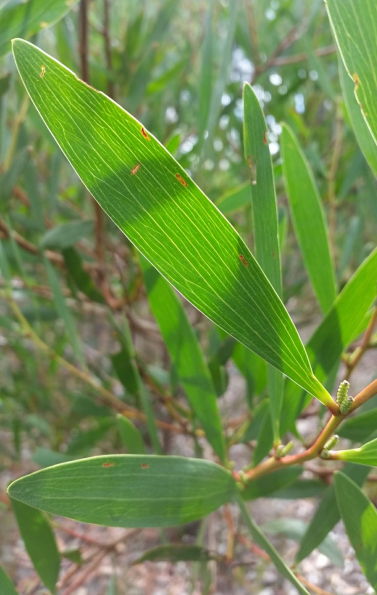
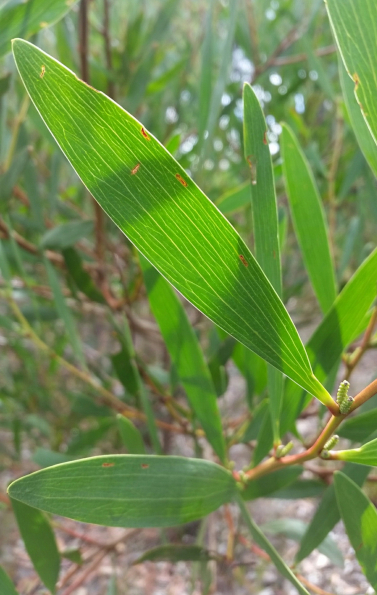
Leaves

The “leaves” are actually flattened leaf stalks (phyllodes) that function like true leaves

  • Alternately arranged
  • 5 to 25 cm long and 4 to 30 mm wide, mostly more than 6 to 7 times longer than wide
  • Straight or slightly curved, thin and pliable, mostly hairless
  • Bright or dark green
  • Several prominent longitudinal veins
  • One marginal gland near the base
     

Leaf

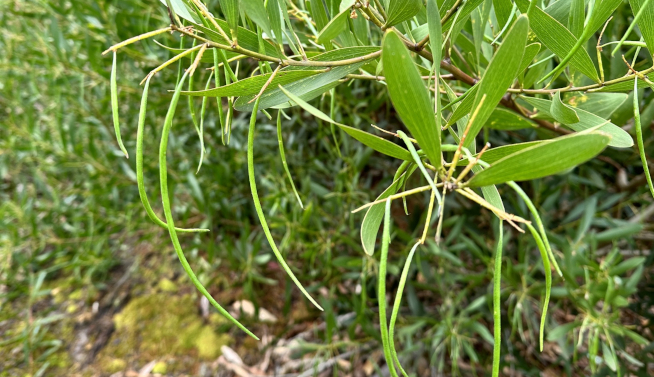
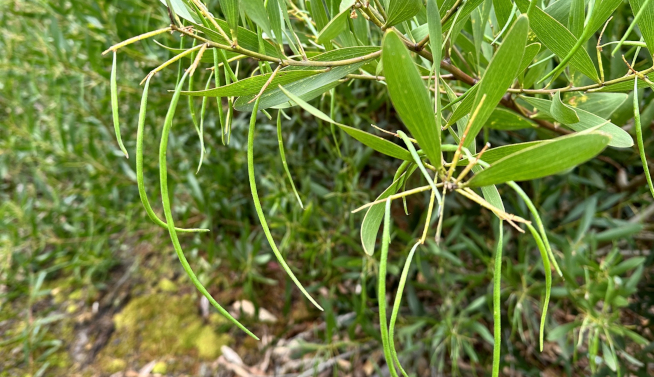
Fruit - Pods

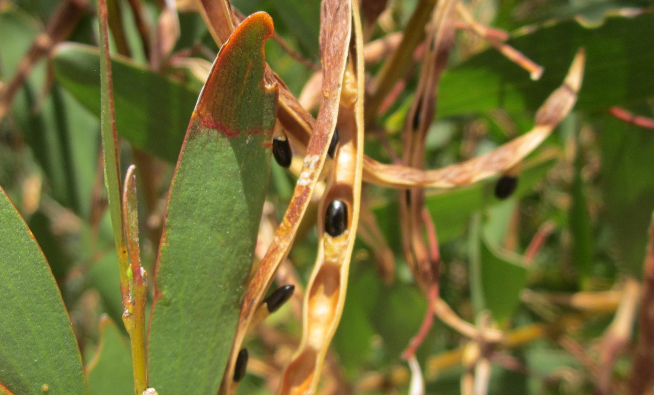
  • Long, narrow pods (about 40 to 150mm long, 3 to 10 mm wide)
  • Straight to strongly twisted, sometimes constricted between seeds
  • Green when young, turning brown at maturity
  • Contain several black seeds with a large orange fleshy aril
  • Seeds have a hard coat that enforces dormancy, which allows them to persist in the soil for extended periods (10 to 20 years).    

Pods

Habitat

Grows on a wide range of soils including, loam, gravel and laterite but prefers light (sandy) soils. Can grow well in nutritionally poor and saline soils. Often found on sloping ground, foreshores (near streams and swamps), forests, woodlands, shrublands. 

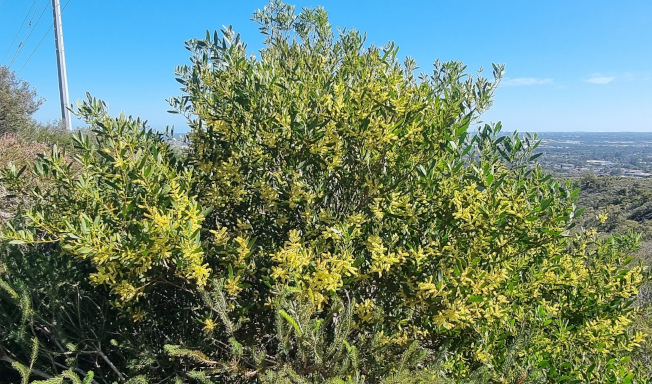
Small tree

May be confused with...

Similar native species: The subspecies Acacia longfolia subsp. sophorae (coastal wattle) is also present in WA and doesn't behave as weedy as Acacia longifolia.  Its more of a low shrub than three, grows to about 3m and the leaves are significantly shorter and broader than Acacia longifolia. Note; hybrids of the two species can occur.  

Coastal wattle © Richard Boon

How does it spread?

Seed dispersal by ants and birds, spread through human activities such as slashing and through soil movement (dumped in garden waste or contaminated soil)

Why is it a weed?

Introduced into Western Australia by escaping from gardens or through large scale revegetation plantings and has since become naturalised in south-western Western Australia between Perth and Albany.

How to control

Detail the recommended methods for effective management of x weed. Include specifics where available, such as herbicide rates, growth stage to target, applicable situation, etc.

Physical

For smaller, light infestations of seedlings hand weeding is suitable. Small shrubs/trees can be hand pulled, ensuring removal of the taproot.

For older plants, ringbarking can be done by stripping away at least 10cm all the way around the trunk, ensuring that the strip is deep enough.

For larger saplings and mature trees, removal by felling followed by chemical treatment.

Following the removal of large trees by felling and/or chemical treatment, should be followed by hand pulling the flush of seedlings that are likely to appear.

Chemical

For mature trees, 

Basal Bark

Apply a mix of 30g of picloram (120g/L) and 60g of tricloclopyr (240g/L) with 15L of diesel to the basal 50cm of the trunk using a sprayer.

Stem injection

Use a drill and fill method which involves drilling holes at intervals around the circumference of the tree into which a strong (50%) glyphosate (540g/L) is injected into the tree.

Drill and Pill

Drill and Pill method using capsules with Aminopyralid (37.5 mg) + metsulfuron methyl (30 mg). Drill and insert each capsule with the applicator at 10cm intervals around the tree circumference below any branching

Foliar herbicide application is not recommended due to the thick waxy leaf cuticles.

Managerial

In large dense stands a hot fire may be used to kill old trees but fire will stimulate mass germination of seeds stored in the soil and young plants often reshoot vigorously from their bases after fire.

Biological

In South Africa where Acacia longifolia is a major weed, the bud-galling wasp,Trichilogaster acaciaelongifoliae,  has been released and has had a significant impact on flowering and fruiting.  Research is required to determine if there are significant benefits to introducing this insect from eastern Australia.

Weed Distribution Map

LSID number: [51286955] | full LSID: [https://id.biodiversity.org.au/taxon/apni/51286955] | field_lsid: [] | taxon: [Acacia longifolia]

ALA Reference

References

  • Dennill, G.B. (1985) The effect of the gall wasp Trichilogaster acaciaelongifoliae (Hymenoptera: Pteromalidae) on reproductive potential and vegetative growth of the weed Acacia longifolia. Agriculture, Ecosystems & Environment,14 (1-2).
  • Brisbane City Council. (n.d.). Control Methods. Brisbane City Council Weed Identification Tool
  • Moore, J., & Wheeler, J. (2008) Southern weeds and their control. Department of Agriculture and Food, Western Australia.
  • PlantNET - FloraOnline (n.d.). Acacia longifolia (Andrews) Willd. PlantNET - FloraOnline.
  • Urban Bushland Council WA. (n.d.). Sydney Golden Wattle.
  • Welgama, A., Florentine, S., Marchante, H., Javaid, M. M., & Turville, C (2019) The germination success of Acacia longifolia subsp. longifolia (Fabaceae): a comparison between its native and exotic ranges. Australian Journal of Botany, 67, 414–424
  • Western Australian Herbarium (1998–). Florabase—the Western Australian flora. Department of Biodiversity, Conservation and Attractions.
  • Wood, B. (n.d.). Acacia longifolia. Plants of South Eastern New South Wales

Life Cycle

JAN FEB MAR APR MAY JUN JUL AUG SEP OCT NOV DEC Notes
Flowering
Fruiting
Regularly or most commonly
Occasionally, given suitable conditions

Management

JAN FEB MAR APR MAY JUN JUL AUG SEP OCT NOV DEC Notes
All controls
Optimal
Potentially, but conditionally dependent
Last updated: October 2026